A JUGGLER IN THE CIRCUS: A COMMITTEE TO CONCEAL THE CIRCUMSTANCES OF THE 44-DAY WAR
The recent speech by former Defense Minister Seyran Ohanyan in parliament has prompted calls for a thorough investigation. The Public Tribunal finds it necessary to recall that a parliamentary committee already exists to investigate the circumstances of the 44-day war — a committee that, for four years, has been occupied with entirely different matters. To recall, Seyran Ohanyan stated that a 265 km section of the total 283 km line of contact with the enemy was successfully defended for a month. Aghdam, Martakert, and Kelbajar remained under the control of Armenian forces, while the enemy managed to break through only in the southern section, from Jabrayil to Horadiz — a section under the control of the General Staff.
Any illusion that the parliamentary committee might provide answers to key questions about the war has faded following Ohanyan’s speech.
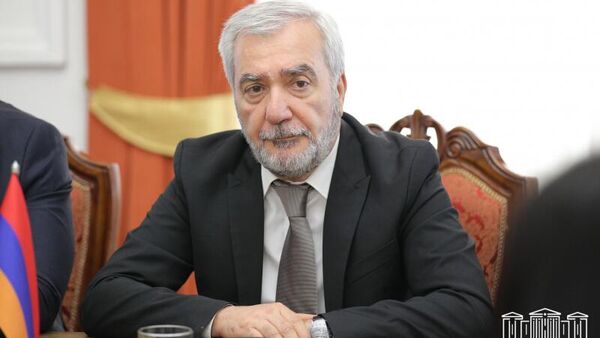
Chairman of the Parliamentary Standing Committee on Defense and Security Affairs, Andranik Kocharyan — who heads the committee established in February 2022 to investigate the circumstances of the 44-day war and the reasons behind the defeat of the Armenian army — has, for four years, misled parliament, the country, and the families of those who lost their sons in the war, apparently not without the knowledge of Nikol Pashinyan.
So, this is the situation we are left with.
The chairman claims that a report exists, yet even the eleven members who were supposed to prepare it have not seen it. A report exists, yet ruling-party parliamentarians who are members of the committee have no access to it. A report exists, yet Parliamentary Speaker Alen Simonyan states that the deadline for its submission has passed and, legally, it cannot be placed on the parliamentary agenda. A report exists, yet by Simonyan’s order — and based on the conclusions of Vladimir Vardanyan, head of the Committee on State and Legal Affairs, and Tatul Soghomonyan, head of the National Assembly Secretariat — it has been transferred to the classified department, inaccessible to the public.
What is this, if not the concealment of information?
For four years, the committee worked, collecting materials and questioning witnesses, former ministers, and generals. In November 2024, Andranik Kocharyan promised to submit the completed report to parliament. Yet it now appears that the document he drafted — together with an unidentified co-author — has not been seen even by those who were meant to sign it.
MP from the Civil Contract Party, Kristine Poghosyan, says she repeatedly requested the report. The response was: “The report is still being prepared. You will review it when it is published.” In the spring of 2025, she was told: “The report will be published in September.” In September, she was told: “Sign it first; you will read it later.” She refused to sign a document without reviewing its contents.
MP Hayk Sargsyan says the same: he has “never seen the report.” Former MP Vilen Gabrielyan confirms: “No one has provided the report to me or invited me to review it.” Only four of the eleven committee members signed the report. The remaining seven, including members of the ruling party, have not read it.
This means Kocharyan violated the National Assembly’s regulations, which entitle all committee members to review the final document and provide their opinions. The regulations have been violated, the law has been violated, and the rights of parliamentarians have been infringed — without any consequences.
The committee has failed in its task. The report that was meant to answer accumulated questions is now stored in a classified department. The few parliamentarians who have seen it speak of it in unusual terms.
Geghan Manukyan, who was the first MP to read it in the classified department, recalls reaching page 2,015 and thinking of a well-known phrase: “When investigating a crime, the most important thing is not to end up implicating yourself.” He added, “It seems a similar situation occurred here.” He cannot disclose the contents due to legal restrictions, yet he believes the report does not answer the main questions: why the war began and why it was lost. According to him, the report raises more questions for the authorities and personally for Pashinyan, pointing to incompetence — if not deliberate actions — by someone whose decisions had fatal consequences. He also notes the absence of signatures from several Civil Contract Party MPs.
Norayr Norikyan, leader of the Fair Armenia Party, who was invited to join the committee but left after his status remained unresolved, openly states that the committee convened only once, carried out no substantive work, and studied no materials. He says he was invited as a representative of a political force but was asked to participate as an expert. He refused, noting that he is a politician, not an expert, and concluded that the committee existed merely for show, not for investigation.
The opposition agrees. From the outset, they boycotted the committee’s work, arguing that a war cannot be investigated by those who waged it. They believe Kocharyan, who held an important position in 2020, cannot investigate the actions of his own team, and that Pashinyan, as Commander-in-Chief, cannot direct a committee tasked with examining his wartime decisions. It is akin to a suspect appointing himself as the investigator.
The committee was supposed to determine why an army once considered among the strongest in the region collapsed within 44 days. It was meant to identify who issued criminal orders and to name those responsible. It was supposed to explain why soldiers awoke in barracks to explosions and why enemy missiles reached them before the “wake-up” command. It did none of this.
Instead, Andranik Kocharyan’s committee simulated activity for four years. Ruling-party MPs simulated participation. When the time came to present results, the report turned out to be a classified document that no one had seen, signed, or discussed.
Nevertheless, Kocharyan continues to insist that “the report is ready and must be discussed.” Meanwhile, those who could ask difficult questions have not seen it, and those who could demand its publication remain silent.
We cannot, and have no right to, accept these claims as truth. To do so would make us complicit in the concealment of information. It would mean allowing those who lost the war to remain in power, those who failed to defend the country to continue governing it, and allowing Kocharyan and his committee to bury the truth, just as soldiers were buried, without names, dates, or explanations.
Kocharyan, Simonyan, and Pashinyan now act in unison. They are concealing the truth about the war deliberately, by violating the law and parliamentary procedures. If this is not stopped, if the report is not published and accountability is not enforced, the next war may end the same way.
As long as the truth about the 44-day war remains undisclosed, everything else is imitation — imitation of investigation, imitation of responsibility, imitation of statehood. In a system built on imitation, defeat becomes a pattern.
P.S.
Andranik Kocharyan, who has “classified” the truth about the war, now shows sudden zeal in “verifying” the circumstances of the Armenian Genocide. Under the pretext of compiling a “list of names,” he questions a fundamental national constant — the number of victims of the Armenian Genocide in the Ottoman Empire. The phrase “what if the number was more or less than one and a half million” is delivered with a distancing tone that makes it sound less like the voice of a descendant of survivors and more like that of a representative of Turkish authorities seeking to evade historical responsibility.
This can only be described as sacrilege.
“Verification of figures” today, revision of meaning tomorrow, and eventual denial of the Genocide as an “obstacle to the normalization of relations with Turkey.” “Verification of figures” today, revision of meaning tomorrow, and eventual denial of the Genocide as an “obstacle to the normalization of relations with Turkey.”