
Summit or Political Window Dressing?
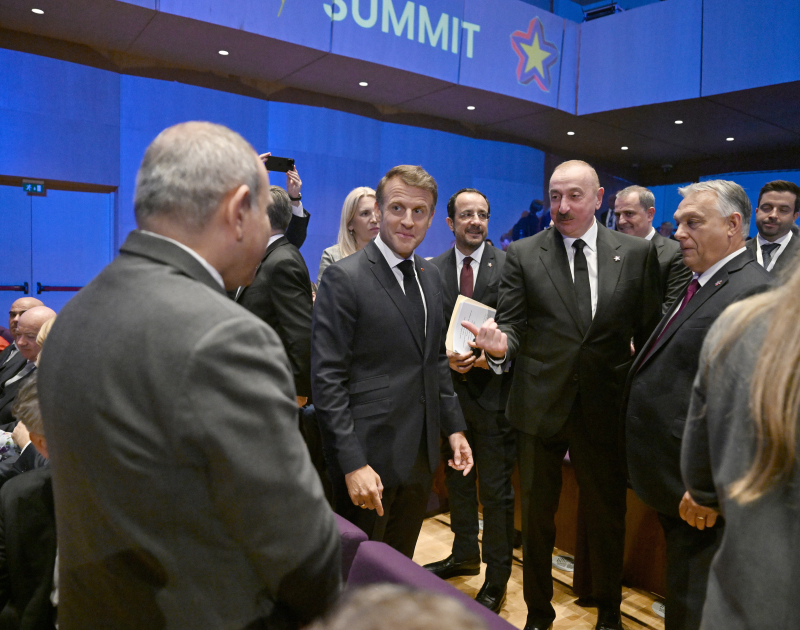
Yerevan these days is living in anticipation of the European Political Community (EPC) Summit 2026, scheduled for May 4. The authorities are actively preparing for the event, portraying it as a major diplomatic success and proof that Armenia is becoming an important platform for Europe. Leaders of European states will arrive in Armenia and make statements about partnership, values, democracy, and security.
Behind this polished picture, however, lie questions that the authorities fail to raise.
If the European Union truly upholds common values, speaks of human rights, the protection of people, and the inadmissibility of violence, then where is its firm political and legal assessment of what happened in Artsakh? Why is there still no clear definition, political qualification, or firm position on these issues?
This is not a matter of disputable interpretations of events. It concerns a territory with an Armenian population that was effectively emptied within a short period of time. Tens of thousands of people were forced to flee. This is not merely a “crisis” or “tension.” International practice provides clear definitions for such processes. If the EU avoids using them, this points to a deliberate political choice.
It is here that contradictions emerge.
On the one hand, Europe speaks of its support for Armenia. On the other hand, it continues to deepen strategic and energy cooperation with Baku — purchasing gas and expanding partnerships. In effect, it finances and strengthens an actor it cannot even bring itself to politically assess.
This is a classic example of double standards in politics: when statements emphasize values, but decisions are guided solely by interests.
If that is the case, then it would be more honest to stop hiding behind the rhetoric of human rights and openly admit that economic and geopolitical interests take precedence.
The rhetoric of Azerbaijan’s leadership is another cause for concern. Official statements about so-called “Western Azerbaijan” effectively lay claim to the territory of the Republic of Armenia. These are not merely words, but an attempt to shape the ideological groundwork for future pressure.
Where is Europe’s response to such statements? Where is the red line when it comes to protecting international law?
Apparently, there is none.
Against this backdrop, Yerevan will host a summit where the EU will discuss values, security, and partnership.
If this platform is not used to raise the issue of the Armenian population of Artsakh and their rights, to demand an assessment of what happened, and to respond to rhetoric that questions Armenia’s sovereignty, then this summit will be little more than a shell.
Responsibility for this does not rest with Europe alone.
The position of the Armenian authorities is key. Are they ready to speak openly, to ask uncomfortable questions, and to make demands rather than merely requests?
What we see today suggests the opposite. The authorities actively demonstrate openness toward Europe, deepening relations and pursuing European integration, while avoiding a pro-Armenian agenda that would compel concrete responses from European partners.
This points to a position of weakness.
In international politics, respect is given to those who clearly formulate and firmly defend their interests — not to those who simply host guests generously.
If Armenia wants to be taken seriously, it must stop being merely a platform and become an active party. It must not only host summits, but use them as instruments to advance its interests and shape the agenda.
Otherwise, the situation will continue to develop by inertia.
Europe will go on speaking about values while simultaneously deepening cooperation with Baku. Statements about “Western Azerbaijan” will persist.
The issue of the rights of the people of Artsakh will gradually disappear from the international agenda — not because it is no longer relevant, but because it is no longer being actively defended.
The summit in Yerevan will become a missed opportunity.
In politics, events themselves are not what matter — decisions, positions, and demands are.
Everything else is merely window dressing.