
IN THE WAKE OF OVERCHUK’S INTERVIEW: HOW PASHINYAN IS DEPRIVING ARMENIA OF ITS FUTURE
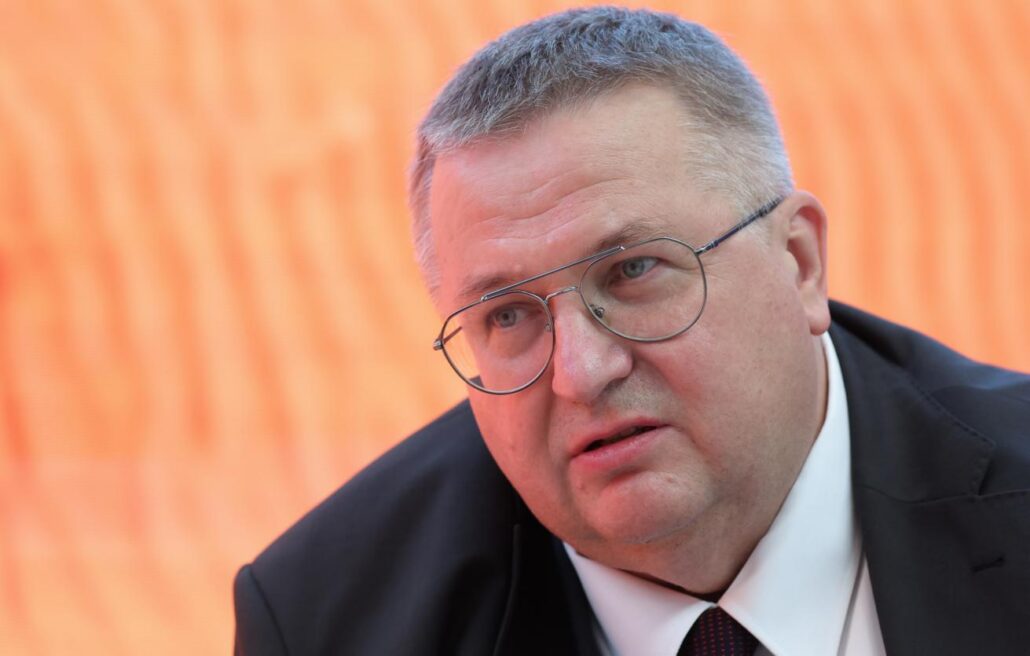
The statements made by Aleksey Overchuk in his recent interview with the Russian TASS agency leave no room for illusions — neither diplomatic nor economic. If anyone in Yerevan still seeks refuge in vague and ambiguous language about “diversification” and “expansion of opportunities,” such wording collapses when confronted with the specifics presented by the Russian deputy prime minister: kilometers, billions, percentages, routes, and deadlines.
THESE ARE NOT MERE WORDS, BUT CONCRETE ACTIONS. Overchuk has, in effect, pointed to systemic discrepancies between rhetoric and the actual policies pursued by the Armenian authorities under Nikol Pashinyan. On the one hand, there are statements about “friendship,” “cooperation,” and an “unwillingness to engage in conflict.” On the other, there are tangible steps: pressure on Russian businesses in Armenia, the stripping of energy assets, the initiation of talks on selling railway concession rights, and consistent efforts to push out key economic players. This is not a policy of balance — it is a process of dismantlement.
THE SITUATION SURROUNDING THE RAILWAYS REQUIRES PARTICULAR ATTENTION, as the authorities’ misrepresentations are especially evident here. Pashinyan attempts to convince the public that Russia’s presence allegedly “scares away” potential freight flows. However, unlike the Armenian prime minister, Overchuk refers to geography and logistics, not slogans. While Yerevan engages in empty rhetoric, Turkey is already implementing a project for direct railway communication with Azerbaijan, investing billions of dollars.
This is the very route referred to in various interpretations as the “Zangezur Corridor” or the “Trump Route,” and it effectively means one thing: a direct Turkey – Azerbaijan connection that bypasses Armenia. This is neither a hypothesis nor a political scare story. It is a real, ongoing project with a defined budget, timeline, infrastructure, and logistics.
AGAINST THIS BACKDROP, the Armenian authorities first propose that Russia restore the damaged sections of the railway, only to later claim that its presence “hinders development.” Such behavior is not merely illogical - it is destructive. In the world of infrastructure projects, such “zigzags” signal that a country is losing its credibility as a reliable partner.
Overchuk states openly that under these conditions, the main cargo flow will pass from Azerbaijan to Turkey, bypassing Armenia. The reason is simple: one border instead of two, ready infrastructure, and large-scale investments. At best, Armenia will receive a symbolic share - those 26% already presented as an “achievement.” The reality, however, is that 74% of revenues will bypass the country.
THIS IS NOT THE «UNBLOCKING», PROMISED BY PASHINYAN. It is the institutionalization of the transit routes that exclude Armenia.
NO LESS INDICATIVE ARE THE DISCUSSIONS SURROUNDING THE TRANS-CASPIAN INTERNATIONAL TRANSPORT ROUTE. Here, Overchuk raises issues the Armenian leadership prefers to avoid, namely, the sustainability of these routes. The shallowing of the Caspian Sea, rising costs of maintaining port infrastructure, and increasing freight insurance premiums make such “alternative” routes highly risky. In Yerevan, however, short-term political calculations continue to take precedence over the development of a long-term strategy.
THIS BRINGS US TO A KEY QUESTION - THE INVESTMENT CLIMATE. Overchuk effectively states that the actions of the Armenian authorities lead investors to conclude that property rights in the country are not guaranteed. First, the authorities strip one investor of assets; then they question another’s concession rights, only to later revise the terms of cooperation. Under such conditions, no one is willing to invest in long-term projects. At best, the country can expect short-term speculative capital.
DESPITE THIS, THE AUTHORITIES CONTINUE TO SPEAK OF A “EUROPEAN VECTOR,” while remaining silent about the fact that Armenia’s exports to the EAEU countries have increased 12.5-fold over the past decade, compared to just a 1.5-fold increase in exports to EU countries. This is not a matter of political preference, but of markets. Under the banner of “European integration,” real economic ties are being undermined, with the risk of losing existing markets without securing new ones.
OVERCHUK RAISED THE ISSUE OF RECIPROCITY FOR A REASON. If Armenia does not welcome Russian business, why should Armenian businesses continue to operate freely in Russia? This is not a threat, but a matter of logic. The consequences of this logic will affect specific companies, jobs, and export flows.
AS A RESULT, WHAT WE ARE WITNESSING IS A CONSISTENT PROCESS OF DIMINISHING OPPORTUNITIES — NOT THE “MULTI-VECTOR POLICY” THE AUTHORITIES CLAIM TO PURSUE. Armenia risks being left without its key transport routes, with a weakened investment climate, strained trade relations, and increasing dependence on projects in which it plays only a secondary role.
ALL THIS IS THE RESULT OF CONCRETE DECISIONS being made today. As experience shows, those responsible for such decisions are rarely held accountable.