
Imitating Unity: Nikol Pashinyan’s Political Performance Amid Seyran Ohanyan’s Disclosures
Armenian society has once again become an involuntary witness to another episode in a prolonged political process marked by artificially constructed narratives. This time, the focus is on the demonstrative, unusual, and contradictory “divorce” and subsequent “reunion” of Nikol Pashinyan and Anna Hakobyan. What appears to be a private matter bears all the hallmarks of a calculated political move.
Just a few weeks after their public separation, Anna Hakobyan was once again accompanying the prime minister on his electoral visits across the country, attending events funded by taxpayers.
This naturally raises a question: what is this — erratic behavior, personal drama, or a carefully orchestrated political strategy?
The answer becomes clear when this episode is viewed in the context of the information storm triggered by statements made by Seyran Ohanyan, the former defense minister of Armenia.
Ohanyan’s speech did not merely disrupt political discourse; it dismantled the long-standing structure of explanations, justifications, and accusations upon which the official narrative of the war’s defeat had been built.
For years, the public was persistently told that the loss was due to former authorities, Russia, a “ruined army,” and deserters. Everyone was blamed except those who made the key decisions during the war.
We were told that the “Key West” negotiations had supposedly predetermined Karabakh’s fate long before 2020. We were told that the army was combat-ineffective because it had been “ruined and looted.” We were asked to believe in the myth of “11,000 deserters,” used to explain the collapse of the front line. We were even presented with the absurd claim that “Iskanders performed at 10%.” Altogether, these narratives turned a national tragedy into something resembling a farce.
And now, a single speech has effectively erased all of that.
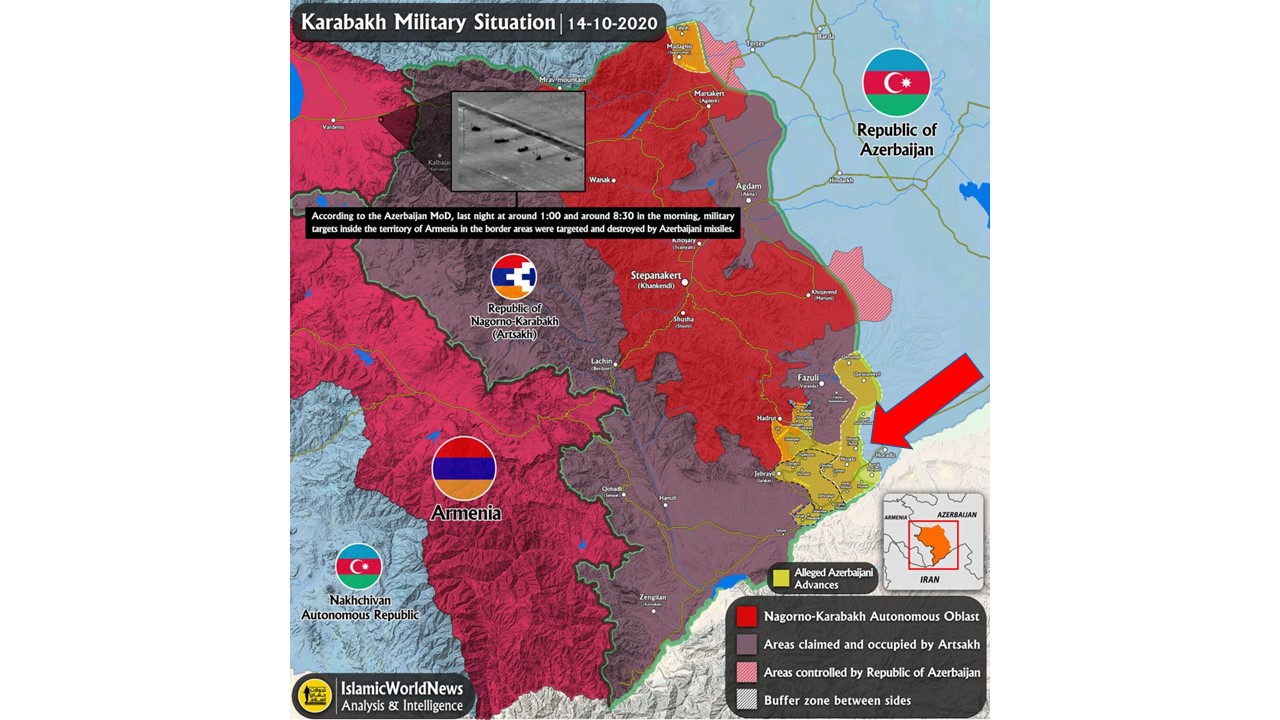
Seyran Ohanyan’s assertions are direct and leave little room for misinterpretation. According to him, 265 kilometers of the 285-kilometer line of contact were successfully defended and remained stable for a month. The Aghdam, Martakert, and Kelbajar (Karvachar) directions stayed under Armenian control. Only one sector failed — the southern direction, from Jabrayil to Horadiz. This sector was under the command of the First Army Corps of the Armenian Armed Forces, directly subordinate to the General Staff.
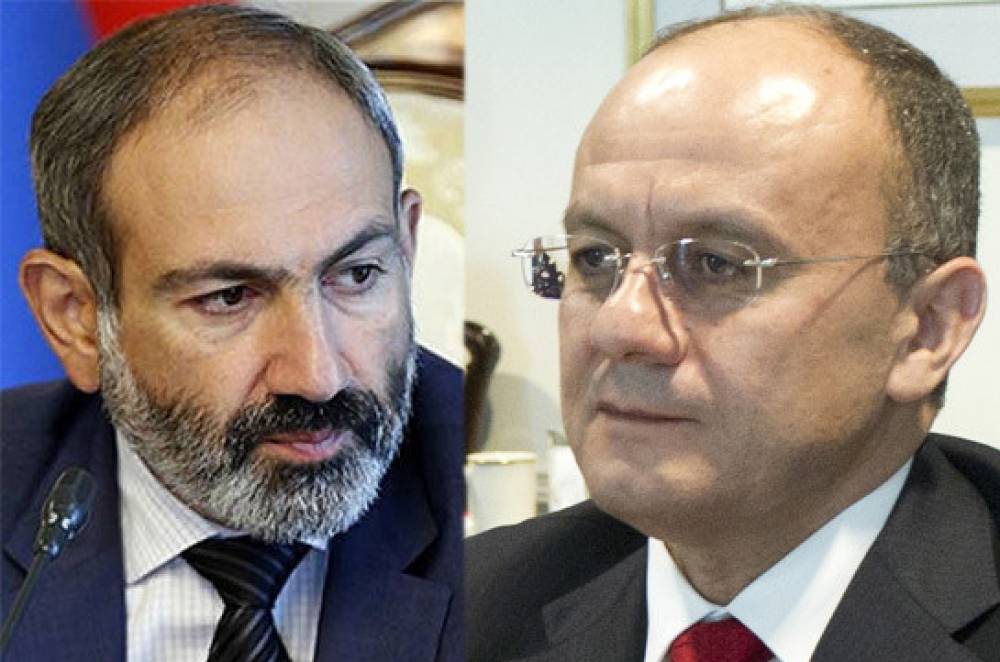
Ohanyan, as a former defense minister with deep knowledge of the system, stated that key decisions regarding troop deployment in that sector were personally approved by the Supreme Commander-in-Chief, Nikol Pashinyan. According to him, only two individuals bear responsibility for the enemy’s breakthrough into Shushi: Chief of the General Staff, Onik Gasparyan, as executor, and Prime Minister Pashinyan as the approving authority.
Additional details have emerged from journalist Aram Gabrielyanov, who claims to have had private conversations with Onik Gasparyan. According to him, during the war, Pashinyan personally prohibited an appeal to Russia for military assistance and ordered the withdrawal of troops from positions near Shushi.
These revelations give rise to two key questions — questions the authorities appear keen to avoid by diverting attention to family drama, staged “divorces,” “reunions,” and other secondary topics.
First question: If 265 kilometers of the front line were successfully defended, with intense fighting ongoing in the main three directions and the enemy failing to advance, why did the catastrophic breakthrough occur precisely in the sector under the direct command of Armenia’s General Staff? Why did the defense collapse in the section controlled from Yerevan rather than Stepanakert?
Second question: Who ordered the withdrawal of troops from positions near Shushi? Who gave the command to abandon the village of Karintagh, thereby paving the way for the fall of Shushi? According to Gabrielyanov, Onik Gasparyan named Nikol Pashinyan in a private conversation. Notably, Gasparyan has not publicly denied this claim.
Setting aside political intrigue and personal drama, it is worth recalling a few essential facts.
Shushi was the heart of Artsakh — its spiritual center, fortress, and pride. It did not fall because the enemy was stronger. It fell because someone in Yerevan ordered a withdrawal. Someone forbade seeking assistance. Someone chose military catastrophe over political accountability.
That decision cost thousands of lives, shattered countless families, and resulted in the loss of Artsakh. Tens of thousands became refugees, losing everything. An entire generation has been irreversibly affected.
This is not merely a defeat. It is a crime. And things must be called by their proper names — and those responsible must face a tribunal.