
On Former President Levon Ter-Petrosyan’s Alleged Ties to U.S. Security Services
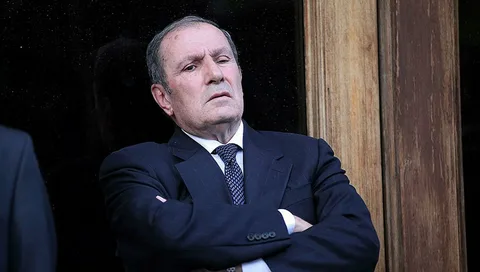
The Public Tribunal has republished an article titled “Closely Watched Democrat President” by Levon Melikyan (Ghazaryan), originally dated October 24, 2009. In it, the author seeks to shed light on the more opaque aspects of the personality and biography of Armenia’s first president, Levon Ter-Petrosyan.
CLOSELY WATCHED DEMOCRAT PRESIDENT
A sensational article was published in the Golos Armenii newspaper (Issue No. 97, September 12, 2009), in which a former employee of Armenia’s special services - a direct participant and eyewitness to events, identified only as M.A. – tells that former President Levon Ter-Petrosyan had ties with U.S. intelligence agencies. In most countries, such an article would have triggered a storm of reactions - ranging from public denials to criminal investigations initiated by the Prosecutor’s Office. But not in Armenia. A month has passed, and the reaction? Silence. Nothing.
It’s hard to believe that the public was so deeply shocked by the revelations that they were left speechless. A more likely explanation might be that the information was already widely known and, therefore, not perceived as a sensation. Yet this too doesn’t hold up under scrutiny. There is a significant difference between scattered assumptions, rumors, or hearsay from questionable sources and documentary testimony from a well-informed witness. Clearly, a different mechanism is at play here. What is evident, however, is that the typically sensation-hungry press affiliated with the Armenian Pan-National Movement (APNM) - and coordinated from a centralized source - received clear instructions to stay silent this time. This may well be because Levon Ter-Petrosyan has nothing to say in response, nothing to deny, nothing to refute. His only remaining tactic is to ignore the accusations altogether… in the hope that, in time, they too will be forgotten.
Perhaps these hopes are not entirely unfounded. Levon Ter-Petrosyan knows better than anyone that he can count on the public’s puzzling tolerance toward the murky and obscure aspects of his biography and personality — to say nothing of his more apparent transgressions. It is precisely this tolerance that has allowed him to remain a political figure to this day.
And yet, close scrutiny of L.T.P. is long overdue - if only because, by studying and understanding his personality and biography (and not only his, of course), we might finally begin to make sense of what happened in and to our country twenty years ago, what has unfolded over the past two decades, what is happening today, and what may yet come. Indeed, Levon Ter-Petrosyan is just one of the many factors that must be examined. But let us agree - he is a significant one, and his relevance remains undiminished.
The events described by M.A. took place during Levon Ter-Petrosyan’s presidency, specifically in the spring of 1992, when, according to the account, he was recruited by U.S. intelligence services, who, as we now have reason to believe, have been managing him ever since. This well-substantiated claim does not exclude the possibility that his cooperation with foreign intelligence may have begun even earlier. Both direct and indirect evidence of this exists in open sources.
What’s particularly interesting is that during that same period, some press reports emerged alleging that L.T.P. had previously collaborated with the Soviet KGB - a charge which, in hindsight, now seems the lesser of two evils. Yet in 1992, amid the anti-Soviet fervor of the time, such accusations could have ended any political career — except his.
A brief reminder of an episode that, perhaps not coincidentally, aligned with the beginning of Levon Ter-Petrosyan’s and Armenia’s foreign policy establishment’s growing engagement with Turkey (as confirmed by recent statements from former Armenian foreign ministers). On June 29, 1992, for the first time — and publicly, on national television — L.T.P. launched an attack against the ARF Dashnaktsutyun. Alongside blatant falsehoods, he accused the party of having ties with the KGB. In response, party leaders, the late Hrayr Marukhyan and Hrach Tasnapetyan, admitted to having held meetings with certain Soviet officials (who, naturally, could not have operated without links to the KGB). In retaliation, Azatamart Weekly — the official publication of the ARFD Bureau, printed in both Armenian and Russian in Yerevan — began publishing documents proving L.T.P.’s own cooperation with the KGB. These were accompanied by commentary from Dr. Eduard Hovhannisyan, Director of the Institute of Armenian Issues in Munich. That rich and telling story, with all its documents and details, certainly deserves to be retold in full — but for now, we will limit ourselves to two key excerpts.
In the article “We Will No Longer Stay Silent,” Ed. Hovhannisyan wrote: “Levon Hakobi Ter-Petrosyan, a KGB agent with personal number Ж-385292, entered the ranks of that powerful organization on May 29, 1977. A fellow agent - known by the alias ‘Kazbek’ - who was familiar with the future president as a colleague, described him as an open-minded, loyal individual with strong knowledge, well-liked by the staff. Based on Kazbek’s report, in October 1977, the chief officer of the 1st Department of the KGB in Armenia, M. Hakobyan, submitted the following communication to the KGB leadership: ‘To submit Ter-Petrosyan’s file for consideration by the Directorate of Counterintelligence of the State Security Committee under the Council of Ministers of the USSR, Krasnodar Region, for enlistment into the special staff of the KGB under the Council of Ministers of the USSR.’ The head of the 1st Department of the KGB in Armenia, U. Haroutunyan, approved the request with the resolution: ‘Approve.’ That same year, 1977, Levon Ter-Petrosyan became an officer in the KGB’s special units.”
A photocopy of the narrative certificate dated October 27, 1981, was published in the article, along with the following resolution: “To keep Reserve Lieutenant L.T.P. in the special reserve of the USSR KGB” (Azatamart, No. 10, July 14–20, 1992).
The first article was expected to be followed by several others, but this never happened - mainly due to mass appeals from Diaspora-based Dashnaks urging “not to embarrass the country.” On the other hand, numerous materials and interviews appeared in semi-official media, allegedly refuting the ARFD’s information. One of the main arguments cited by L.T.P.’s supporters was a relatively fair point that almost all graduates of the Faculty of Oriental Studies at Yerevan State University had automatically come under the KGB’s radar. However, an obvious fact was somehow overlooked: L.T.P. graduated from YSU in 1968, but was reportedly recruited by a KGB agent only in 1977. It is worth recalling that Oleg Kalugin, a KGB General later denounced for high treason, was involved in L.T.P.’s case as “a consultant.” However, setting aside the details, let us now present Eduard Hovhannisyan’s “Open Letter to the Armenian President,” published in Azatamart Weekly, Issue No. 14, August 11–17, 1992.
The letter was unusual and, in our view, contained many controversial points, but the following passage is worth noting: “…We are all sullied - some through indifference, some by the KGB, some by publishing fake scientific papers, some by the party, some through bribery, and some by direct denunciations,” wrote Ed. Hovhannisyan to the President of Armenia, L. Ter-Petrosyan. “You could not have avoided being sullied. Such was the system. There is no point in trying to justify yourself now by claiming you had no idea, or that all orientalists were doomed to the same fate, because that is not entirely true. The KGB reports state that you courageously exploded bombs and mines and were awarded for your actions. You knew perfectly well where you were serving and officially declared your willingness to serve the Motherland through the KGB. None of this constitutes a crime, however, because such were the times.
Your crime is far more serious, because it was committed knowingly, not out of necessity. Yet the roots of this crime lie not in Armenia, nor within your immediate circle...
All true and natural values are spiritual in nature - like the nation itself, which is nothing more than our historical and spiritual bond. Just as the Decembrists, enamored with Europe under the influence of the Masons and Peter the Great’s ‘window to the West,’ brought ruinous ideas to Russia, you, Mr. President, with the help of those same Masons, are now attempting to Americanize Armenia - an effort that will have devastating consequences for our homeland.
That is why you despise the ARF Dashnaktsutyun...”
This old but still relevant story can perhaps be concluded with excerpts from the interview given by the aforementioned KGB General Oleg Kalugin, published in Azatamart Weekly, Issue No. 25, dated July 13–19, 1993. Kalugin’s response to the main question in the interview was unequivocal: “It is absurd to speak of Dashnaktsutyun as some kind of weapon or tool of the KGB. Every political party, especially one as strong and influential as Dashnaktsutyun, had its own reasons for cooperating with the KGB, all while pursuing its own objectives.” However, the interview also addressed a different angle. Journalist Hmayak Hovhannisyan asked the former KGB general the following:“…Some public figures in Armenia claim that the KGB may have influenced members of the Karabakh Committee as well. In particular, they point to the protective measures taken by Vladimir Kryuchkov, the future member of the State Committee on the State of Emergency (GKChP), for the Democrat-President at the time. Kryuchkov reportedly provided him with an armored vehicle for his safety, even though there was no obligation to do so. This occurred just before the 1991 Soviet coup d’état attempt.” In response, Kalugin admitted:“The KGB always tried to manipulate parties, movements, individuals. Prison is a very convenient place for that kind of work… However, I lack the specific information to confirm or deny the version you’ve presented.” The interviewer pressed on: “For example, Armenia’s Prosecutor in 1990, Vladimir Nazaryan, claimed in his publications that there was a concerted effort at the time to find leaders who could ultimately ‘neutralize’ the issue of Nagorno-Karabakh’s unification with Armenia. It’s said that Gorbachev directly asked Armenia’s communist leaders whether they were capable of doing so. When they refused, Gorbachev reportedly replied that he would find others who could handle the situation…” One cannot overlook Hmayak Hovhannisyan’s tendency to glorify the image of the "communist leaders of the time," although Vladimir Nazaryan likely knew exactly what he was talking about. According to the memoirs of one of the initiators of the Karabakh Movement, Vache Sarukhanyan, Karen Demirchyan held a phone conversation with Mikhail Gorbachev on February 25, 1988. During the call, Gorbachev asked: “Are those guys from the Karabakh Committee really that capable?” “No, Mikhail Sergeyevich,” Demirchyan replied, “but there are a couple of guys here whose nationalist ideas are having a strong influence on the public.” He then named Igor Muradyan and Vache Sarukhanyan. Gorbachev responded:“Well, Mr. Kharchenko from the Central Committee’s Chief Ideological Department will be sent to help you change the leadership and suppress anti-Soviet sentiment.” After some time, the Karabakh Committee was reorganized into the notorious second Karabakh Committee, initially led by Vazgen Manukyan and later by Levon Ter-Petrosyan (Hayots Ashkharh newspaper, March 27, 1998). These memoirs were published during Karen Demirchyan’s lifetime. Moreover, the author directly appealed to Demirchyan, urging him to refute the statement, if it was inaccurate. Unsurprisingly, the appeal remained unanswered. It is also worth noting that, according to public rumors, there were four KGB agents within the Committee, and one of them was allegedly Levon Ter-Petrosyan - the younger brother of Telman Ter-Petrosyan, Karen Demirchyan’s close associate, who, as we can now state with confidence, was well known to the KGB.
“Perhaps that strange arrest, which occurred amid the devastating earthquake in Armenia — an event that shifted public attention away from the orators in the Square — and their subsequent heroization, was in fact the very method used to create the kind of leaders Gorbachev needed in Armenia. Considering the methods and style of KGB operations, how logical does this version seem?” Hmayak Hovhannisyan insisted.
Kalugin replied: “It seems quite logical.”
We have recalled these long-forgotten quotes to show just how naïve our perceptions of L.T.P. and his circle once were. Meanwhile, according to reliable information published by Golos Armenii, the President of Armenia had already become a tool in the hands of American intelligence. It would be even more naïve to assume that foreign intelligence services only recruited him after he was elected president.
Of course, we still lack direct evidence, and perhaps we won’t obtain any in the near future. Nevertheless, a broader picture begins to emerge when we piece together testimonies from various sources - for example, statements by Kh. Stamboltsyan and others regarding Zh. Libaridian’s and L.T.P.’s ties with the Masons; information published by Golos Armenii years ago about a former KGB colonel persecuted by L.T.P. who is now his close associate; the visits paid by members of the Karabakh Committee to “certain districts in Paris” following their release; and many other such accounts.
Unfortunately, as far as we know, no one in Armenia is systematically collecting and analyzing this kind of information. We do not want to know - or are unwilling to face - the truth about our recent past, which is, in fact, the truth about our present and future. This is deeply unnatural. We must acknowledge that this indifference and lack of reaction stem from a troubling reality: the forces that once controlled L.T.P. continue to exert influence over a portion of our people.