
Foreign Natives: How the “Velvet” Authorities Are Ousting Artsakh Armenians
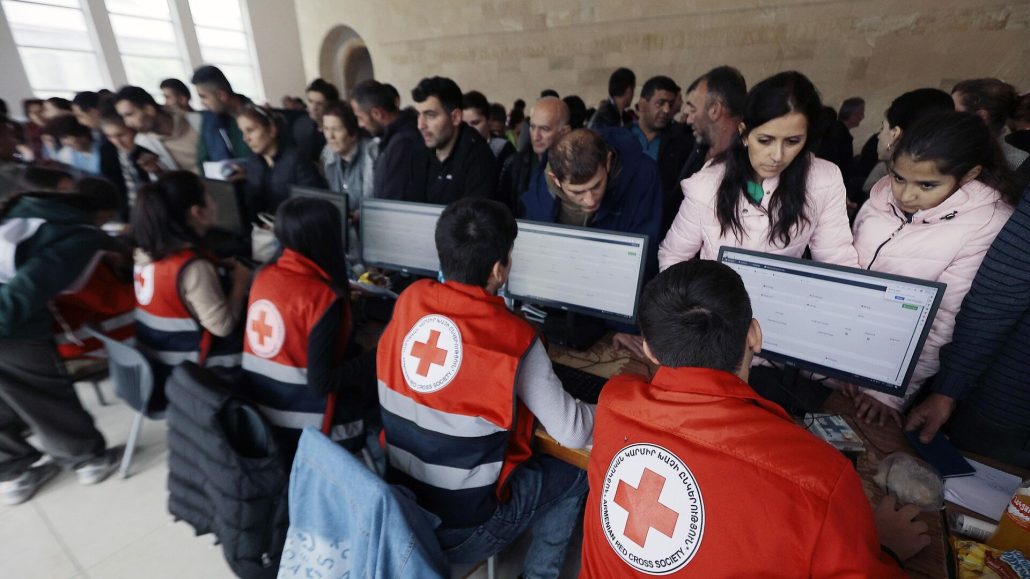
After enduring the horrors of war and months of blockade, the forcibly displaced people of Artsakh now face new challenges in Armenia. Although their database was preserved and transferred to the relevant ministries and agencies, they continue encountering numerous bureaucratic obstacles—from document processing and residency registration to securing loans and accessing targeted state financial assistance. Yet perhaps the most distressing issue is the negative attitude shown by segments of the local population, fueled by the hostility propagated through government-aligned media outlets, proxy influencers, bloggers, and even some officials.
Many media outlets have reported on the outrageous treatment and arbitrariness displayed by the “velvet authorities” toward the refugees from Artsakh. For example, in an article published on April 8, 2024, the online outlet step1.am outline a range of challenges the Artsakh people are facing in Armenia.
- Although the employment tenure of Artsakh residents and their contributions to the pension fund are recognized, Armenia does not acknowledge their work history when calculating pension benefits for those reaching retirement age. Notably, the cumulative pension system in Artsakh operated under the guarantees of Armenia’s Central Bank. Yet, officials offer no clear answers regarding the possibility of recovering the funds from these accounts. As a result, the fate of 16 billion drams held in the pension accounts of Artsakh residents remains uncertain.
- Artsakh residents with the passport code “070” face difficulties obtaining loans from Armenian banks, as their credit histories are not recognized, despite the Armenian government’s official recognition of the credit records of Artsakh citizens.
- Many Artsakh residents with the passport code “070” who own real estate property in Armenia risk having their ownership documents invalidated, as the Armenian government plans to implement future housing support programs for Artsakh residents only on the condition of Armenian citizenship.
- ID cards are required to register a business or an organization in Armenia, whereas ID cards are not provided to residents with a passport code “070.”
- The Government of Armenia does not recognize Artsakh residents as citizens of Armenia and deems the operation of Artsakh authorities on Armenian territory inadmissible. At the same time, it has failed to establish a unified body to address the needs and issues of the forcibly displaced population from Artsakh.
In December 2024, the Armenia Today media outlet spoke with more than 20 entrepreneurs from Artsakh to learn about the obstacles and challenges they face when attempting to start a business in Armenia. The businessmen also shared what support measures could help them adapt their businesses to the new environment and eventually expand. Below are some quotes from the Artsakh entrepreneurs:
“After the 2020 war, when the Turks occupied our land, we were forced to buy a new plot—three hectares for 11 million drams. We cultivated it and planted nut trees. I’d like to do the same here, but land is very expensive, and there’s no support or assistance from the government. At the very least, they could give us some time to get back on our feet, start earning an income, and then pay for the lease and taxes. But we still need that time. To become competitive, we have to offer a better product, which requires access to quality raw materials,” says Alvina Gabrielyan, founder of the bakery A Piece of Happiness.
Donara Gasparyan, founder of the bakery brand Donara’s Zhengyalov Hats, who restarted her business from scratch in Yerevan—producing her signature herb-stuffed flatbread, along with bread and pastries—says the most pressing issue is the heavy tax burden. She believes many residents of Artsakh urgently need government support in this regard.
“If the government could help by reducing taxes, it would be a great relief. I’m speaking not only for myself, but for all Artsakh residents,” says Donara.
In fact, the people of Artsakh, who were forcibly displaced as a result of Azerbaijan’s aggression, have found themselves as foreign natives in Armenia — belonging by origin, yet treated as strangers. In this light, many of them are considering leaving the country.
Referring to the National Security Service (NSS) of Armenia, mass media outlets report quite contradictory data on the Artsakh people who leave Armenia forever. For instance:
“Between September 27, 2020, and October 1, 2024, a total of 47,212 people forcibly displaced from Nagorno-Karabakh left Armenia, and only 18,734 of them have returned,” reads the response from the National Security Service to a request by Armenia Today.
“Between September 27, 2020, and July 24, 2024, 49,975 people registered in Nagorno Karabakh left Armenia, and only 26,571 of them have returned, and the remaining 23,404 haven’t,” reads another response from the National Security Service to a request by Armenia Today.
“According to statistics published by the National Security Service of Armenia, as of January 1, 2025, 26,397 people forcibly displaced from Artsakh had left Armenia, while only 14,871 had returned. This means that following the 2020 war and the mass displacement in September 2023, 11,526 Artsakh residents left Armenia and have not yet returned,” armnews.am reports.
How is it possible that, according to official data, 48,975 people had left Armenia as of July 1, 2024, 47,105 as of October 1, 2024, and only 26,397 as of January 1, 2025? These contradictions strongly suggest that the National Security Service does not have reliable or accurate data.
Based on the above, it can be concluded that Nikol Pashinyan’s “velvet” government is pursuing a policy of segregation against the forcibly displaced people, with the apparent aim of driving them out of Armenia.
This is nothing short of a synergy between Nikol Pashinyan's 'velvet' government and Ilham Aliyev's genocidal policies. This alignment is also evident between the authorities and certain opposition forces in Armenia. Their actions do not aim to address the issues faced by the forcibly displaced Artsakh Armenians. Instead, they exploit their suffering for political gain.