
VICTORY BEFORE THE VOTES WERE COUNTED OR AN OPERATION TO RETAIN POWER?
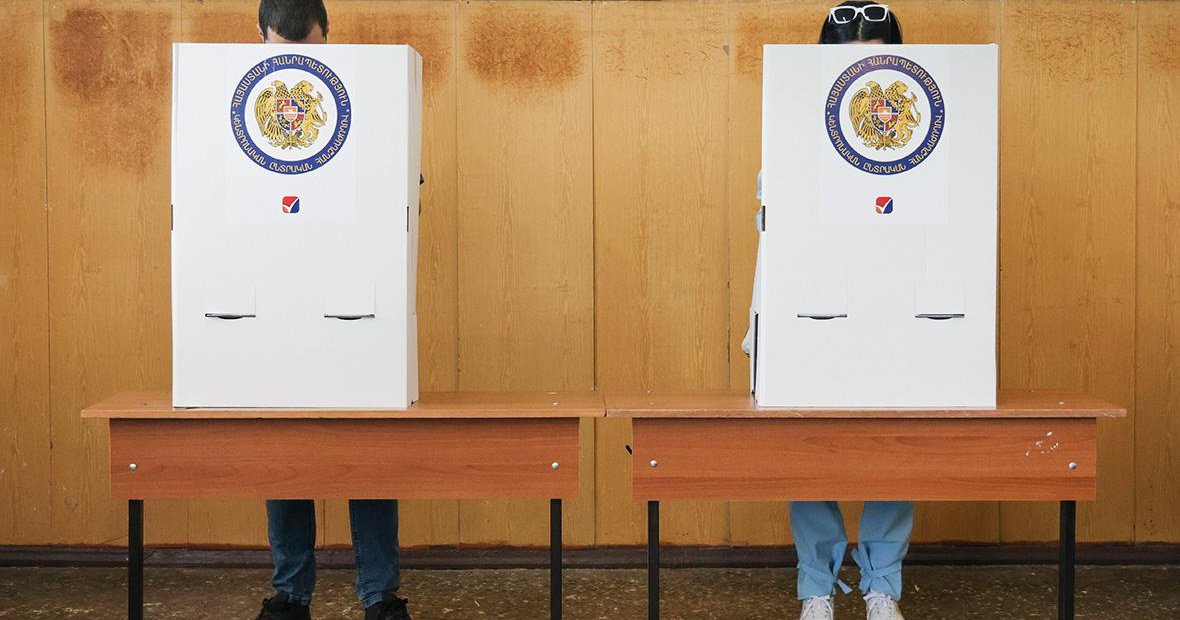
So, the elections are over. At least, that is what the authorities claim, having already congratulated themselves on yet another historic victory. The congratulations came so swiftly that an inexperienced observer might conclude the outcome was known long before the polls had closed.
But this is not even about the victory of the Civil Contract Party. The real issue is how that victory was achieved and why it raises so many questions.
Let us begin with the most obvious.
Even before election day, the country witnessed an unusual preparation for what was supposed to be a democratic celebration. Some parties were campaigning, others were meeting with voters, while some found themselves meeting with investigators.
According to opposition sources, 75 members of Samvel Karapetyan's team alone were arrested. According to various reports, the total number of people detained during the election period exceeded 700.
Of course, this could all be dismissed as mere coincidence.
Coincidentally, the main targets of the law-enforcement system happened to be representatives of the opposition.
Let us leave it to those who regard such a political atmosphere as an example of democracy to judge its merits.
There is, however, something even more interesting.
Many observers continue to view these elections as a straightforward contest between the authorities and the opposition. In reality, the picture was far more complex.
Alongside the use of administrative resources, pressure on political opponents, and doubts about the transparency of the vote count, there was another factor that the Public Tribunal and numerous experts had repeatedly warned about.
That factor was the unusually large number of political parties and movements participating in the elections, many of which had been created shortly before the campaign began.
Some called themselves the opposition, others the real opposition, and still others the only true opposition. Some positioned themselves against both the authorities and the opposition. There were even forces that, by the end of the campaign, seemed unable to decide whom they actually supported.
Yet despite all the slogans, programs, and political declarations, the outcome was quite clear.
All of these political formations performed one important function: they fragmented the protest vote.
Whether this was done deliberately is difficult to say. One may speak of good intentions, but political arithmetic is unforgiving.
Every vote cast for a small party with no realistic chance of achieving a meaningful result objectively contributed to the preservation of the ruling authorities.
Therefore, when representatives of such political projects speak of their struggle against the regime, it may be worth reminding them that their so-called struggle helped keep that regime in power. This is their political responsibility.
The vote-counting process itself also raises questions.
The first results arrived from rural communities at a surprisingly rapid pace. Rural areas have traditionally been places where administrative resources are most actively used, and where the influence of local officials on the electoral process remains significant.
Armenian politics is well acquainted with the phenomenon of local "feudal lords." Governments and parties may change, but the system remains largely the same. Local leaders provide the necessary voter mobilization, while the central authorities provide them with political patronage.
It is therefore hardly surprising that these regions were among the first to report overwhelming support for the ruling party.
While rural polling stations began reporting results almost immediately after voting ended, larger towns - where the authorities' positions are considerably weaker and public oversight is stronger - took much longer to complete the count.
Then, it was reported that further results would be published the following morning.
Samvel Karapetyan rightly noted that no such precedent exists in the history of elections in Armenia.
Perhaps the specialists at the Central Election Commission can provide a thorough explanation. Whether the public will find those explanations convincing is another matter.
After all, over recent years, the authorities have done much to erode trust in public institutions — a trust that has fallen to roughly the same level as confidence in the campaign promises of most Armenian politicians.
Yet, there is more.
There is an old political principle: sometimes rallies reveal more than official statistics.
Of course, rallies are not polling stations.
Of course, attendance at rallies cannot replace ballots.
And of course, the Central Election Commission is under no obligation to count the number of people gathered in public squares.
All of that is true.
But, still...
Why was the Prime Minister, with the full resources of the state apparatus at his disposal, unable to fill Republic Square during the campaign?
Why was Samvel Karapetyan able to do so?
The pre-election rally of the Civil Contract Party.
The pre-election rally of the Strong Armenia Party.

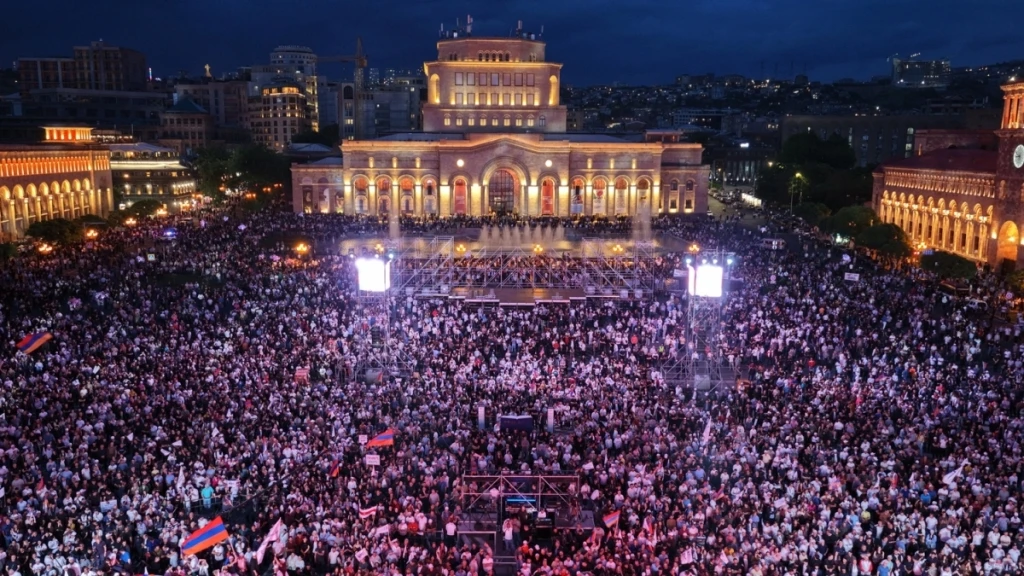
The answer to this question does not automatically mean that the opposition won. However, it does raise a legitimate question: do the official results announced by the Central Election Commission accurately reflect the public mood observed before the election?
After all, media images of rallies are not proof of electoral fraud. But data published by an institution whose independence is regularly questioned is not, in itself, proof of a perfectly fair electoral process either.
So the real issue is not who has been declared the winner, but who the people believe the winner to be.
Nikol Pashinyan has already declared victory. Samvel Karapetyan insists that Civil Contract lost the election. As is often the case in Armenian politics, the truth probably lies somewhere between official statements and public sentiment.
What will the opposition do next? The answer to that question should become clear in the coming days.
Will it accept the official results, heed international observers' calls for calm, and begin preparing for the next election?
Or is the opposition convinced that what occurred was not a defeat, but the result of the authorities' political technologies, and therefore prepared to continue the struggle?
Many are interested in the answers to these questions. The elections may be over, but the struggle for Armenia's future is likely only beginning.