
EUROPEAN MISSION IN ARMENIA REPORTING TO BAKU: NIKOL PASHINYAN’S “VELVET” SOVEREIGNTY
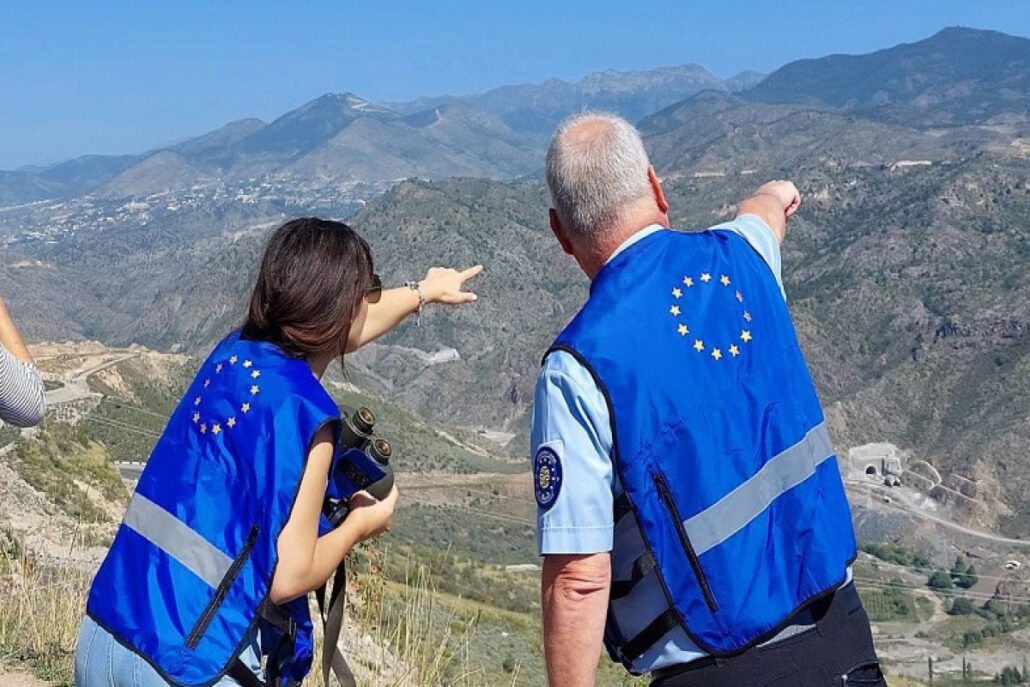
“Ambassadors of EU member states in Brussels endorsed on Wednesday the deployment of a new civil mission to Armenia, paving the way for final approval, which is expected at a meeting of EU foreign ministers next week,” RFE/RL reports.
The picture is clear. Armenia is confidently moving toward a point from which it will not be able to exit on its own. Judging by the country’s enthusiasm in this direction, it may seem like a breakthrough rather than a basic adjustment to someone else’s game.
So, what do we have in reality? Nikol Pashinyan sent a letter to Brussels requesting a rapid response group. The European Union agreed “reluctantly.” Of course, it could not miss the opportunity to enter the country with at least a two-year mandate, with a possible extension, access to domestic policy, elections, post-election processes, and even a potential constitutional referendum.
The European Union Partnership Mission will comprise 20–30 personnel on the ground. These are not tourists or observers in the classical sense, but security experts, analysts, and information specialists. In effect, it will be a mission better informed about Armenia’s internal processes than local institutions. And this is called “assistance.”
Let us add the geographical factor. The Armenia–Iran border is about 44 km long. It is not a large section, yet it is strategic — the only window to Iran. What is happening around Iran? Tensions, the Strait of Hormuz, and global energy risks. The EU, which is experiencing an energy crisis, suddenly shows heightened interest in this direction. A coincidence? Of course...
This means that the mission will observe not only elections in Yerevan, but also in Iran, its transit routes, and everything connected to the Iranian section of the Armenian–Iranian state border. In this case, Armenia is merely a platform — convenient, accessible, with leadership ready to open the doors wider.
There is more.
The EU considers it necessary to explain to Azerbaijan what it is doing in Armenia. Not to Yerevan — that goes without saying — but to Baku, to avoid “misinterpretations.” Thus, a decision concerning Armenia is reported to a belligerent state. This is a diagnosis.
This is not the first time. The current EU Mission in Armenia (EUMA), as Europeans admit, regularly informs Azerbaijan about its trips and observations. The draft peace agreement even states: no third-party forces on the border. The mission will be removed as soon as it is signed. For now, there is an opportunity to go deeper and more thoroughly into the country.
The key question is: how should Russia respond to all this? With a pat on the back as a sign of approval?
Vladimir Putin has made it quite clear: a reorientation game is not free entertainment. If you want to change the vector, do not be surprised by changes in the terms of cooperation. Aleksey Overchuk has openly warned about economic consequences.
Now let us look at the figures without illusions. Russia’s share in Armenia’s foreign trade is about 35–40%. More than 70% of Armenia’s gas supply comes from Russia. Money transfers account for about 10–12% of GDP. Armenia’s GDP is about $25–30 billion. Remove or reduce these figures, and the economy will crack.
The process has already begun. Russia has introduced obstacles to cargo transportation, intensified border checks, and tightened export conditions.
Against this background, Armenia’s authorities are placing their stake on the European Union — an institution that pursues its own interests: energy, logistics, containing Russia, and monitoring Iran. In this framework, Armenia is not a partner but an element — a consumable part, to call things by their proper names.
Meanwhile, within the country, there is talk of “strengthening independence.” Independence with a foreign mission on the country’s territory, with access to political processes, and discussing key issues with the adversary. Very convincing.
This is nothing but political adventurism — a simple attempt to sit on several chairs at once, without the necessary resources, political weight, or margin of safety — relying solely on chance.
There will be no chance.
When the EU pursues its objectives, it acts in its own interests. When Russia responds to perceived threats, it also acts in its own interests. In between stands a country with a vulnerable economy and logistics, critical dependence on external flows, and an extremely unstable regional environment.
This is the main conclusion. Armenia is turning into a playground for others. The more eagerly the current authorities continue this political course, the fewer chances remain for the country to control these processes.