
“Real Armenia” – A Project to Undermine the Nation and the State
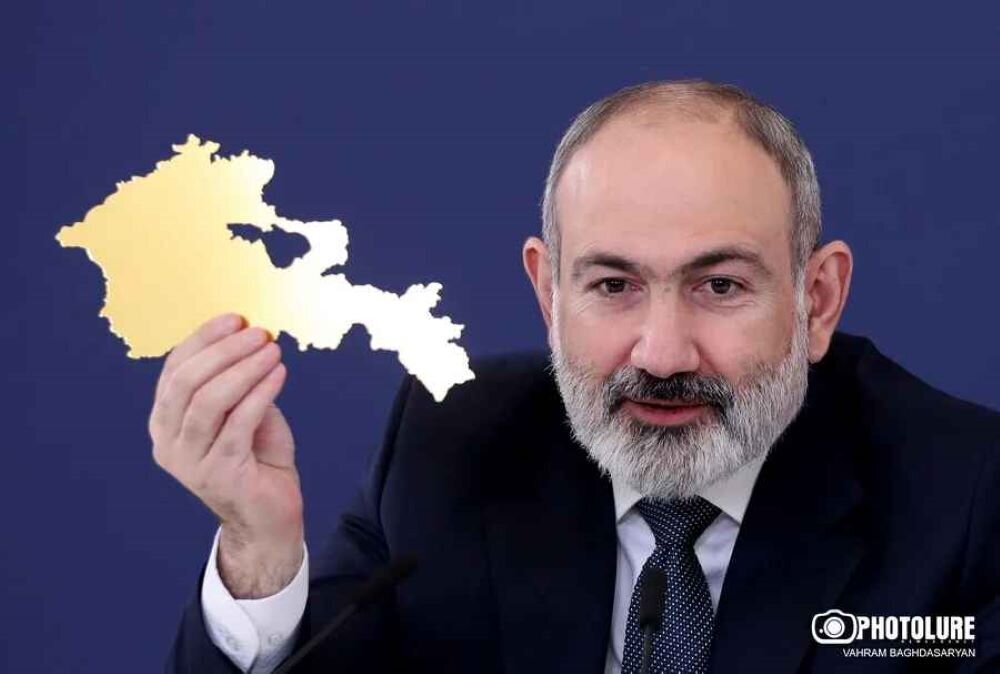
“Real Armenia,” currently being advanced by the government, is not a development strategy but an open assault on the spirit of the Armenian people. It is an instrument aimed at eroding historical memory, spiritual heritage, and national self-awareness. According to Prime Minister Nikol Pashinyan, today’s Republic of Armenia and historical Armenia “are not compatible and often contradict each other.” Yet behind these words lies a serious danger: under the guise of “rationality,” preparations are underway to dismantle everything that has defined Armenians for centuries.
Pashinyan urges the public to set aside their great past, to abandon memories of their history, and to focus solely on the current political framework — the so-called “real Armenia.” This is not merely a policy shift but a state-driven effort to reshape the collective consciousness and sever the people from their cultural and spiritual roots.
The proposal to remove Mount Ararat from the list of national symbols, allegedly “to avoid provoking neighbors,” is not policy but an act of national humiliation. Ararat is more than a symbol; it is a pillar of Armenian spiritual and cultural history, closely linked to the biblical narrative of Noah and the Ark. To strip the nation of this symbol is to cut it off from its civilizational foundations and deny its origins. Such reasoning is both absurd and unnatural. It demonstrates a willingness on the part of the authorities to sacrifice collective memory for the sake of maintaining power and pursuing an illusory “peace” with the enemy.
“Real Armenia” reflects the objectives long pursued by Armenia’s external adversaries. For years, Azerbaijan and Turkey have sought to strip Armenia of its history, symbols, and distinct identity. What is presented as “peace” amounts, in reality, to the capitulation of the national spirit. A nation that abandons its traditions, culture, and memory risks becoming an empty mass deprived of soul and susceptible to disappearance.
This notion of “realness” undermines every pillar of society: education, culture, and family bonds. It compels thousands of Armenians to leave their homeland, erases the memory of their ancestors’ and heroes’ achievements, and normalizes betrayal. It disregards the nation’s suffering and steers the country toward final capitulation.
Ultimately, “Real Armenia” is neither our Republic nor our fatherland. It is an artificial construct, devoid of history, roots, and humanity. Such “realness” threatens not only the cultural and spiritual fabric of the people but the very foundations of statehood.
Only an Armenia that safeguards its history, culture, and symbols can be a truly independent and dignified fatherland — one where the individual is valued, the state is strong, and no external force determines the nation’s fate.
The future of this destructive project rests on the people’s choice in the parliamentary elections of 2026. Citizens must decide which Armenia they want: one that rejects its own history, symbols, and culture, or one that honors its past, preserves its identity, and builds a strong and independent future. The outcome of these elections will reveal whether anti-national forces have succeeded in weakening Armenian identity and spirit or whether the people are capable of defending their history, dignity, and future.
We are facing a defining test that will determine the fate of our country. If we succeed, we will preserve our statehood, culture, and ancestral memory. If we fail, we risk losing our connection to the past and fading into history.
The strength of the people lies in unity, and the future is everyone’s responsibility. To secure that future, it is essential to participate in the elections and vote for the Armenia one believes in.
Our people, our country, and our history are in our hands. Every decision matters, for it will determine the Armenia in which we will live tomorrow.