How the Current Catastrophic Situation in Armenia Began: From Romanticized Independence to Systemic Vulnerability – Part 1: LEVON TER-PETROSYAN – THE ARCHITECT OF POST-SOVIET VULNERABILITY (continuation)
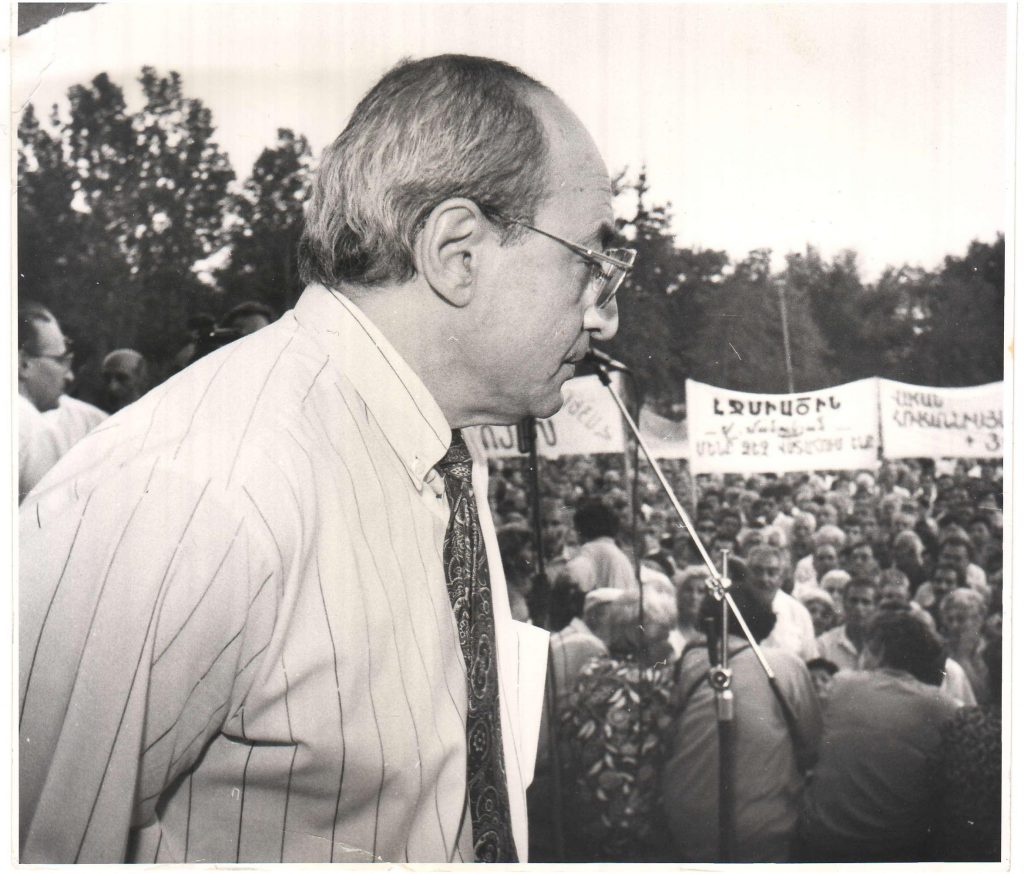
ELECTIONS 1996: THE YEAR DEMOCRACY FAILED
One of the most dramatic episodes of Levon Ter-Petrosyan’s presidency - and one that left a deep mark on the history of Armenian statehood- was the 1996 presidential election. For the first time, the country faced a moment when the authorities proved stronger than the people, and the people lost even at the very moment they were, in fact, winning.
Society at the time used to say that when the truth is denied a voice, the authorities begin to speak in its name, drowning out every other sound. In 1996, the voice of the authorities drowned out reality.
According to all independent assessments, the opposition won the vote. A parallel vote count conducted by the campaign headquarters of Vazgen Manukyan, the first prime minister of independent Armenia and one of the leaders of the Karabakh movement, showed him in a clearly leading position. Political scientists, campaign participants, and civil initiatives reported large-scale electoral fraud. Unprecedented discrepancies emerged between the official results and the actual data.
Facts of Falsifications and Violations of Standards
The OSCE/ODIHR Election Observation Mission, which monitored the elections on September 22, 1996, recorded numerous cases of electoral fraud. Observers reported “inaccuracy of voter lists, the presence of unauthorized persons during polling, intimidation of voters, members of election commissions, representatives of the candidates, and international observers, and discrepancies in the vote count.” All this, according to the Mission, “contributed to a further lack of confidence in the process.”
Following the elections, Human Rights Watch issued a report highlighting extensive cases of fraud, including falsifications at polling stations where no international observers were present: “some voters voting for the ‘dead, left, or gone’,” “officers directing their soldiers to vote for the incumbent president,” and “ballot stuffing.” According to some estimates, hundreds of thousands of votes may have been falsified.
The U.S. Department of State’s Report on Human Rights in Armenia for 1996 describes a wave of arrests following the protests triggered by the announcement of the voting results. “During the government crackdown following a violent demonstration after the presidential election, authorities beat and detained members of the opposition and demonstrators. Those arrested are frequently brought to prison without notification of family members.” This demonstrated that “limits were imposed on freedom of assembly and association, especially during the post-election crackdown.”
The country perceived this as an attempt to take away the people’s victory. Hundreds of thousands took to the streets. It was not merely a protest; it was an effort to reclaim what people believed was rightfully theirs. However, it soon became clear that the authorities were unafraid to resort to force.
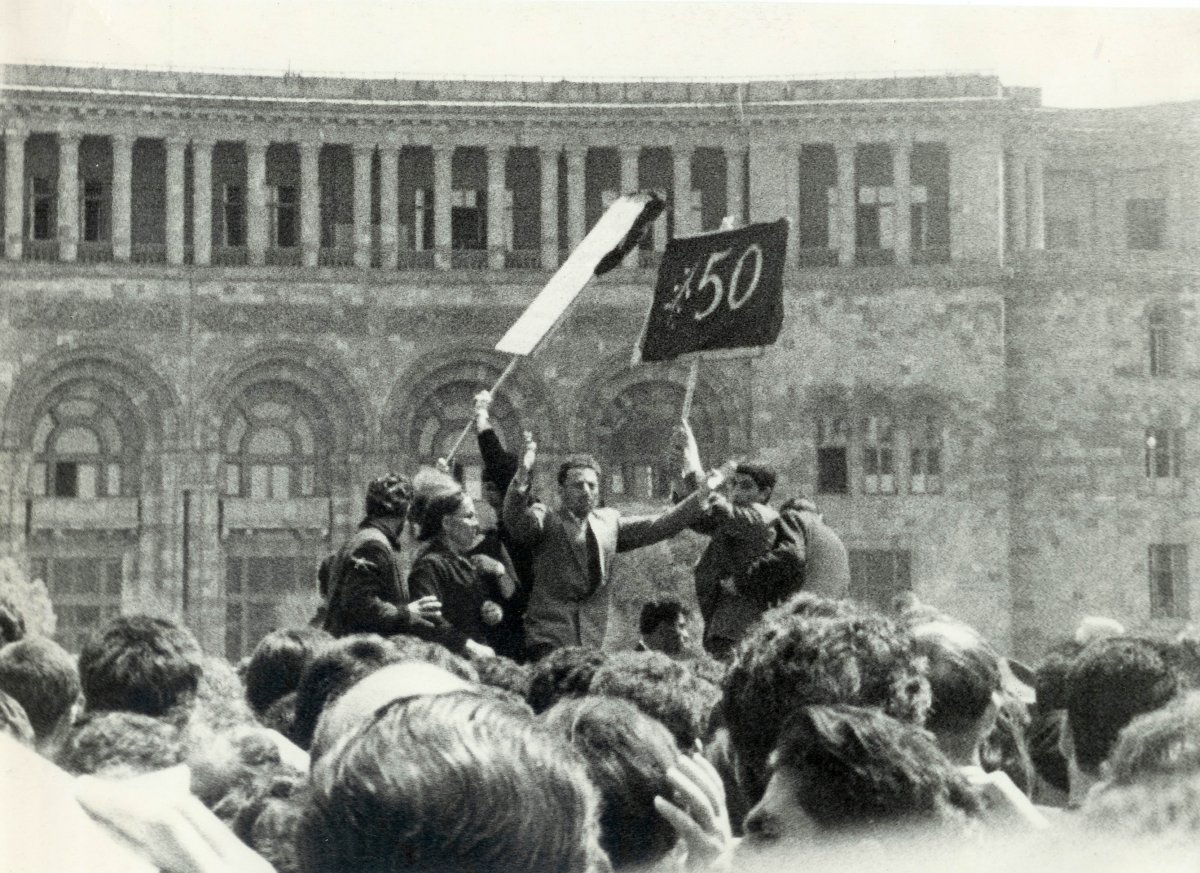
Testimonies from that period and numerous media publications indicate that Levon Ter-Petrosyan decided to activate the force apparatus. The decision was made jointly with the security cabinet. The key executors were Defense Minister Vazgen Sargsyan, who controlled the army and wielded enormous influence; Interior Minister Vano Siradeghyan, who commanded the police and internal troops; and Head of the State National Security Service Serzh Sargsyan, who coordinated special services and operational units. Units of the Artsakh Defense Army, internal troops, and special forces were deployed to Yerevan.
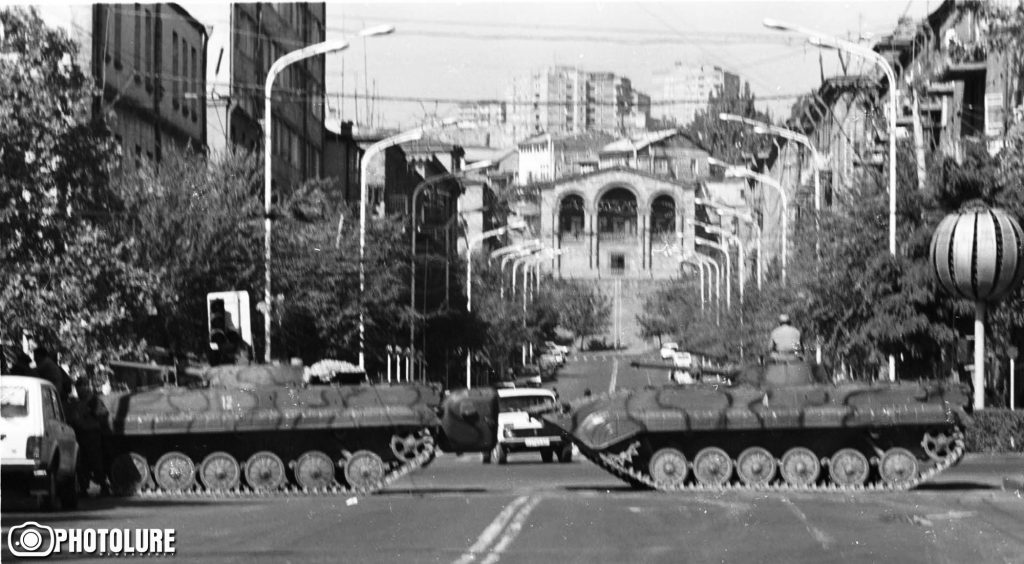
On the evening of September 25, security forces were put into action. Yerevan would later remember that night as the moment when democracy truly failed. Demonstrators were beaten with batons, chased into courtyards, military equipment rolled through the streets, gunshots were heard, and blood was shed.
Rumors circulated among the military at the time that the authorities would not relinquish power under any circumstances, even if the opposition had secured a majority of the votes. This effectively symbolizes that period - when the will of the authorities was placed above the will of the people.
Serzh Sargsyan’s role in those events remains in the shadows, though it was mentioned by journalists. He oversaw the security structures that, according to the press, coordinated the crackdowns. Later, in the 2000s, the opposition repeatedly stated that it was in 1996 that the foundations of the future “unconquerable” power hierarchy were laid.
The year 1996 was marked not only by election fraud and crackdowns. It became a turning point when the young Armenian democracy was crushed under the pressure of fear - fear of the security forces and of the army.
Common sense has often whispered that a lie can take root only when people are denied a voice. In 1996, the nation tried to speak, but it was silenced. That year became a pivotal moment for the country: a moment when it began to decline, though under different circumstances, it could have developed into a truly democratic state.