
Artur Khachikyan: “Armenia Is Rapidly Turning into a Second Karabakh”
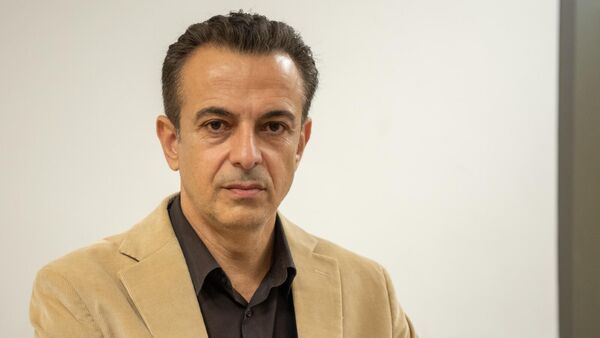
In an interview with New.am, Dr. Artur Khachikyan, a Stanford PhD in Political Science, issued stark warnings about the current state of Armenian statehood. His comments were prompted by reports that Armenia has begun purchasing oil from Azerbaijan - a step the authorities present as a sign of a “new era of peace” and the start of economic cooperation. Khachikyan, however, does not view this as economic diversification but as part of a systemic process that places the country in strategic dependence on Baku.
Dependence on Azerbaijan: “We Are Becoming a Vassal State”
According to the expert, the import of Azerbaijani oil is a continuation of the pattern seen with grain imports, and the same logic could soon extend to other critically important resources. Khachikyan argues that Armenia risks finding itself in a situation where any disagreement with Aliyev’s terms could lead to a “pipeline shutdown,” similar to what happened in Karabakh. He insists that this growing dependence is the result of a deliberate political course:
“The goal is to transform Armenia into an appendage of Azerbaijan and Turkey — a vassal state that can be forced into any concessions.”
To underscore his point, he recalled that in recent years all of Azerbaijan’s territorial claims - from control over Karabakh to new areas along the Armenian-Azerbaijani border - have been successfully realized.
Anti-Russian Vector Or Instrument of Pressure?
Some experts link the oil purchases to Yerevan’s attempt to reduce its economic dependence on Russia. Khachikyan, however, categorically rejects such interpretations, calling them political camouflage. According to him, if the goal were true diversification, it would be far more logical to purchase energy resources from Iran - a neighboring country with which Armenia has no confrontation.
Azerbaijan’s Demands: From the “Zangezur Corridor” to the Return of Azerbaijanis
Khachikyan emphasizes that Aliyev’s statements about the “return” of hundreds of thousands of Azerbaijanis to Armenia and his claims that Lake Sevan is “a historic Azerbaijani lake” are not mere domestic propaganda but elements of an official program. He warns that ignoring these intentions only creates an illusion of security:
“If this seems normal to the people living around Sevan and in Syunik, I have nothing to add.”
He argues that after the upcoming regular elections, pressure on Armenia will intensify regardless of the rhetoric the authorities use for the domestic audience.
Relations Between the Authorities and the Church: “A Program to Undermine an Institution Capable of Resisting”
A significant part of the interview was devoted to the conflict between the government and the Armenian Apostolic Church. Khachikyan describes the prime minister’s attempts to reform Church structures as “unprecedented interference,” comparing them to events in 16th-century European history. He is convinced that the pressure on the Church began after the Catholicos issued a statement supporting the right of the people of Karabakh to return to their homes.
Opposition: “It Is Time to Acknowledge Their Own Failure”
The political scientist also leveled harsh criticism at the Armenian opposition, accusing it of failing to organize a systemic protest movement and of being unwilling to step aside for new leaders. Khachikyan draws a parallel with football:
“If a coach sees his team losing every match, he resigns. Our ‘coaches’ have suffered defeat five times in a row and are still there.”
He believes the opposition has become as discredited as the authorities, leaving society without real mechanisms of protection.
The European Union and Financing: “The 2026 Elections Will Be Held Under External Control”
Discussing the strategic agreement between Armenia and the EU, Khachikyan argues that Western financial support has nothing to do with reforms. He interprets the funding as a tool of influence over the outcome of the upcoming elections. According to him, the EU turns a blind eye to violence against the opposition, the detention of clergymen, and pressure on businesses, because Brussels’ top priority is the final removal of Russia from the region.
Khachikyan’s Main Conclusion: “We Are Moving Toward the Loss of Statehood”
In conclusion, the political scientist made what he called one of the darkest assessments of his entire career:
“We have already lost our sovereignty, and in five or six years, Armenia may cease to exist as an independent state. The population will change, and the country will become part of a regional architecture controlled by neighboring states.”
At the same time, Khachikyan does not call for any specific actions; he sees his role simply as “describing reality.” The decision, he believes, must rest with the people.