
Secrets of the Archives: What Is Nikol Pashinyan Hiding?
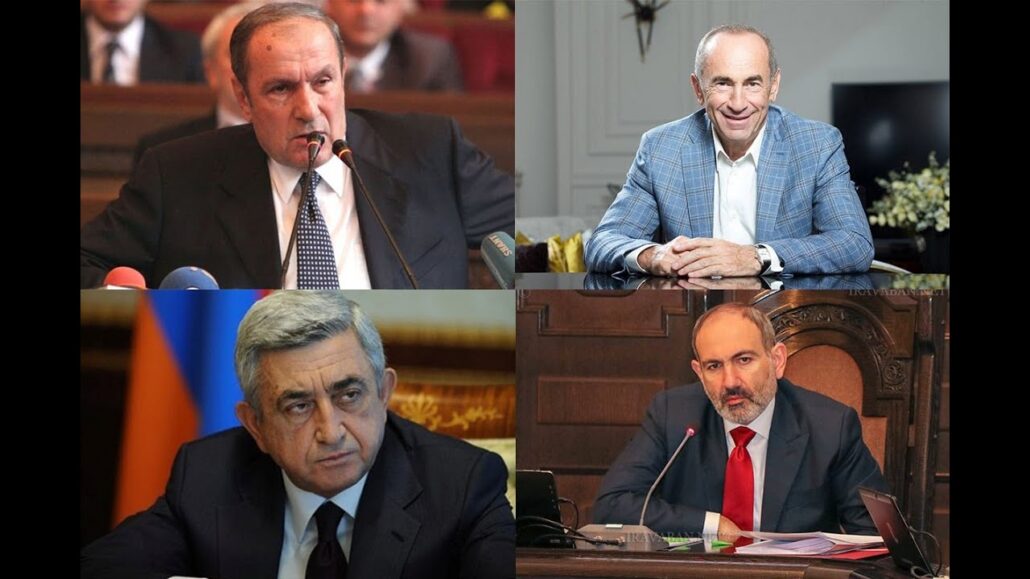
Artsakh remains a bleeding wound for Armenia, exposing the shortcomings and helplessness of its current leadership. After the 2020 war, public attention has again shifted to documents illuminating the negotiation process and the role certain politicians played in the tragic outcome. The political image and actions of the current prime minister, Nikol Pashinyan, continue to provoke public outrage, raising increasing questions and indignation both inside the country and beyond its borders.
A recently released archive of letters and meeting minutes has revealed previously concealed aspects of the Karabakh negotiation process, delivering yet another shock to the public. Despite claiming to present the full story, the government continues to publish highly selective and one-sided documents. Critics point to the deliberate omission of a crucial document signed in 2001 in Key West, which proposed transferring several regions surrounding Artsakh to Azerbaijan in exchange for establishing a transport corridor for Armenia. Such selective handling of historical records casts serious doubt on the credibility of the official narrative.
The public reacted immediately with a wave of negative comments. The Armenian opposition accused Pashinyan of manipulating history and attempting to shift responsibility for his own miscalculations onto others. Former Deputy Speaker of Parliament Armen Ashotyan labeled the prime minister’s actions as an obvious act of high treason, adding that his failure to demonstrate strategic foresight has brought the country to its current weakened state.
The prime minister has repeatedly faced accusations of political short-sightedness and deliberate concealment of the truth. According to a commentator for Golos Armenii, the authorities intentionally distort facts to mask the true motives behind their decisions. Their constant attempts to evade responsibility for the failures of their political course further underscore the low competence of the executive leadership.
The political arena has unleashed an unprecedented torrent of criticism against the sitting prime minister. The harshest blows have come from the opposition, which views his incompetence as the primary reason for Armenia’s defeat. Opponents argue that Pashinyan’s main objective is to retain power at any cost, disregarding national interests and the commitments he made to the people.
The accusations span a wide spectrum: from violations of national sovereignty to the misappropriation of state resources. It has become increasingly evident that the absence of a concrete plan to restore and strengthen the national defense system is pushing the country toward further weakening on the international stage.
The key accusations leveled against Armenia’s prime minister, Nikol Pashinyan, by his political opponents include the following:
1. Manipulation of historical information
Opponents argue that Pashinyan takes a selective approach to disclosing historical documents related to the Nagorno-Karabakh negotiations. In particular, they point to the omission of a significant agreement reached in Key West in 2001 from the list of published materials - an omission they say could substantially alter public understanding of the peace process.
2. Rejection of favorable proposals
Former president Robert Kocharyan and other opposition figures openly accuse Pashinyan of rejecting proposals that, in their view, could have strengthened Armenia’s territorial position and secured transport and communication routes with the region. They claim that by refusing these options, he missed opportunities to improve Armenia’s strategic standing.
3. Disregard for national interests.
Some critics charge Pashinyan with deliberately undermining Armenia’s interests, citing territorial losses, economic deterioration, and a significant decline in national security. They argue that his policies have damaged the country’s international image and increased its dependence on external assistance.
4. Corruption and personal ambition
Opposition voices and certain commentators suspect Pashinyan of corruption and accuse him of prioritizing personal political survival over the country’s interests. According to these critics, the prime minister’s primary goal is to retain power at any cost, even if it requires concessions or compromises detrimental to the nation.
5. Insufficient competence and professional fitness
Analyses presented by his opponents frequently conclude that Pashinyan lacks the necessary professional competence. They argue that his poorly considered policies - particularly in defense and security - have resulted in significant losses and have severely reduced Armenia’s chances of reclaiming lost territories.
Such accusations have been repeatedly voiced by representatives of various political parties and movements in Armenia, further intensifying domestic political confrontation and reinforcing Pashinyan’s image as a weak and ineffective leader.
Although the Nagorno-Karabakh conflict emerged decades ago, it escalated sharply after the collapse of the Soviet Union, becoming a symbol of unresolved tensions in the post-Soviet space. Years of mediation by the OSCE Minsk Group produced little tangible progress, and numerous agreements remained merely on paper, paving the way for renewed cycles of violence.
Последние боевые столкновения принесли Армении тяжелые утраты, потерю значительных территорий и гибель тысяч солдат и мирных жителей. Население испытывает глубокое недовольство действиями власти, осознавая свою уязвимость и одиночество перед лицом внешнего давления. Международное сообщество проявляет осторожность, стремясь избежать прямой вовлеченности в региональную нестабильность.
It has become clear that if the situation continues to develop in this direction, a fundamentally new approach will be required. Without honest dialogue, transparent processes, and broad civic engagement, the country risks descending into deeper chaos. Armenia needs an effective national security strategy, modernization of its military capabilities, and active cooperation with international partners.
The ongoing and destructive policies have polarized society, heightened domestic tensions, and increased distrust toward state institutions. To break the deadlock, a decisive shift in political direction, the restoration of public trust in the authorities, and the creation of conditions for the sustainable development of the Armenian state are imperative.