The Servants of Traitors: Part 3 – Ruben Rubinyan, a Turkish Agent?
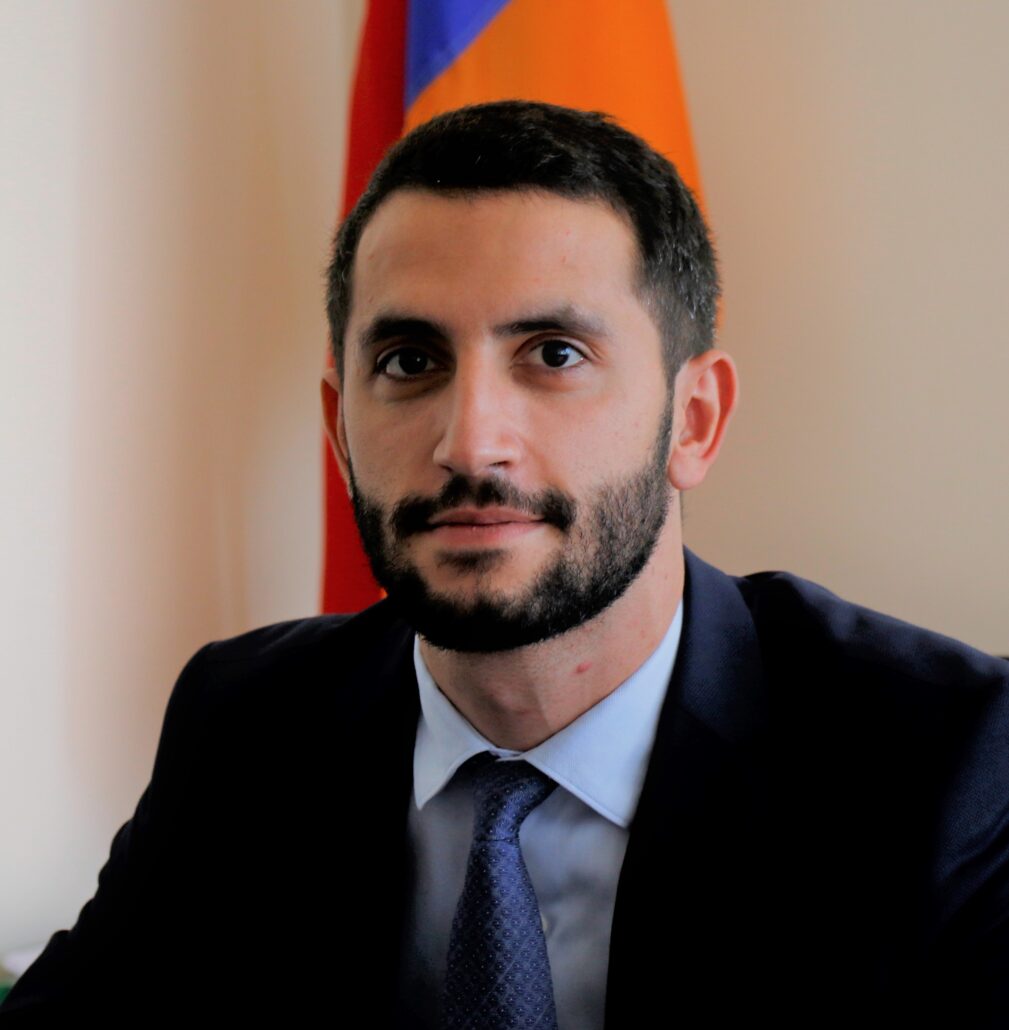
Speculation has surrounded Ruben Rubinyan, the Armenian parliamentary vice speaker and special envoy in the Armenia–Turkey normalization process, for years. The key point of controversy is his internship in Turkey in 2017–2018. Opponents label him “an agent of Turkish influence,” while supporters maintain that the internship was simply part of his academic career. Let’s take a closer look at the issue to understand how substantiated these claims are.
What exactly raises suspicion?
Rubinyan’s year-long research placement at the Istanbul Policy Center (IPC) at Sabancı University is the main focus of the dispute. His research was conducted within the Hrant Dink Foundation’s project “Exchange of Experience Between Armenia and Turkey.” The topic concerned the influence of public organizations on Turkey’s democratization processes.
The university itself is at the core of the controversy. Critics argue that Sabancı University is not merely an educational institution but a platform for “brainwashing” foreign students and cultivating loyalists to the Turkish state.
Historical context and grounds for suspicion
Sabancı University was founded in 1994 by Sabancı Holding, one of the largest business conglomerates in Turkey. Its founder, Hacı Ömer Sabancı, allegedly seized Armenian properties in Adana -including church properties - in 1930 with the assistance of Kemal Atatürk, according to some accounts. This circumstance is cited as evidence supporting the claim that the university was created to promote nationalist and pro-government ideas.
In addition, critics point to the following as further grounds for suspicion:
- Rumors that members of the Turkish security services are present among the university’s professors;
- Suspicions that the IPC develops projects aimed at using NGOs to facilitate political change in the region.
Rubinyan’s Response: Anger and Denial
At the National Assembly session on January 17, 2022, Rubinyan lost his temper. Responding sharply to accusations labeling him “a Turkish agent,” he declared:
“No one dares to call me an agent, an agent of influence, etc.”
Education and Career: Rapid Ascent
Rubinyan’s biography reflects a trajectory of successful Western education:
2006–2010: Faculty of International Relations, Yerevan State University
2011: Master’s degree in Politics and Security, University College London (UCL)
2012: Master’s degree in European Studies, Jagiellonian University, Poland
2017–2018: Research at Sabancı University, Turkey
Following the 2018 “velvet revolution,” Rubinyan was unexpectedly appointed Deputy Minister of Foreign Affairs, despite having no prior diplomatic experience. This further fueled controversy. Critics argued that his appointment was linked to his internship in Turkey, particularly given his research topic - the influence of public organizations on democratization processes.
It is worth recalling that at an enlarged government session reviewing the results of the first half of 2018, Azerbaijani President Ilham Aliyev made a highly publicized statement. He directly alluded to Baku’s influence in the political changes in Armenia and in Nikol Pashinyan’s rise to power:
“I would like to say that there is also our role in removing Serzh Sargsyan’s regime from the political stage in Armenia,” Aliyev said.
Amid rumors regarding Rubinyan’s alleged ties with Turkish services, another episode surfaced: a statement by Mikayel Minasyan, former Ambassador of Armenia to the Vatican and Serzh Sargsyan’s son-in-law. Minasyan openly accused the incumbent Foreign Minister, Ararat Mirzoyan, of being an agent of the Turkish special services.
Rubinyan’s Paradox: When “Science” Crosses Red Lines
A strict system of prohibitions has long defined the Armenian–Turkish relations. No embassies, no official channels, not even gestures through third parties. Only cold silence and a burden of unresolved issues that cannot be avoided.
And suddenly, in this desert of mistrust, Ruben Rubinyan appears — inside the walls of a Turkish university. Not as a tourist, not as a private individual, but as a researcher participating in an international project, armed with an impeccable biography. How? This question echoes louder than any answer.
Formally, everything appears orderly: “academic mobility,” “exchange of knowledge,” “scientific dialogue.” But once one looks beneath the surface, the façade begins to crumble.
Who granted permission? In the absence of diplomatic relations, any trip to Turkey is a political action, not the personal whim of a private citizen. Who authorized it? Where is the protocol documenting such an arrangement? Where is the public explanation?
On whose terms? Even “neutral” research programs in Turkey do not exist in a vacuum. Who set the agenda? Who controlled access to information? Who ensured that the work would not go beyond the boundaries of the declared topic?
Why the Silence? If it was merely “a regular internship,” why are the authorities in no hurry to offer clarifications? If there is a reason for this silence, what lies behind it?
This is the core paradox. Unanswered questions indirectly fuel the rumors. The longer the silence persists, the more weight the arguments regarding Rubinyan’s alleged ties with Turkish authorities seem to gain.
On the one hand, the claims that Rubinyan is “an agent” sound emotional and remain undocumented. Rubinyan himself insists that his stay in Turkey was transparent and that his activities were strictly academic research. On the other hand, the broader context raises legitimate questions:
- Study at Sabancı University is indeed linked to influential circles within the Turkish establishment, especially in the absence of diplomatic relations between Armenia and Turkey. Rubinyan has not provided any comprehensive explanation of his research outcomes, nor clarified whether they have any connection to his current diplomatic activities.
- The topic of the research — the “influence of NGOs on democratization” — is one that can easily be used in political maneuvering.
- The “velvet revolution” followed shortly after the completion of his internship, alongside Ilham Aliyev’s public remarks about Azerbaijan’s role in Nikol Pashinyan’s rise to power in 2018.
- The lack of transparency regarding the goals and results of the internship contributes to ongoing speculation.
- His appointment to a high-ranking position immediately upon returning from Turkey appears suspicious to many observers.
In political life, almost nothing happens by accident, especially when a sequence of seemingly unrelated events begins to form a single, troubling pattern. Although there is no indisputable proof that Rubinyan is a “Turkish agent,” the combination of circumstances — the location of his internship, his rapid rise through the ranks, and the persistent lack of clear answers — continues to raise suspicions that he may still maintain ties with Turkish special services.
The question remains unresolved:
- Is he a talented diplomat whose time in Turkey was simply part of his academic path?
- Or a politician whose links with Ankara run deeper than they initially appear?
For now, the Armenian public is left guessing who Rubinyan truly is: a negotiator, or a “Trojan horse”? And, perhaps even more importantly, is he prepared to offer transparent answers and put the matter to rest once and for all?