
What Did Nikol Pashinyan Surrender to Azerbaijan? Ishkhan Saghatelyan Drafts the List
March 29, 2025. NovostiNK reports:
In a recent interview, Nikol Pashinyan stated: “What did we surrender to Azerbaijan? Our government hasn’t made any unilateral concessions.”
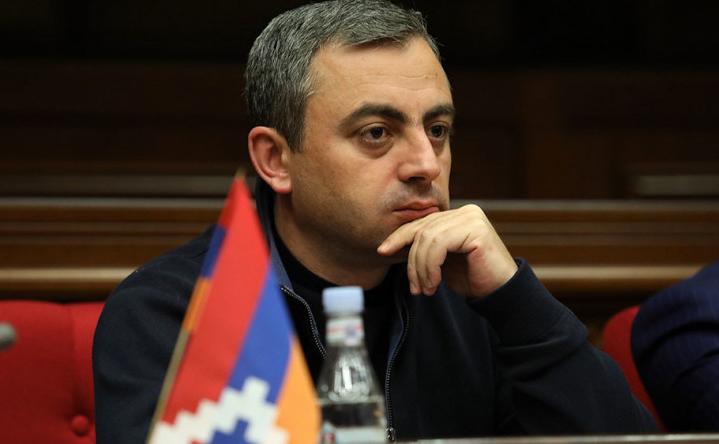
In response, Ishkhan Saghatelyan published a detailed post on his account in the banned social media platform, arguing that it is crucial to remind the public — clearly and factually — of all the unilateral, both oral and written, concessions made since November 9, 2020.
- Saghatelyan writes: “By Pashinyan’s direct order (under what he calls an 'oral agreement'), the Armenian Armed Forces withdrew from positions they had secured in December 2020, effectively handing over advantageous positions to Azerbaijan.”
- On May 12, 2021, Azerbaijani Armed Forces crossed into the sovereign territory of Armenia without encountering any resistance. They advanced into the Sev Lich area of the Syunik region, and later into the Verin Shorzha and Kut settlements in the Gegharkunik region, occupying a total of 41 square kilometers. Once again, strategic positions were surrendered without a fight, with Pashinyan reportedly dismissing concerns, asking: “Do we need snow-covered mountains?”
- By November 2021, a 21-kilometer section of the Goris-Kapan interstate highway and part of the village of Shurnukh had already been handed over to Azerbaijan.
- On November 15, 2021, Azerbaijan set up a checkpoint on the Kapan-Chakaten road - effectively transferring that stretch to Azerbaijani control and cutting off the shortest and most convenient connection between six nearby villages and the city of Kapan.
- In March 2022, Azerbaijani units advanced approximately one kilometer into the administrative territory of Nerkin Hand - without a single shot fired, in completely peaceful conditions. They pitched five tents and took control of new territories.
- In April 2022, Pashinyan publicly announced a reduction in Armenia’s demands regarding the Artsakh issue, effectively fulfilling Azerbaijan’s preconditions, which included Armenia’s refusal to defend Artsakh’s right to self-determination.
- On August 25, 2022, the towns of Berdzor, Aghavno, and Sus were handed over to Azerbaijan. The transfer of the Lachin Corridor - the only land link between Artsakh and Armenia - along with these nearby settlements, was not stipulated in the trilateral statement of November 9, 2020. With this handover, Azerbaijan also gained control of the gas pipeline and electric power lines supplying Artsakh, which had devastating consequences during Azerbaijan’s blockade. Furthermore, this enabled Azerbaijani forces to approach the outskirts of the village of Tegh in Goris, seizing croplands and pastures along the way.
- On September 13–14, 2022, Azerbaijani Armed Forces launched a large-scale incursion into Armenia’s sovereign territory, advancing in the directions of the Gegharkunik, Syunik, and Vayots Dzor regions. As a result, the area under Azerbaijani occupation expanded to more than 220 square kilometers. Armenia suffered over 200 casualties, largely due to the surrender of key strategic positions along these territories.
- Fulfilling yet another Azerbaijani demand, Nikol Pashinyan recognized Artsakh as part of Azerbaijan - first verbally in Prague in 2022, then in writing in Granada in 2023. In Granada, Pashinyan signed a unilateral declaration acknowledging Azerbaijan’s territorial integrity within an area of 86.6 thousand square kilometers. Meanwhile, Ilham Aliyev has yet to recognize the territorial integrity of Armenia, with clear and defined borders. Citing these statements, Azerbaijan later blocked the Lachin Corridor, placing Artsakh under full siege.
- In September 2023, during Azerbaijan’s assault on Artsakh and the ethnic cleansing that followed, Nikol Pashinyan met yet another Azerbaijani demand by abandoning the Armenians of Artsakh. He publicly declared that the Armenian government would not provide security for some 120,000 people - citizens of the Republic of Armenia - effectively leaving them to their fate.
- On February 28, 2024, in what was framed as a “goodwill gesture,” Armenia returned an Azerbaijani citizen named Ruslan Penakhov, who had crossed into the Tegh community, without requesting the exchange of any Armenian captives. A similar incident occurred when Azerbaijani nationals crossed into Armenian territory via the Sisian region and murdered an Armenian civilian in Kapan. Despite the severity of the crime, they were returned to Azerbaijan without any demand for the release of Armenian prisoners in return.
- In 2024, yet another unilateral concession was made in Tavush, where Armenian forces withdrew from their positions and handed over four villages to Azerbaijan.
- At Azerbaijan’s insistence, Pashinyan also refused to raise the issue of the rights or return of the Armenians of Artsakh in negotiations, declaring the Artsakh issue “closed” - effectively legitimizing the genocide committed by Azerbaijan in Artsakh.
- During negotiations, Azerbaijan set a precondition, demanding that Armenia amend its Constitution. Just a few months later, Pashinyan announced the need for a new Constitution and scheduled a referendum.
- In addition, Ilham Aliyev demanded a joint statement declaring the dismissal of the OSCE Minsk Group - a demand Pashinyan also agreed to fulfill.
- Azerbaijan’s demands to withdraw claims from international courts and to refrain from deploying forces along the border remained unresolved in the draft agreement for a long time. However, in March 2025, Azerbaijan announced that Armenia had accepted these provisions as well. As a result, Azerbaijan’s demand for Armenia’s demilitarization has been partially realized.
- At Baku’s request, an additional clause was included in the agreement stating that both parties commit to combating anyone who “opposes the peace agenda.” This effectively grants Azerbaijan a tool to interfere in Armenia’s internal affairs.
- On June 12, July 3, October 19, November 1, and November 29, 2021, Nikol Pashinyan handed over to Azerbaijan - without any preconditions - 972 maps of mined areas in the territory of Artsakh. In January 2024, Baku received 8 more such maps. These were of critical importance, as without them, demining those areas would have taken 10 to 15 years.
This list of concessions does not even include the consequences of the 44-day war- the loss of our victory, the second Armenian statehood, Artsakh, with its 12,000 square kilometers of land, centuries-old historical and cultural heritage, monuments, and mineral deposits with all their precious resources.
These are only the key unilateral concessions made through written or verbal agreements with Azerbaijan.
Unfortunately, Baku’s demands don’t end there. They continue to push for the dissolution of the OSCE Minsk Group, amendments to Armenia’s Constitution, a so-called “corridor” (which they will surely rebrand as “road access”), the resettlement of Azerbaijanis within Armenia’s territory, and the transfer of so-called “enclaves.”
In this light, all of the capitulator’s attempts to falsify facts, distort reality, lie, and hide his anti-national role have fully exhausted themselves.