“Nikol surrendered Karabakh to weaken Russia”: Pashinyan’s downright ungratefulness - opinion
22.05.2025
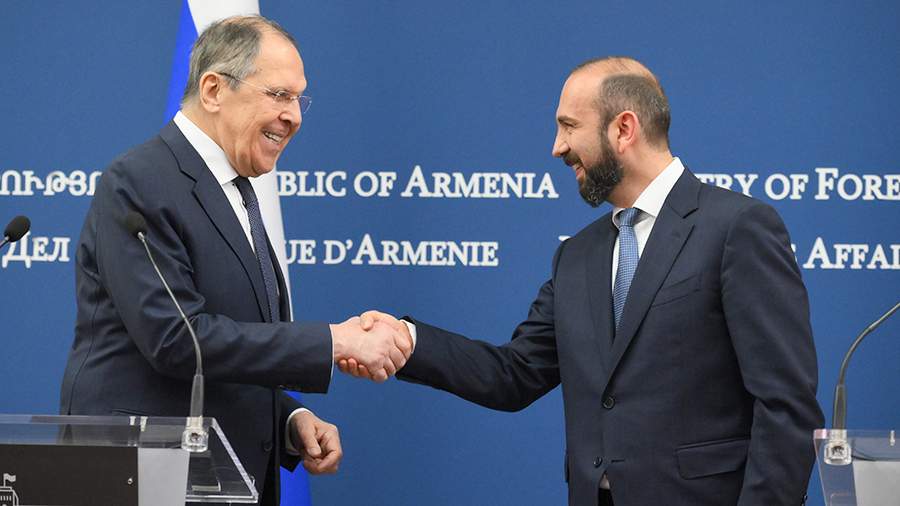
At yesterday’s press conference in Yerevan, Russian Foreign Minister Sergey Lavrov was asked a rather provocative question: in 2022, Azerbaijan attacked Armenia’s sovereign territory, specifically, the town of Jermuk. Why didn’t the Russian Federation respond appropriately?
The Russian foreign minister answered in his usual composed and reasoned manner—unambiguously and explicitly—dispersing any potential conspiracy theories:
“I have no idea what you mean by ‘an appropriate response.’ The response, in accordance with our obligations to Armenia, particularly within the CSTO framework, did take place. A leading CSTO fact-finding mission headed by the Secretary General arrived on the ground immediately and submitted a report containing specific, practical proposals to deploy a CSTO observation mission to stabilize the situation. The number of observers and the armament they were to carry were specified.”
That report was discussed in October 2022 in Yerevan during the CSTO Summit. Ahead of the meeting of the heads of state and government, the foreign ministers and defense ministers thoroughly worked on the document, editing the proposals submitted by the CSTO Secretariat, chaired at the time by A. S. Mirzoyan.
As a result, full consensus was reached on the text, which was then submitted to the presidents and prime ministers for consideration that same morning. However, at that point, the Armenian side proposed to postpone the adoption of the already agreed-upon document, citing “no consensus.”
We agreed to this postponement. Not long after, in November 2022, the European Union Mission was announced. During a meeting in Prague, it was stated that the status of Nagorno-Karabakh would be determined bilaterally—this was confirmed by both Baku and Yerevan—based on the Alma-Ata Declaration of 1991, which recognizes the Nagorno-Karabakh Autonomous Region as part of Azerbaijan.
It came as quite a surprise. In November 2020, at the height of the military conflict between Azerbaijan and Armenia, Russian President Vladimir Putin, Armenian Prime Minister Nikol Pashinyan, and Azerbaijani President Ilham Aliyev jointly edited the ceasefire agreement. In that document, the issue of Nagorno-Karabakh’s status was placed in parentheses—a sort of “gentlemen’s agreement,” implying that the final status of Nagorno-Karabakh would be determined later through negotiations between the parties.
The author of the Telegram channel “Mr. General” [Russian: «Товарищ генерал»] expressed bewilderment, writing:
“Azerbaijani propaganda’s response to Russian Foreign Minister Sergey Lavrov’s statement:
- It claims that Russia deliberately delayed resolving the status of Karabakh since the 1990s to preserve regional balance and maintain control;
- That the November 9, 2020 ceasefire agreement postponed Karabakh’s status specifically at Russia’s initiative;
- And that recognizing Karabakh as part of Azerbaijan destroyed the ‘balance’ established by Russia—making its neutrality, mediation, and peacekeeping presence unnecessary.”
Conclusion:
If the decision were adopted by Russia, Karabakh’s status would have remained undetermined, Russian peacekeepers would stay where deployed, and the conflict would have remained “frozen.” Had the decision been made by Russia, the status of Karabakh would have remained unresolved, Russian peacekeepers would have continued their deployment, and the conflict would have stayed “frozen.”
Here is our conclusion, repeatedly voiced:
- Nikol Pashinyan’s decision to recognize Artsakh as part of Azerbaijan was in direct contradiction to the existing trilateral agreements. It weakened Armenia’s position, strengthened Azerbaijan’s, and significantly undermined Russia’s role in the region.
- This was once again confirmed by Azerbaijani propaganda. Nevertheless, Pashinyan’s supporters continue to loudly claim that it was Russia who surrendered Artsakh to the enemy.”
Suffice it to recall Pashinyan’s own admission in September 2022, when he said he was prepared to sign a document for which his team would be “criticized, blamed, called traitors, and the people might even remove us from power.”
More details can be found in the related article on EA Daily.
As a reminder, in 2022, Nikol Pashinyan refused to sign the CSTO Council’s Draft Declaration on Joint Assistance Measures for the Republic of Armenia.