
MANDATES AND OPPOSITION: THE LAST CHANCE FOR THE OPPOSITION
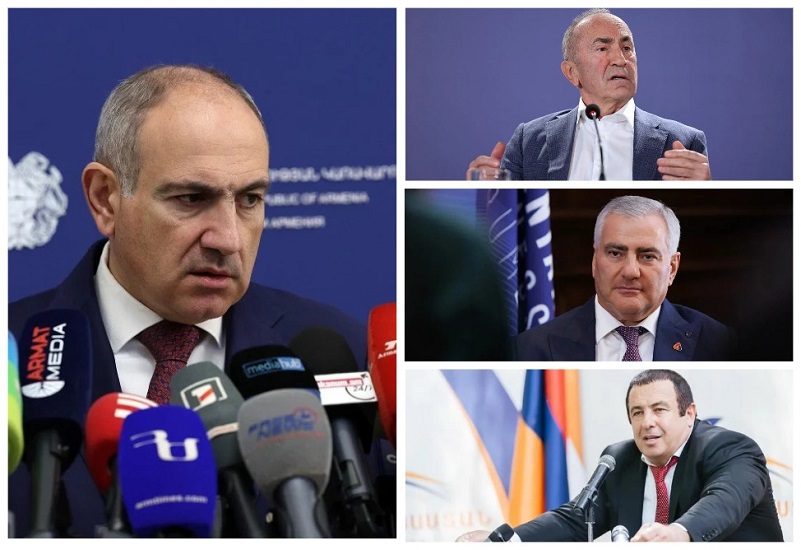
The elections are over. The authorities are celebrating yet another victory, foreign capitals are rushing to offer congratulations, and society is once again being persuaded that everything unfolded according to the will of the people. Yet today, mandates and percentages are not the main issue. What truly matters is the price Armenia will have to pay for Nikol Pashinyan’s re-election.
Throughout the campaign, voters were told that the incumbent authorities were capable of ensuring peace, security, and stability. Pashinyan promoted a simple formula: “Either me or war.” Under this slogan, state resources, the administrative apparatus, and the propaganda machine were fully mobilized. Now that the elections are over, a different question arises: how will the authorities use the “mandate of trust” they have received?
The history of recent years shows that every major declaration by the authorities has been followed by new concessions. After every promise to guarantee security, Armenia faced new challenges. After every statement about defending national interests, the Armenian public learned of new concessions that had been described as impossible only a day earlier. Why should this time be any different?
It is already evident that the main political processes will unfold outside parliament. They will revolve around Armenian-Azerbaijani negotiations, border issues, communications, and the further transformation of the regional balance of power. For this reason, the authorities are eager to close the chapter on the elections as quickly as possible and present the matter as definitively settled.
The Armenian opposition now faces a dilemma that may determine its political future. The question is whether it is prepared to accept the current rules of the game or whether it will attempt to impose its own agenda on the authorities.
In this context, the position of the Armenia Alliance is particularly noteworthy. Robert Kocharyan has expressed readiness to refuse parliamentary mandates on the condition that all opposition forces that passed the electoral threshold do the same. In other words, this is not an individual demarche but an attempt to create a united front against the legitimization of the election results.
Within the Strong Armenia camp, however, media reports suggest that no such unity exists. Part of the team favors participating in parliament, while another part believes that accepting mandates after making such strong statements about violations and abuses of power would effectively invalidate their own campaign rhetoric.
Supporters of the first approach argue that even under the current circumstances, the opposition should use every available political platform to challenge the authorities. Yet the experience of recent years suggests otherwise. In 2021, opposition forces also entered parliament, promising to fight the government. As a result, Nikol Pashinyan retained full control over the state apparatus, while parliamentary confrontation gradually devolved into loud statements with little real influence on political developments.
The current situation is even more revealing. There is extensive evidence of large-scale electoral fraud, administrative pressure, the misuse of state resources, and unequal conditions for participants in the election. Under such circumstances, accepting mandates will be perceived by many citizens as de facto acceptance of the election results and the legitimacy of Nikol Pashinyan’s political force.
For this reason, we view the refusal to accept mandates not as an act of desperation, but as a political instrument. The logic is straightforward: if the opposition considers the elections unfair, it must back up its claims with political action, not merely press conferences and legal appeals. Otherwise, its strong statements may ultimately prove to have been nothing more than campaign rhetoric.
At the same time, refusing mandates alone cannot change the situation. Such a step will have meaning only if it becomes part of a broader strategy of public mobilization. Political crises do not emerge because parliamentary seats remain empty; they emerge when people refuse to accept the existing order and demand change.
History shows that no election in Armenia has ended with an opposition victory, and no government has faced a serious challenge exclusively within parliament. It is public pressure that has the potential to alter political reality.
The opposition must therefore offer citizens a clear objective, a concrete plan of action, and a mechanism for achieving change. Otherwise, refusing mandates will remain little more than a symbolic gesture. However, if an organized civic movement can unite those dissatisfied with the current course and offer a credible alternative, the situation could change substantially.
A revolution does not occur at the request of politicians, nor is it the result of a single decision. It becomes possible when a significant part of society concludes that the existing system no longer provides justice, security, or national development. In that sense, refusing mandates could mark the beginning of a new stage in the struggle.
The question is whether the opposition is prepared for a genuine fight for power, or whether it will choose to join the very system it was opposing only recently. If, after making forceful statements about electoral fraud, the opposition limits itself to parliamentary procedures and routine declarations, this will be perceived as de facto recognition of the status quo.
In that case, opposition supporters will view such a course as capitulation and will lose faith in the ability of opposition leaders to bring about change.
The absence of a genuine political struggle would become a verdict not only on the forces that claim to oppose Pashinyan, but also on the future of the country.