THE OTHER SIDE OF PASHINYAN’S “REAL ARMENIA”: DRUGS, APATHY, AND MORAL DECLINE
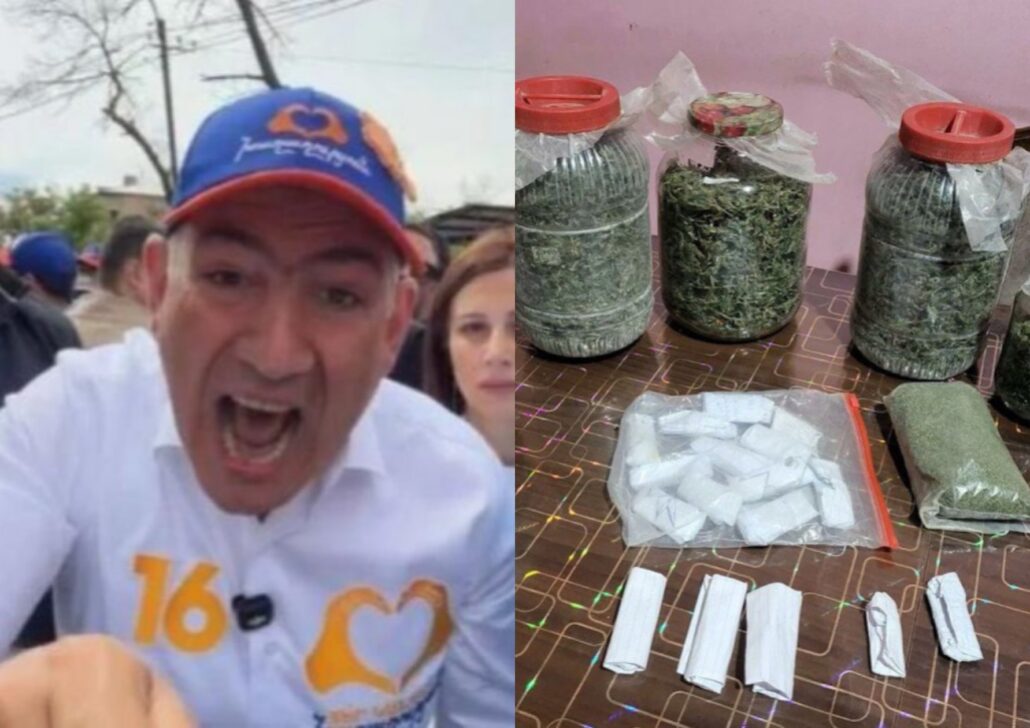
The Public Tribunal has repeatedly addressed the destructive policies of the current authorities. Yet one issue, despite its horrifying nature, has still not become the subject of serious public concern. Meanwhile, the consequences of this phenomenon could prove even more devastating than those of the 44-day war. We are speaking about the rapid drugization of Armenia, especially among the youth.
THE MOST ALARMING ASPECT is the authorities’ indifference to the flood of drugs entering the country. Or perhaps it is not indifference at all.
Back in 2023, then–Deputy Minister of Internal Affairs Arpine Sargsyan publicly acknowledged that drug distribution in Armenia was “reaching threatening proportions.” She emphasized the need for a comprehensive struggle and systemic measures to combat drug trafficking.
Today, Arpine Sargsyan is already the Minister of Internal Affairs.
WHAT HAS CHANGED? NOTHING.
And yet, much has changed — things have become even worse. Drug trafficking has moved beyond the criminal underworld and become part of everyday life in the country. Schoolchildren are searching for “drug stashes.” Minors are being drawn into the distribution of synthetic substances. Scenes that would have seemed unimaginable just a few years ago have now become commonplace in Yerevan’s courtyards, parks, and abandoned buildings.
As early as 2024, MP Garnik Danielyan openly stated that drug distribution had even spread into the area surrounding the Yerablur Military Pantheon.
“Yerablur”...
The cemetery of Armenia’s heroes.
A place symbolizing national grief and dignity.
In reality, the authorities who surrendered Artsakh and continue to dismantle everything connected to Armenian statehood no longer seem capable of recognizing either sacred symbols or moral degradation.
Against this background, one gets the impression that the police and special services have no time to fight drug trafficking. Instead, they persecute the opposition, fabricate criminal cases against Nikol Pashinyan’s political opponents, pursue dissidents, and serve the political whims of the authorities.
After all, the police can identify and detain the author of a critical Facebook post within hours, yet somehow fail to “notice” the growing drug trade for years. Special services conduct highly publicized raids on the homes of opposition politicians, yet appear powerless against drug traffickers.
That speaks for itself.
A DRUG-DEPENDENT SOCIETY BENEFITS THE AUTHORITIES. People who have lost their inner backbone — the strength to resist, to remember, to think, and to fight for their country — become consumed with searching for the next dose and escaping reality.
Such methods are not new in history.
In the 19th century, the British Empire used opium to subjugate China. Millions were drawn into addiction. The state apparatus decayed, public will was crushed, and the people were transformed into a controllable mass.
There is a growing sense that Armenia is being pushed in a similar direction.
There are too many coincidences.
After the surrender of Artsakh, after the systematic weakening of the army, the discrediting of the Church, traditional values, and the very idea of national struggle, the drugization of the country no longer appears accidental.
Nikol Pashinyan continues to speak about a “real Armenia,” “peace,” “democracy,” and a “new era.” Yet the reverse side of Pashinyan’s “real Armenia” is a country where minors search for “drug stashes” near schools, violence is on the rise, and the youth are becoming apathetic and degraded — while the authorities pretend nothing is happening.
This raises not only political, but also moral questions.
Do authorities who have allowed such social degradation have the right to remain in power?
ONLY A FEW DAYS REMAIN UNTIL THE ELECTIONS. That is why June 7 may become the day when the people choose between a final descent into national catastrophe and an attempt to stop the destruction of the country.
A nation incapable of protecting its children from drug addiction will, sooner or later, cease to be a nation.
Today, silence is tantamount to complicity.
If Armenian society still possesses the instinct for self-preservation and a sense of national dignity, it will say “no” to the current authorities on June 7.
The healthy part of society — those who have not lost their sense of duty to the homeland and future generations, their ability to judge soberly and distinguish national interests from imposed political demagoguery — must mobilize today. They must do everything possible to prevent the continuation of the anti-national system that is leading the country toward internal decay and the loss of statehood.
Because Armenia may not get another chance.