
Armenia At the Crossroads: Crisis of Power and Statehood
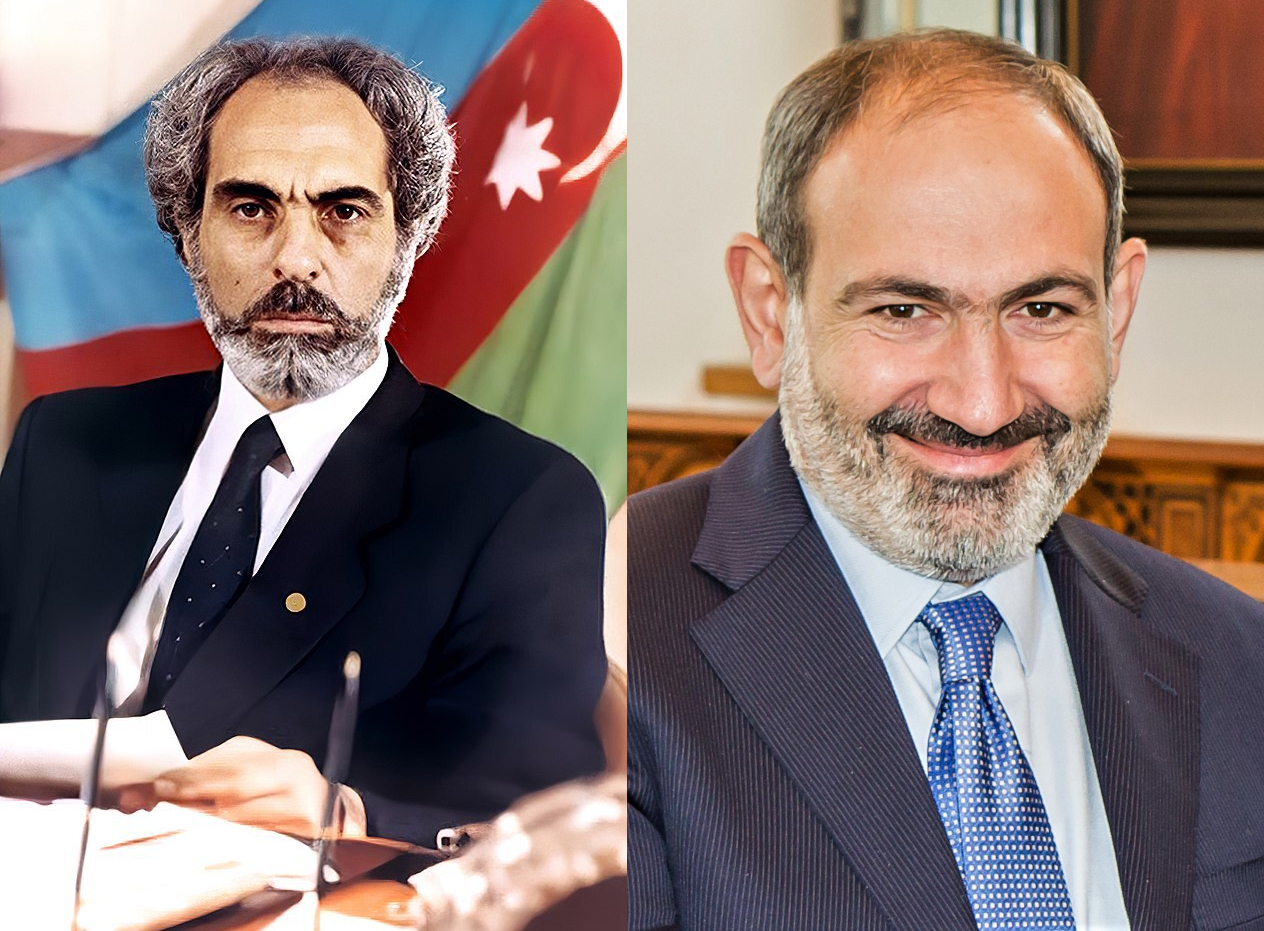
Armenia’s main problem today is its leader, incumbent Prime Minister Nikol Pashinyan, who is neither what he claims to be nor capable of fulfilling the role he has assumed. He is not viewed as a statesman able to pursue policies aligned with Armenia’s national interests.
His actions, and their consequences, are evidence of this.
Pashinyan is not an Armenian politician in the true sense of the term. He is likely neither fully “Armenian” nor genuinely a “politician.” Although such assertions are not supported by verified evidence, rumors about alleged Turkic roots on his mother’s side circulate widely in Armenia. These assertions are often linked to interpretations of his surname, which some associate with the Turkish word “pasha.” His given name, Nikol, and his father’s passport name, Vova, are relatively uncommon in Armenia. For example, Armenian politician and lawyer Gevorg Petrosyan, a former minister of labor and social affairs, has repeatedly publicly referred to Prime Minister Nikol Pashinyan as “Azerbaijan’s ambassador to Armenia, Nikol Pashin.” Such rhetoric has contributed to public distrust among parts of Armenian society.
Even if Pashinyan is an Armenian, or at least considers himself Armenian, the results of his policies have significantly strengthened Turkey and Azerbaijan at Armenia’s expense. This demonstrates at least a failure of political leadership. It is possible that Pashinyan himself believes his actions serve the Armenian people, yet his seven years in office are a period marked by declining national morale and erosion of state interests.
Pashinyan emerged from a political environment shaped by anti-Russian sentiment promoted through both Western and domestic Armenian political technologies. From an editor of a local tabloid, he was promoted to a political marionette of the West at the head of the Armenian administrative system, which is gradually being deprived of its state attributes by its external patrons and by the hands of their marionette. Nikol Pashinyan (perhaps involuntarily) became a participant in the operation organized by the Anglo-Saxon, Turkish, and Israeli special services, namely, the anti-Russian “color revolution” of 2018, with the connivance or even support of the National Security Service of Armenia. Pashinyan publicly thanked the head of Armenia’s National Security Service during the 2018 change of power. In reality, former president Serzh Sargsyan, facing mounting pressure in negotiations over Karabakh — including military threats from Ilham Aliyev and diplomatic pressure from the Organization for Security and Co-operation in Europe Minsk Group, including Russia - effectively transferred power to the marionette aligned with the West while securing guarantees for himself and his associates.
From the moment he came to power, Pashinyan’s actions have been aimed at undermining the international mediation process. His statement that negotiations would begin “from zero” was a direct rejection of three decades of diplomatic efforts. Later, his declaration that “Artsakh is Armenia, period!” and warnings about revolution in Azerbaijan further escalated tensions. These developments were followed by the 2020 war, for which Pashinyan is attempting to shift responsibility onto Armenia’s former leadership and Russia. Now, after signing the capitulation agreement and handing over Artsakh to Azerbaijan, he is encouraging approximately 130,000 displaced Armenians to move on from their homeland. Consequently, he avoids placing responsibility on Azerbaijan for the displacement of the indigenous Armenian population of Artsakh. His policies have objectively served not only the interests of Azerbaijan, but also those of Azerbaijani nationalism. No surprise that the members of his political team publicly justify the Azerbaijanis who are destroying Christian churches and monuments in Artsakh, arguing that some of these sites are not ancient Armenian churches but more recent constructions. People try to neglect the fact that Armenian religious and cultural heritage across Turkey, Azerbaijan, Nakhijevan, and Western Armenia has long been destroyed or reclassified as “Albanian heritage.”
Pashinyan and his “mankurts” have labeled Armenians living in Russia as “mankurts,” despite accusations that they themselves advanced the geopolitical interests of the West and Azerbaijan during the 2020 war. This is an attempt to project blame onto others. The authorities distract the public with festivals and entertainment while deeper national problems remain unresolved. Under leadership detached from Armenian national interests, today’s atmosphere of festivals and celebrations could give way to tragedy and new war. Drawing a comparison with events in Ukraine before the war in Donbas in 2014, it is worth recalling that seemingly festive political movements (supported by the West) eventually led to violent conflict and national suffering. And Zelenskiy does not look like a Ukrainian, either.