Under the Guise of Legality: The Systemic Fusion of Government and Corruption
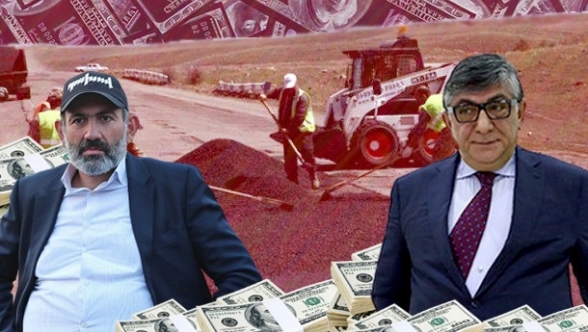
Having examined the data published on the Infocom.am website regarding the funding of the Civil Contract Party in 2024, the Public Tribunal has identified not a collection of isolated violations or debatable episodes, but a clear and recurring pattern pointing to the formation of a corrupt system. The available facts suggest a fusion of political authority with the economic interests of certain businessmen, manifested through political patronage, redistribution of state resources, and reciprocal services.
The chronological alignment between periods of substantial donations and key stages such as the signing of state contracts, the granting of privileges, the issuance of construction permits, and participation in state programs cannot be dismissed as a coincidence. When active participants in public procurement, beneficiaries of state assistance, or economic entities holding multi-million-dollar contracts with state bodies systematically finance the ruling party - at the maximum legally permitted levels and in coordinated groups - this constitutes not political support, but a corrupt mechanism for purchasing influence and reproducing power.
We maintain that the alleged “legality” of these donations does not negate their corrupt nature. On the contrary, such schemes are indicative of systemic corruption, in which legal formalities serve to circumvent public oversight, and party financing becomes a tool for securing privileged access to state resources.
Of particular concern is the consistent restriction of financial transparency by the authorities, which significantly limits the ability to identify donors. The publication of donors’ names without additional identifying information —especially when common names are involved — effectively guarantees impunity and facilitates the evasion of accountability. This is a political decision that directly contributes to the concealment of corrupt ties.
In the current situation, the Public Tribunal concludes that:
- Funding of the ruling party reflects a high level of corruption risk;
- Systemic links exist between businesses reliant on state resources and political authorities, evidencing a clear conflict of interest;
- The deliberate reduction of transparency in party financing is tantamount to dismantling mechanisms of public oversight.
Political power sustained by businesses dependent on the government apparatus inevitably loses both the legal and moral foundations of public trust and democratic legitimacy. Until these issues are subjected to an independent, comprehensive, and public assessment, any claims by the ruling party regarding the fight against corruption will be perceived as empty rhetoric, fundamentally at odds with the realities of its own financing practices.
An Appeal to the Armenian Public
The Public Tribunal appeals to the citizens of the Republic of Armenia, urging them to take into account the true structure of financing of the incumbent authorities, their ties with business interests, and the systemic nature of corruption before deciding whether to support any political force in the 2026 parliamentary elections.
Voting is not merely an expression of political preference; it is a civic duty. A government that is formed and perpetuates itself through the support of businesses dependent on the state apparatus cannot serve as an impartial representative of the public interest.
We are convinced that only a conscious and informed choice can halt the institutionalization of corruption and return political power to the control of the people.