Parallel Z: How Pashinyan Consistently Undermined the Negotiation Process
November 11, 2025. Telegram Channel “Parallel-Z” reports:
“The Azerbaijani iTV channel aired a new episode of the program “Təmas Xətti” (“Contact Line”), in which Foreign Minister Jeyhun Bayramov detailed key developments before and during the 44-day war, secret diplomatic negotiations, and other important facts.
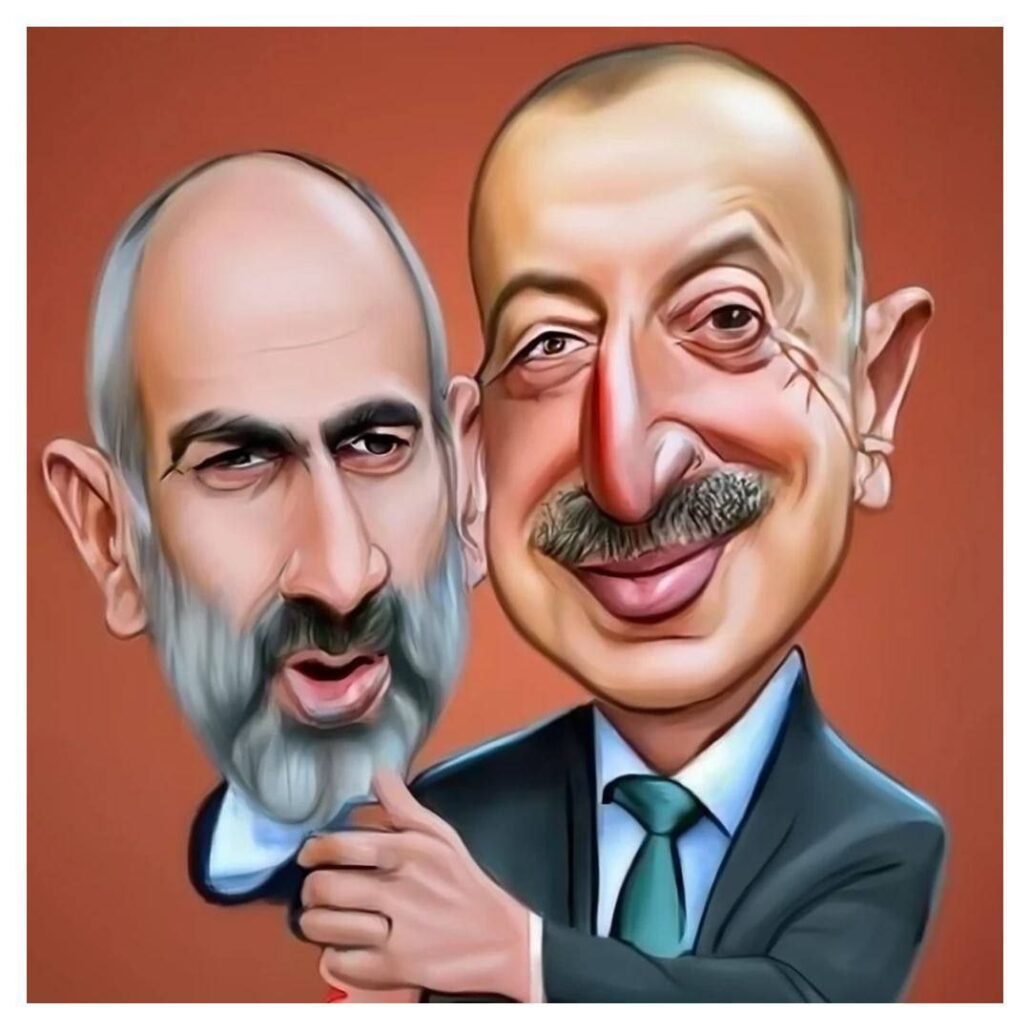
Nikol Pashinyan’s rise to power in 2018 initially raised certain hopes. He was a new figure, unconnected to the previous ruling elite. Unlike the former “war criminals,” he was not personally associated with shedding Azerbaijani blood. In May 2018, Nikol Pashinyan became Prime Minister. On September 28 of the same year, in Dushanbe, the capital of Tajikistan, on the sidelines of the CIS Summit, he met Ilham Aliyev for the first time.
During that meeting, Ilham Aliyev told Pashinyan: “We must resolve this issue. It cannot continue forever. We will never accept it. The ‘occupied’ territories of Azerbaijan must be ‘liberated.’”
An agreement was reached with Pashinyan to establish a “hotline” - a direct line of operative communication between the two countries. On the Armenian side, National Security Service Director Artur Vanetsyan was assigned as the responsible official; on the Azerbaijani side, it was the Head of the Foreign Intelligence Service, Orkhan Sultanov. Thus, the “hotline” was established in 2018. Pashinyan himself admitted that this was the most stable and peaceful period along the border - a time that raised certain hopes.
On March 29, 2019, in Vienna, the President of Azerbaijan and the Prime Minister of Armenia met again - about six months after their first encounter. During this meeting, Nikol Pashinyan shifted both his position and his tone, openly stating that he could not, and did not intend to, resolve the issue. He even explained his stance by saying, “If I do that, I will be killed.” Then he asked Aliyev rhetorically: “Do you want me to be killed?” Aliyev responded that no one wished him death, but emphasized that Azerbaijani lands could not remain under “occupation.”
Between 2018 and 2020, a comprehensive dossier was compiled on the provocations carried out by Armenia’s military and political leadership. This document was presented to foreign diplomats and international partners both before and during the war. Immediately after the Vienna meeting, on March 30, Armenia’s then Defense Minister Davit Tonoyan met with representatives of the Armenian Diaspora in the United States, where he used the known phrase: “New war — new territories.”
On August 5, 2019, Nikol Pashinyan delivered a speech in Stepanakert, introducing yet another slogan: “Artsakh is Armenia, full stop!”
From August 6 to 17, the Pan-Armenian Games were held in Karabakh for the first time in history. The Prime Minister attended the opening ceremony and several related events. On July 10, 2020, Armenia published a new National Security Concept, which declared that the outcomes of the First Karabakh War were considered an integral part of Armenia’s national security. Shortly thereafter, from July 12 to 16, “provocations” took place in the direction of the Tavush region. Immediately afterward, the servicemen who took part in those “provocations” were demonstratively awarded, including individuals involved in the “murder” of General Polad Hashimov.
On July 23, the Prime Minister of Armenia introduced seven additional conditions into the negotiation process, all of which were unacceptable. One of these conditions stated that if Azerbaijan wished to discuss the issue, the talks should be held with the so-called “Republic of Artsakh” rather than with Armenia. This effectively undermed the negotiation framework that had been in place for years.”
© Political expert Ara Poghosyan
At the same time, Pashinyan actively undermined the army’s command system, quarreled with the CSTO, and rejected joint military exercises that had been proposed three times — even though Moscow had agreed to finance the deployment of an entire group of troops. Meanwhile, Azerbaijan was openly preparing its assault forces. Pashinyan was warned about this, yet he remained focused on provoking conflict. There was even a perception that the cross-border “provocations” were coordinated by both Pashinyan and Aliyev, that they were, in effect, acting in concert.”