Gegham Manukyan on the Report by the Committee Investigating the Circumstances of the 44-Day War: The Key Point for the Authorities Not To Expose Themselves
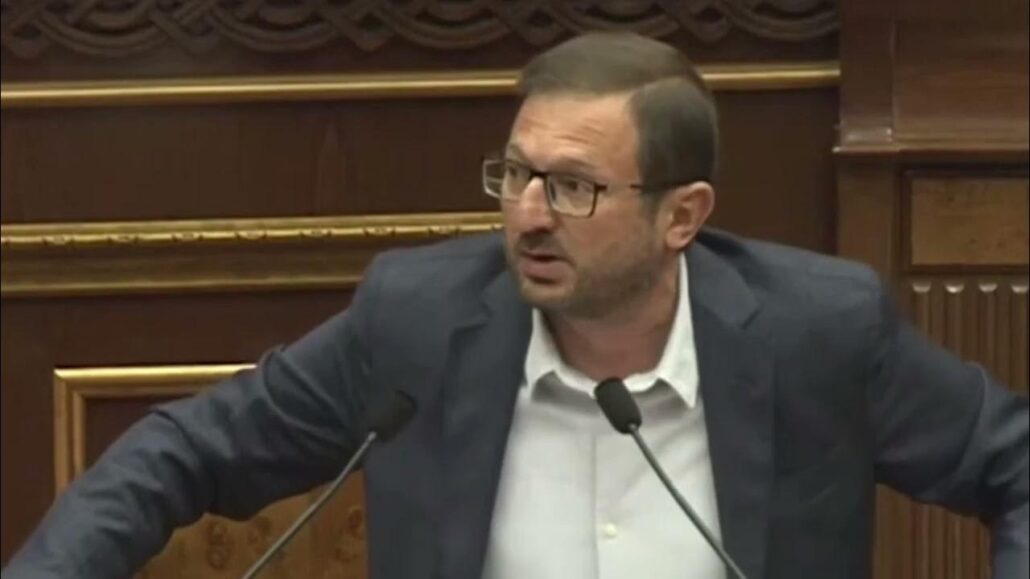
Gegham Manukyan has reviewed the report by the ad hoc parliamentary committee established to investigate the circumstances of the 44-day war. Here’s how he commented on the findings of the committee’s work:
Yesterday, throughout the day, I was at the secret department of the National Assembly, studying the report by the ad hoc parliamentary committee set up to investigate the military actions that began on September 27, 2020.
Although the committee chairman has already published certain excerpts from the report - seemingly to please the authorities - I won’t be doing the same, as such actions are prohibited by law.
However, having gone through the document, I would like to highlight the following points:
The opposition was absolutely right to boycott the committee meetings, and we had all the grounds and arguments to support our position. We refused to be part of this political show staged by the authorities. The failure of this show is evident in the violations of legal requirements, the committee’s scheduling blunders, and the failure to submit the report for discussion during the parliamentary session.
It’s also quite strange that I couldn’t find the signatures of some committee members - even pro-government parliamentarians - on the final report. And that, frankly, speaks for itself.
I cannot open the brackets, but after familiarizing myself with the report, I can state the following: Although the investigative committee was established to sidestep the questions about the 44-day war that have been constantly raised by the public and political circles, and to justify the wartime actions of the authorities and Pashinyan, it has failed — and that’s painfully obvious.
A whole host of additional questions now arise for the authorities, and personally for Pashinyan, regarding the flawed staff policies, disgraceful appointments in the military, and the adoption of strategic decisions without any proper or comprehensive analysis.
Excuses like “Poor, naïve man, what could he have done? He was deceived” simply don’t hold up under scrutiny. Many conclusions and provisions in the report point to an incompetent individual whose actions led to fatal and disastrous consequences for the outcome of the war - not to mention the possibility of deliberate actions.
After studying the report, the questions I had will be turned into formal parliamentary inquiries directed at the Prosecutor General’s Office, the Investigative Committee, the NSS, and the Police. The results will, without a doubt, be made public.
These are some of the considerations I had after familiarizing myself with the report. We will have the opportunity to discuss these issues in detail without opening the brackets.
So, by the end of the working day, I was the only parliamentarian who had gone through the entire report. After turning the last, 2015th page, a well-known phrase suddenly came to mind: “When investigating a crime, the most important thing is not to expose yourself.” The situation seems quite similar.