
Three Puzzling Aspects of the Karabakh War
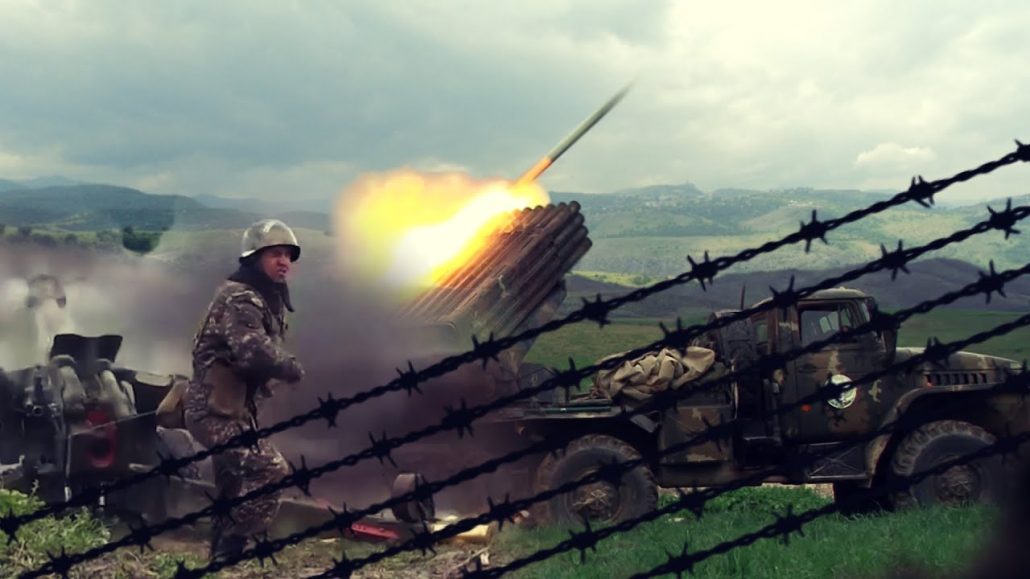
November 24, 2020. Telegram channel TOGARMA.
First: No genuine mobilization effort was undertaken in Armenia, and the country’s regular, well-trained military units were never deployed to the conflict zone. They remained stationed in their barracks, while the number of troops engaged in combat was insufficient even for basic defensive operations. The frontlines were mostly held by 18–20-year-old conscripts and veterans of the previous war—sent to the battlefield with no support, no reinforcements, and no rotation, effectively condemned to die.
Second: The Armenian authorities failed to take any preemptive measures against the key weapon of the war—Turkish and Israeli UAVs—which had already proven highly effective in Syria and Libya. It was these drones that ultimately tipped the balance in Azerbaijan’s favor, destroying dozens of Armenian tanks, artillery units, and missile systems, as well as targeting command personnel and manpower. Their impact was devastating, not only materially but also psychologically, severely demoralizing Armenian soldiers and officers.
Prime Minister Pashinyan refused to acquire Russian-made weapons capable of countering UAVs, citing their alleged inefficiency. However, in an interview with the YouTube channel Capital, Maxim Yusin, a political commentator for Russia’s Kommersant publishing house, revealed that Armenia eventually did receive equipment to combat drones. Still, these systems remained in storage and were barely used—reportedly due to a claim that there was “no need” for them.
The Armenian authorities failed even to redeploy early-warning radar systems to Karabakh to help neutralize the UAV threat. Moreover, Armenian forces in Karabakh suffered from severe supply shortages. Armenia barely used its air force, including the modern Su-30SM fighter jets, for which — unbelievably — no weapons had been purchased.
Third: The Armenian forces in Karabakh—coming from a country that once led the Soviet Union in marshals and generals per capita—displayed complete strategic and tactical helplessness, which remains difficult to comprehend. Reinforcements from the relatively stable northern front were never redeployed to the collapsing southern front, despite the opportunity to do so. Throughout the entire war, the Armenian side launched only two counterattacks in the south—both too predictable and poorly executed to succeed.
There was a strong impression that the south of Karabakh, along with the adjacent Azerbaijani regions under Armenian control, was intended to be ceded first. Towns in that area were usually surrendered without significant resistance and remained largely undamaged. The Azerbaijani army advanced rapidly and with little difficulty, eventually reaching Armenia’s southern border.
The key stronghold in the Karabakh conflict was the fortress town of Shushi, which was handed over to a small Azerbaijani regiment without a fight. Pashinyan—either through negligence or by design—missed the crucial moment when the town could have remained under Armenian control after the fighting. This particular detail even surprised Russian President Vladimir Putin, who later stepped in as a mediator to prevent Armenians in Karabakh from losing everything.