Game of Thrones in Armenia: Sargsyan, Minasyan, and Pashinyan vs. Kocharyan – A Fight for the Nation’s Soul
Although the political landscape in Armenia and the motives of its key actors are no secret to either experts or the politically aware public, the information campaign against Robert Kocharyan and his Armenia Alliance ahead of the elections may at first appear to be routine pre-election polemics. It seemed like a standard competition in which parties exchange accusations and attempt to strengthen their positions.
However, subsequent developments - the synchronization of actions by seemingly unrelated groups, along with the persistent repetition of identical narratives - suggest that the situation is far more complex. This is not a spontaneous political struggle, but a targeted and carefully constructed campaign with a specific objective: to prevent the consolidation of voters around the Armenia Alliance and to minimize Robert Kocharyan’s political weight in the upcoming electoral cycle.
The formation of the Armenia Alliance - uniting Robert Kocharyan, the Armenian Revolutionary Federation (ARF Dashnaktsutyun), and the Forward Party - brought previously hidden processes to the surface. Almost immediately, a large-scale information campaign was launched, drawing on the resources of both the authorities and groups that formally position themselves outside the government. The central narrative of this campaign has been to convince the public that the Alliance is incapable of surpassing the parliamentary threshold. Even without substantiation, such messaging has the power to shape public behavior.
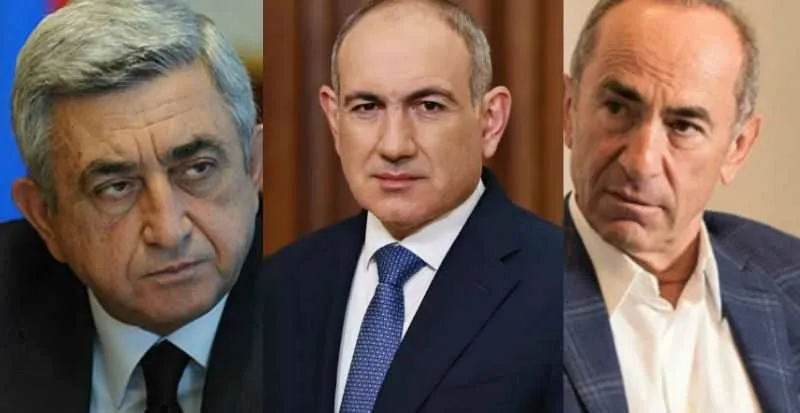
The role of Mikael Minasyan, son-in-law of the third president Serzh Sargsyan, is particularly notable within this configuration. For years, Minasyan’s media resources have disseminated consistent narratives against Robert Kocharyan. Notably, these narratives almost literally replicate those circulated through controlled structures during 2008–2018. This continuity points to a sustained strategic objective: the removal of Kocharyan as an independent political actor.
The topic of impeachment has also been actively used for over a year and a half, eventually gaining a degree of practical visibility. Its initiators - supporters of Serzh Sargsyan, such as Narek Malyan, Edgar Ghazaryan, and the “I Have Honor” parliamentary faction - appear not to have pursued it with the intention of achieving tangible results. Even when procedural opportunities arose, no substantive steps were taken, despite the Armenia Alliance expressing readiness to provide the necessary parliamentary signatures. Instead, impeachment served as a tool of aggressive propaganda against Kocharyan and as a means of demoralizing voters, discouraging electoral participation. This, in turn, could reduce turnout, as potential opposition supporters might see little value in voting.
The situation surrounding the Strong Armenia Movement and the figure of Samvel Karapetyan is similarly illustrative. The pattern is familiar: attempts at internal influence, the creation of artificial contradictions, and deliberate information leaks. Narratives associated with Mikael Minasyan have been promoted within Samvel Karapetyan’s circle by figures such as Edgar Ghazaryan and Gohar Meloyan, whose actions appear aimed at fostering discord both within the movement and in its relations with other opposition groups. Within this framework, any force with the potential for independent political activity is treated as a threat to be neutralized.
Against this backdrop, certain forces with evidently overlapping interests publicly attempt to distance themselves from one another. Not only the substance but often even the wording of statements made by different actors closely coincide. This raises a natural question: can such consistency truly be coincidental? When accusations against Kocharyan voiced by Narek Malyan and Edgar Ghazaryan align with statements made by pro-government figures such as Styopa Safaryan and Taron Chakhoyan, the likelihood of coincidence appears increasingly doubtful. Rather, this suggests a coordinated effort designed to exert both psychological and electoral influence.
Attempts to portray these overlaps as mere coincidences fail under scrutiny, as they reflect years of systematic work. Efforts to push Robert Kocharyan out of the political arena date back as early as 2008, with substantial resources deployed since then. The current phase is characterized by similar methods, albeit with a reconfigured set of participants. Actors who once operated independently now appear to be moving in the same direction.
What we are witnessing, therefore, is not a conventional political struggle, but a carefully designed, multi-layered strategy operating under the guise of competition. Its purpose is to demobilize, mislead, and fragment the electorate. Every statement, every initiative by representatives associated with Nikol Pashinyan and Serzh Sargsyan appears directed toward a single goal: to divide, confuse, and prevent the consolidation of support around an alternative political force.
The primary beneficiary of this dynamic is Nikol Pashinyan. Strengthening his own position may not be his foremost priority; rather, his central objective appears to be preventing the emergence of a unified and strong opposition. Any alternative center of power is perceived as an existential threat. A secondary beneficiary is Serzh Sargsyan and his immediate circle, for whom the rise of an uncontrollable new government would pose significant risks. This dynamic reflects a deeper concern - an apprehension before the judgment of history. After all, it was their reforms, their management of the “Velvet Revolution,” and their constitutional policies that contributed to the loss of Artsakh.
In this dramatic political performance, each act appears calculated and each actor positioned deliberately. Parties, voters, and citizens risk becoming instruments in a broader strategy aimed at preserving power and avoiding accountability for decisions that cost Armenia lives and territories.
Without disclosure and accountability for the forces behind this tragedy, national and state security will be placed at risk. This serves as a broader lesson: when democracy is merely imitated rather than genuinely practiced, it can devolve into a system of manipulation. The greater the ambitions of political actors, the higher the price society may ultimately pay.
The Public Tribunal addresses all citizens of Armenia eligible to vote: do not allow carefully constructed and potentially misleading confrontations to determine the country’s future. Each vote is a tool for defending national interests. The upcoming parliamentary elections will shape not only the parliamentary forces but also the trajectory of Armenia’s future. Remain vigilant, think critically, make informed choices, and act in a way that serves the interests of the nation rather than those of individual groups.