
To Win and Defend the Vote: Kocharyan’s Mission
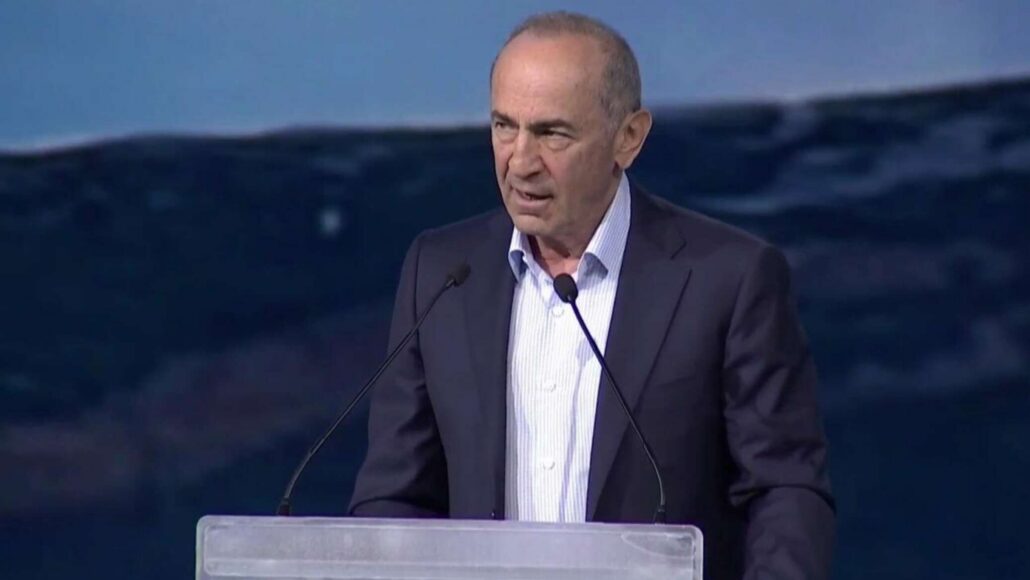
On March 16, 2026, Robert Kocharyan was officially nominated as a candidate for prime minister by the Armenia Alliance. Regardless of one’s personal attitude toward Kocharyan, it must be acknowledged that both the future of his political force and, to a large extent, the fate of Armenia itself rest on his shoulders. Much will depend on his actions - whether the country continues its downward trajectory or manages to stabilize and move toward development.
Public opinion about Kocharyan has long been deeply polarized. On one hand, he is valued for his managerial experience, strategic thinking, and ability to build alliances. On the other hand, years of sustained anti-Kocharyan narratives — promoted by Armenia’s first and third presidents and reinforced by the tragic events of October 27, 1999, and March 1, 2008 — have left a lasting imprint on his public image. Many have been led to believe that he bears responsibility for nearly all the country’s past tragedies. The events of March 1 are attributed to him; he is accused of misappropriating state property, economic mismanagement, and even the loss of Artsakh. At the same time, certain key facts are often overlooked: the foundational collapse of the state system began under Ter-Petrosyan, while Sargsyan and Pashinyan together further weakened institutions and eroded the country’s strategic independence.
A central driver of this long-standing narrative has been fear, uniting Ter-Petrosyan and Sargsyan in their opposition to Kocharyan’s political return. Their concern extends beyond electoral competition; it includes the possibility of a fundamental reassessment of Armenia’s modern history, in which they played central roles and are seen by critics as advancing Western-aligned policies. For them, Kocharyan’s return could mean political marginalization, loss of historical standing, and the risk of being recast — from “founders of the republic” to those responsible for the missteps and failures of the transitional period.
Kocharyan is not merely a political figure; he represents a potential challenger to an entire era. As an insider, he possesses detailed knowledge of past political arrangements, including informal agreements, unspoken concessions, and hidden motivations behind key decisions of the 1990s and 2000s. He could initiate parliamentary inquiries, revisit established historical narratives, and shift political debates into a broader discussion of historical accountability for the crises the country has faced. For the old elite, this prospect poses a serious threat.
Political forces associated with Serzh Sargsyan and the Republican Party of Armenia are currently experiencing a prolonged crisis. Their traditional voter base is shrinking, and their accumulated political capital is losing value. Similar trends are visible within Levon Ter-Petrosyan’s camp.
In this context, both Ter-Petrosyan and Sargsyan appear to be seeking support from businessman Samvel Karapetyan. Unlike them, he was not directly associated with the events of 1999 or 2008 and is often seen as a figure representing stability and continuity. For the established political elite, this presents an opportunity to “reset” without undergoing accountability. This scenario is frequently linked to Karapetyan’s Strong Armenia Party.
When this political project first emerged, it was widely perceived as an attempt to build a new force, free from the legacy of past elites. It attracted young activists, professionals, and members of civil society, raising expectations for a new political culture.
However, as the party expanded, individuals closely tied to the so-called “former authorities” began to appear within its ranks. Particular concern was sparked by the involvement of former diplomat and public figure Edgar Ghazaryan, associated with Serzh Sargsyan. For many, this development signaled the possible infiltration of old elite interests, prompting some to describe him as a “Trojan horse.”
This has led to growing unease within Karapetyan’s own team. Questions are being raised about who is shaping the party’s human resources policy, determining candidate lists, and defining its political image. For many supporters, this trend is disappointing. Expectations for genuinely new political actors were high, and any perceived return of figures linked to former authorities is met with skepticism.
At the same time, some view these developments as a potential form of political sabotage — possibly orchestrated by Sargsyan to weaken Karapetyan’s rising popularity, foster distrust, and ultimately provoke tensions with Robert Kocharyan.
Under these circumstances, the Strong Armenia Party faces an urgent need to provide clear and transparent explanations regarding its decisions and any intentions to cooperate with the Armenian Pan-National Congress led by Levon Ter-Petrosyan. Opaque agreements or behind-the-scenes dealings with former elites risk undermining public trust.
Meanwhile, Kocharyan’s team cannot afford to lose time. With elections approaching, every hour matters. It is essential to actively counter misinformation, expose false narratives, and present a consistent and credible account of the country’s situation, while also acknowledging past mistakes. Only through openness, honesty, and disciplined effort can public trust be rebuilt and voters prepared for a decisive moment.
Ultimately, however, the decisive power lies with the people. Every citizen must take on the role of an active observer and defender of their vote. Indifference is not an option. Any hesitation today risks repeating the events of 1996, when public will was disregarded and the right to choose was effectively undermined. Citizens should vote, document violations, monitor polling stations, and respond whenever irregularities arise. Civic resistance must be immediate, broad, and resolute.
Today, Robert Kocharyan faces what can be described as a historic responsibility: to win and safeguard the people’s vote by all available means. Another term under Pashinyan would bring severe consequences — further territorial losses, institutional weakening, and the erosion of what remains of national sovereignty. At the same time, no meaningful defense of the state is possible without active public participation. Citizens committed to protecting their rights and preserving their country must recognize that silence and passivity come at a high cost. Every vote, every observer, and every act of civic engagement contributes to the foundation of the state.