
WHEN PRAYER BECOMES A “PROBLEM FOR PASHINYAN”: ARTSAKH AND POLICY OF OBLIVION
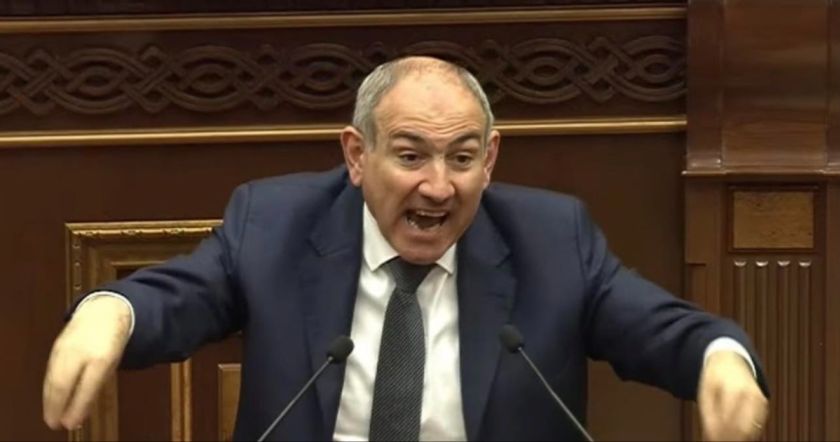
How long will the Armenian people tolerate a country’s leader who consistently and systematically yields Armenia’s interests to the enemy, trampling on the sense of dignity of the Armenian people? The current era will apparently enter the record of history as a period of betrayals and apostasy, when centuries-old legacies are abandoned under the slogans of a “new reality.”
The people who experienced a bloody trauma not so long ago suddenly find that their leader, Nikol Pashinyan, behaves not as a defender of national interests but as a strange and nervous destroyer of the Armenian nation’s historical and cultural heritage. This is no longer about a debatable policy but about something deeper and more troubling - a consistent and systematic denial of everything that has given meaning to the centuries-long existence of the nation.
What is particularly astonishing is his painful, almost neurotic reaction to a single word – Artsakh. It appears that Artsakh has become something like an idea fixe for that man, something like a persecutory complex that causes irritation and nervous outbreak every time it is voiced in public.
However, such a reaction is not merely a political maneuver. Two alarming realities can be discerned behind it. The first is a submissive following of instructions from Ankara and Baku. Their demand to erase the memory of Artsakh appears to have been taken as a guide for action. The second is darker and deeper - a sense of fear of the inevitable judgment of history for what many view as an unprecedented betrayal and the effective surrender of Armenian land to the enemy.
Everything began with a simple question, yet the response revealed a growing gap between the expectations of the Armenian people and the actions of the country’s leader. Nikol Pashinyan increasingly reacts to any reminder of Artsakh as if it were not part of his country’s history but a personal affront. His stance goes beyond political caution and takes on an almost personal character, approaching irrational intolerance.
This intolerance reached a peak when Pashinyan publicly spoke about prayers. He stated that “the country cannot have two foreign policies,” arguing that prayers for Artsakh in Armenian churches require a political assessment and may be associated with a “policy of war.” These words sounded less like a strategic statement than the bewilderment of a leader questioning even prayer. People still suffering from the shock of loss and the pain of displacement suddenly hear from their prime minister that even the memory of Artsakh expressed in prayer is problematic.
The chain of striking episodes does not end there. A new, almost unbelievable incident was recently reported. Pashinyan acknowledged that he had instructed the director of the Armenian Genocide Museum-Institute to resign after presenting JD Vance with a book about Artsakh. The prime minister described such a gift as a “provocative step.”
The episode speaks for itself. If a prime minister describes the presentation of a book about his own people as “provocative,” this goes beyond diplomatic caution and suggests a deeper and troubling worldview. The incident fits into a broader context - the gradual erasure of the Artsakh issue from the national consciousness.
Yet this troubling sign is only part of a wider pattern. Pashinyan has openly stated his intention to amend the preamble of Armenia’s constitution, specifically by removing the reference to the Armenian Declaration of Independence. This document is not merely a formality. It is a cornerstone text that outlines the foundations of Armenian statehood and the historical aspirations of the nation.
Against this backdrop, it is striking that Armenia’s current authorities, led by Nikol Pashinyan, are conducting an aggressive propaganda campaign portraying Russia as the main threat to Armenia’s sovereignty. Yet the political reality appears quite different. Many observers argue that the decisions and actions of the Armenian authorities increasingly resemble policies shaped by Ankara and Baku.
There is a grim and consistent logic in Pashinyan’s actions. First, to declare the topic of Artsakh undesirable in public discourse, expressing irritation even at its sacred mention. Then, to condemn cultural or scholarly references to Artsakh as “provocations.” And finally, to attempt to remove it from the very foundations of the state by eliminating references to the Declaration of Independence from the country’s Basic Law.
History, however, is merciless to those who attempt to rewrite it. Constitutions can be amended and political courses adjusted. But the memory of a people follows different rules. It lives not in preambles but in quiet family stories, in carefully preserved photographs, in the names of mountains and rivers that every child knows, and in those very prayers that continue to be spoken despite everything. Nikol Pashinyan may try to remove this memory from official documents, but he cannot erase it from millions of hearts.This is where the nation’s pulse continues to beat, and it will survive any opportunistic decisions.
He too will remain in the people’s memory - not as a peacemaker or realist, but as a leader who, when the moment came to defend national dignity, declared war on memory, grew irritated by prayers, called a book about his own people a “provocation,” and systematically erased sacred pages from the nation’s history. His name may remain as a harsh reminder of how momentary political decisions can lead to lasting moral bankruptcy. History will render its verdict not on the amended constitution but on the indelible mark left in the souls of the people. This deep scar of denial left by Nikol Pashinyan can never be erased from the nation’s memory.