
Middle East's Hot Breath and Armenia: Reflection on Sergey Markedonov’s Interview
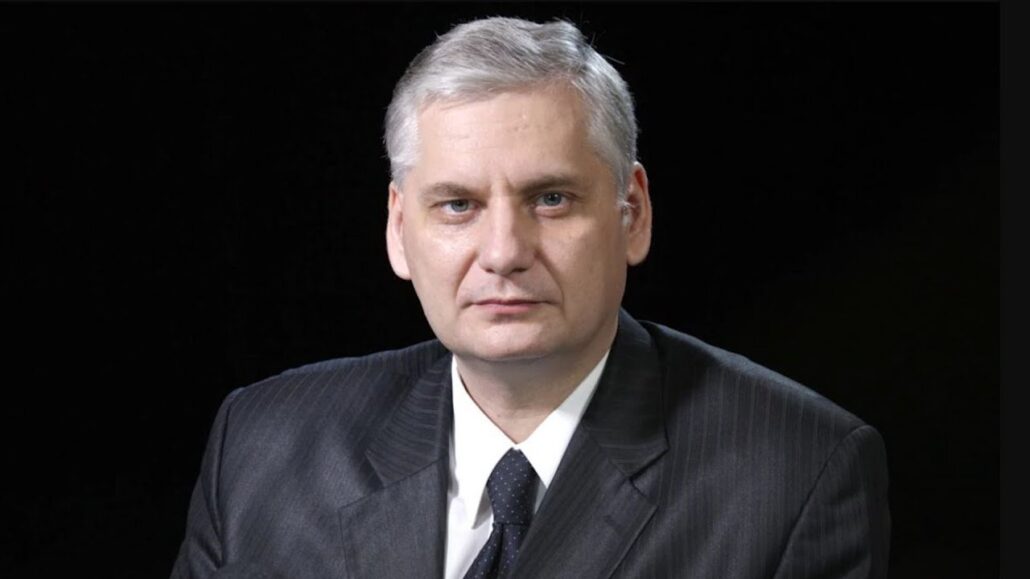
The news of Israel’s attack on Tehran quickly ceased to be just another report from the Middle East. The world was once again reminded of a disturbing, consistent pattern: a local military operation that could trigger large-scale geopolitical shifts. The new wave of tensions in the Middle East is destined to affect both the region itself and the South Caucasus, which is becoming increasingly intertwined with this volatile area.
In an interview with 168TV, political expert Sergey Markedonov suggested that the situation should be viewed through a broader historical lens, extending well beyond today’s headlines.
Historical Bill Yet To Be Paid
According to Markedonov, the current escalation is part of a long-standing attempt to revise the balance of power around Iran — a challenge that has long occupied America’s foreign policy.
“Closing the Iranian issue means paying the historical bill that the Americans have been carrying since the 1979 revolution,” he stated.
The Islamic Revolution in 1979 indeed marked a turning point. The loss of a key ally in the Middle East was perceived by Washington as a significant strategic defeat. Since then, efforts to weaken Iran — either through sanctions or the threat of military action — have been recurrent. However, it’s crucial to understand that even if there is a regime change in Tehran, the role of Iran as a state with ancient history and the ability to adapt will remain substantial.
The South Caucasus In the Turbulence Zone
The developments around Iran are directly impacting the South Caucasus, as the region becomes engulfed in the Middle Eastern confrontations involving Turkey, Israel, the West, and regional powers.
“The Caucasus is not only undergoing Westernization but also Easternization — the Middle Eastern conflicts are already affecting it directly,” Markedonov observed.
Azerbaijan’s military-political strengthening has been facilitated by the active support of Turkey and Israel. Armenia, for its part, had long viewed Iran as a potential counterbalance. Yet the reality has shown the limited nature of such calculations — Tehran’s primary resources and attention are focused on defending its position in the Middle East. As the conflict expands, Iran’s ability to engage in the Caucasus will only continue to diminish.
Dangerous Illusion: Can Stability Be Brought from Outside?
In the West, discussions often revolve around scenarios of internal destabilization within Iran, betting on social discontent. Markedonov recalls a fundamental rule of international politics:
“When people are discontented with their government, that’s one thing. When happiness is imposed from outside at the point of bayonets, people unite around the national flag.”
Recent history confirms that external pressure often leads to national consolidation, even in the face of deep internal divisions. Moreover, if the conflict transitions to a ground invasion, it could lead to a large-scale humanitarian crisis, including refugee flows, which would inevitably affect the Caucasian countries bordering Iran.
When the Neighbor’s House is on Fire
The South Caucasus is not only politically linked to Iran but geographically as well. The shared border makes the region highly sensitive to any shocks to the south.
“If the neighbor’s house is on fire, one can close the windows and doors, but still needs to watch out for the squalls,” Markedonov remarked.
Even a limited expansion of the conflict could alter economic routes, energy flows, and the military-political security architecture of the region. It would trigger the activation of all the major players — Turkey, Israel, the U.S., the EU, and Russia — and each would aim to strengthen its position.
Pragmatism Over Illusions
Markedonov emphasized the role of external forces in the post-Soviet space, reminding that international politics operates under strict pragmatic rules:
“Politics has no altruism.”
Any support is always driven by strategic expectations. The strengthening of one superpower inevitably means the weakening of another. Inviting external actors to resolve domestic issues can drastically alter the balance of sovereign decisions.
Opinion of the Public Tribunal
The interview underscores a crucial turning point. Armenia is entering an era of strategic uncertainty, where the price of political mistakes is no longer measured in approval ratings but in the security of the nation. The previous security system has been eroded, alliances are being redefined, and the region is descending into a landscape of raw force and conflicting interests.
Armenia’s security today hinges on the ability of its leaders to assess the reality with clarity. Attempts to maneuver between competing centers of influence without a coherent strategy have led to a situation where external guarantees are now conditional, while the risks are immediate and very real.
In this context, Russia remains the only true guarantor of Armenia’s security. However, such a scenario is only possible if the Armenian authorities show the political will to act accordingly and consistently. The current government’s course is well-known, but what matters now is who will come to power next and which foreign policy path will be chosen. The Armenian people will determine this choice. Whether Armenia will find itself within a system of sustainable alliances or continue on its precarious path depends on the people’s decision.
Conclusion
The heated breath of the Middle Eastern conflict is once again felt along Armenia's borders. The era of relative stability is fading, making way for a fierce contest over spheres of influence. Armenia now faces a stark choice: either develop a new security model based on pragmatism and long-term national interests, or remain hostage to domestic political games.