
On the Crossroads of War, “Peace,” and Statehood
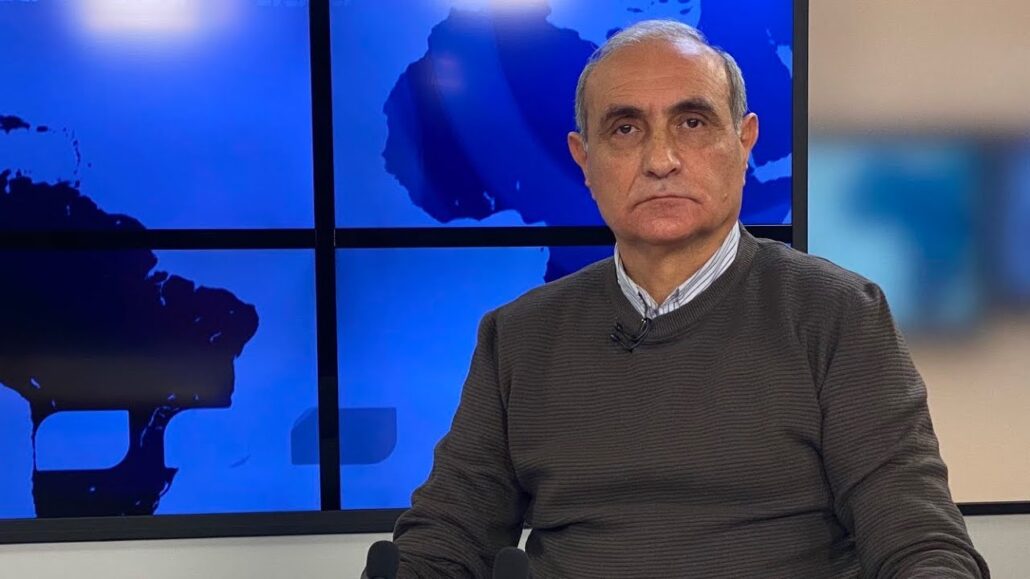
Recently, 24TV hosted Hayk Nahapetyan, a reserve lieutenant colonel and military expert, to discuss a range of pressing issues: the verdicts delivered by the Baku court against Armenian prisoners of war, the redistribution of forces in the region, the interests of major powers, and Armenia’s domestic political developments.
According to the military expert, the Baku court’s verdict against Ruben Vardanyan — sentencing him to 20 years in prison — should be viewed not only from a legal perspective, but also as a political act. Azerbaijan’s President, Ilham Aliyev, has consistently framed the events in Karabakh as an “anti-terrorist operation,” a characterization that, in effect, reshapes the status of the detainees. Nahapetyan argues that such terminology enables Baku to portray them not as prisoners of war, but as criminals, with all the legal and political consequences this implies.
The expert underscored the significance of the October 6, 2022, statement made in Prague, when Armenia’s Prime Minister Nikol Pashinyan recognized the principle of Artsakh being part of Azerbaijan. In his assessment, that move created a new international environment in which Azerbaijan was able to present its actions as matters of internal security.
Referring to the trilateral statement of November 9, 2020 — the ceasefire agreement on Nagorno-Karabakh — Nahapetyan noted that it was followed by preparations for a second large-scale military operation, which required appropriate political and legal groundwork. In his view, that groundwork was laid through a combination of political decisions and carefully constructed legal formulations.
The role of the United States was also addressed. The expert recalled the regional visit of U.S. Vice President J.D. Vance, emphasizing Azerbaijan’s strategic importance to Washington. He also pointed to Section 907 of the U.S. Freedom Support Act, noting that the lifting of its restrictions opened the way for expanded technical cooperation with Azerbaijan.
Nahapetyan stressed that in international politics, legal terminology often serves as a tool to justify the use of force. The concept of “peace,” he argued, can be viable only in the context of genuine and balanced mediation.
During the discussion, Armenia’s announced military procurements were also examined. The expert criticized the manner in which they were publicly presented, stating that defense capability cannot be reduced to numbers and declarations alone. It requires a systemic management culture and a coherent, long-term strategy.
In conclusion, Nahapetyan touched upon church–state relations. Recalling that the Constitution enshrines the separation of church and state, he warned that breaching this boundary risks deepening public polarization. In his view, the country’s strength depends not only on foreign policy calculations but equally on domestic institutional stability.
The Public Tribunal's Conclusion
The Public Tribunal, based on the presented factual and political assessment, states that the policy pursued by the Armenian authorities headed by Nikol Pashinyan has resulted in a significant weakening of the national security system and a multiple increase in existential risks facing the state.
The Tribunal notes that the political decisions adopted and implemented since 2020 have created a new chain of threats to national security. Statements regarding Artsakh’s status, the international obligations undertaken, and their legal and political formulation have effectively restricted the Republic of Armenia’s status as a subject of international law, leaving very limited room for strategic maneuvering in the defense sphere.
The Public Tribunal emphasizes that the foundations of statehood enshrined in the Constitution, including sovereignty, territorial integrity, and the obligation to ensure national security, must be strictly upheld and must not depend on political expediency. The political course that disrupted the balance of power and weakened defense capabilities contradicts the authorities’ obligation to ensure the security of the people and the uninterrupted existence of the state.
The Tribunal provides a legal assessment of the circumstances in which foreign policy decisions and public statements have shaped a new legal environment contributing to the legitimization of the adversary’s actions. Such practices exhibit signs of improper exercise of authority and have led to an increase in national security threats and existential risks.
The principle of the supremacy of the Constitution cannot be subordinated to political expediency. Possible violations of the constitutional order, the weakening of the national security system, and the undermining of the foundations of statehood must be subject to legal and public assessment.
The authorities must act exclusively within the framework of the Constitution and in accordance with national interests. Any deviation from these principles should be regarded as actions entailing political and legal responsibility.
The Public Tribunal further states that all manifestations of crimes against the state must be subject to comprehensive and impartial investigation. Nikol Pashinyan and those who have carried out his unlawful instructions, the individuals who have justified crimes against the state in the information sphere, as well as the forces supporting him from the shadows, must be held accountable to the full extent of the law.