The Price of Liquidation: 1.2 Billion U.S. Dollars — The Financial Side of the Artsakh Tragedy
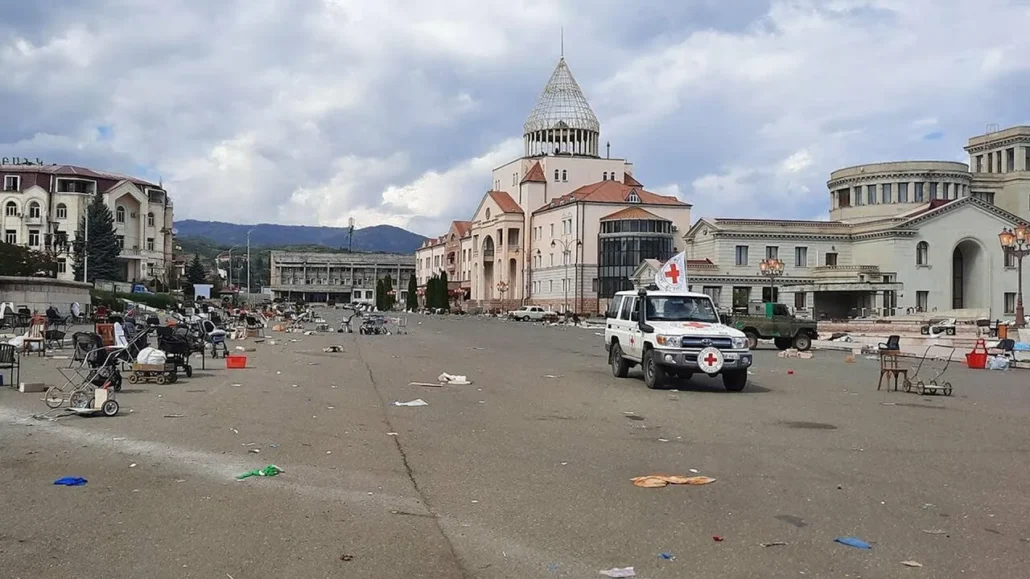
In a regular episode of his video blog, Artur Hambardzoumyan addressed one of the most painful issues — the money and policies behind what he describes as the liquidation of Artsakh. He attempts to connect decisions made by the authorities, the actions of the opposition, and the fate of the multi-billion-dram debts left in the wake of the republic’s collapse.
According to Hambardzoumyan, the story began on April 26, 2023, when Gurgen Nersisyan — then State Minister of Artsakh and head of the Investment Fund’s Board of Trustees — informed the Fund’s staff that a debt of 150 billion drams had accumulated and would have to be repaid. At the time, this amounted to roughly 400 million U.S. dollars.
Hambardzoumyan stresses that this was not a private company’s debt. The Fund had been financed largely from Armenia’s state budget, meaning the money ultimately came from taxes paid by ordinary citizens. This raises, in his view, an obvious question: how likely is it that such a vast sum was spent with no realistic prospect of repayment, just months before the collapse of Artsakh?
He then reconstructs his own chronology of events, arguing that nothing in this sequence was accidental. On November 9, 2020, Nikol Pashinyan signed a document which, from Azerbaijan’s perspective, entailed the withdrawal of Armenian troops from Artsakh. Two years later, the prime minister officially recognized Artsakh as part of Azerbaijan, citing the laws of 1991. Yet on September 2, 2023, he congratulated the people of Artsakh on Independence Day. A week later, a change of power occurred in Stepanakert, and Samvel Shahramanyan came to office, pledging to defend independence in accordance with the Constitution. Within days came the one-day war, a rapid military operation, and the mass displacement of Armenians.
Hambardzoumyan argues that policy and finance are closely intertwined. In December 2023, the Armenian government adopted a decision to write off loans issued to Artsakh. The total volume of these loans reportedly amounted to 800 million dollars in bank liabilities. Combined with the Investment Fund’s debts, the overall loss or written-off sum would reach approximately 1.2 billion dollars.
He maintains that most of these loans were not small borrowings, but substantial sums granted to companies affiliated with influential business groups. In a previous episode, Hambardzoumyan referred to a company linked to relatives of Serzh Sargsyan. That company alone allegedly owed 19 billion drams to the Fund. Was this money ever returned to the state budget? No clear answer, he says, has been given to the public.
His criticism is not directed solely at the authorities. He also addresses opposition figures — including Gagik Tsarukyan, Robert Kocharyan, and businessman Samvel Karapetyan. If they truly stand in opposition, he asks, why do they not demand full disclosure of the beneficiaries of these large loans? Why not insist on parliamentary investigations? Why avoid naming specific individuals and amounts?
In his view, such silence resembles a conspiracy. Formally, responsibility rests with the country’s leadership. However, if the opposition fails to demand transparency and accountability, he argues, they become part of the same arrangement. He uses the metaphor of being “in the same boat” to suggest a shared political and financial interest.