
The Myth of the “Russian Project”: Who Benefits from Pashinyan’s Image as Moscow’s Puppet?
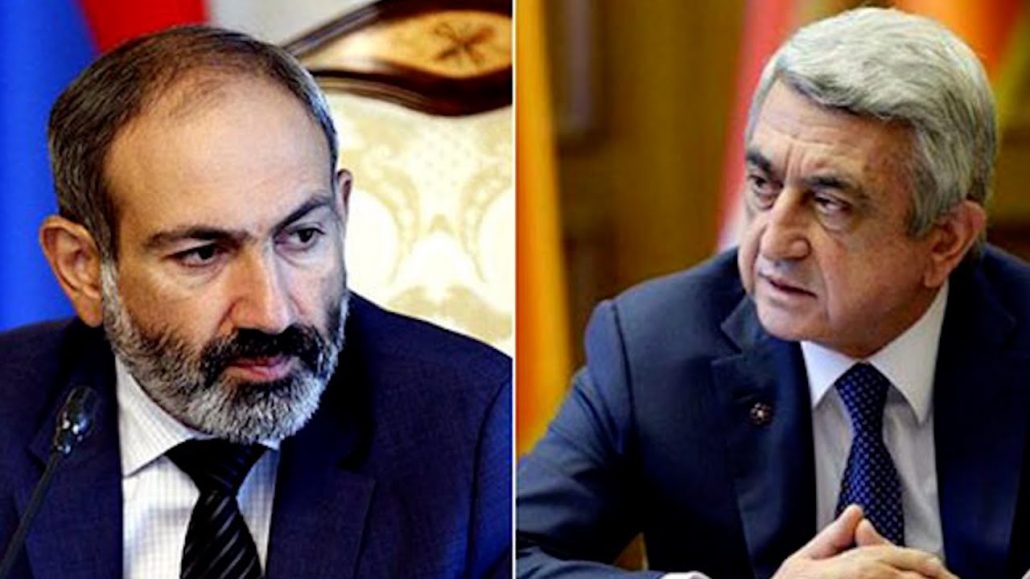
For years, Serzh Sargsyan and his political allies have persistently promoted the thesis that Nikol Pashinyan allegedly came to power with Russia’s backing.
They regularly insinuate that it was Moscow that ensured the consolidation and reproduction of his authority, supporting these claims with arguments that at first glance appear logical and convincing.
Yet this thesis is far from accidental. It is the product of a calculated political strategy. The grave consequences of Pashinyan’s rule — the loss of Artsakh, the surrender of certain Armenian territories, and the dangerous processes unfolding around the foundations of national identity — are presented as the direct result of Russian influence.
Meanwhile, for a considerable segment of Armenian society, it is evident that these processes developed within a Western agenda, and that their preparatory phase began under Serzh Sargsyan’s leadership. It was during that period that the inviolability of the Genocide issue was first called into question, and a perilous process of devaluing national symbols and historical landmarks was set in motion.
Efforts to portray Pashinyan as a “Russian project” have pursued a clear objective: to redirect public dissatisfaction and frustration away from the West and toward Russia. In other words, there is an attempt to label their own political protégé as Moscow’s pawn, thereby diverting public anger from the real architects of the current course and channeling it against Russia.
Supporters of this narrative frequently ask: if Pashinyan is not “pro-Russian,” why has Armenia not withdrawn from the EAEU? Why has the Russian military base not been closed? Yet they remain silent about the fact that Armenia’s geopolitical position, economic structure, and security system have been shaped over decades in close cooperation with Russia. A sudden rupture of these ties is not a matter of mere declaration; it carries the risk of destabilizing the country and jeopardizing power itself.
It is worth recalling that in 2013 it was Serzh Sargsyan who attempted a rapid pivot toward Europe. However, that process abruptly culminated not in an Association Agreement with the EU, but in accession to the EAEU. The reversal followed unequivocal signals from Russian political circles regarding the prospects of retaining power.
Today, little is said about the openly anti-Russian rhetoric that flourished under Sargsyan. The overt promotion of a European vector, media discussions about revising historical narratives, debates on public television, and the articulation of ideas later echoed by Pashinyan — all of this fits into the logic of prior preparation.
In 2012–2013, the central issue on the domestic agenda was the choice between signing an Association Agreement with the European Union or pursuing integration with the Eurasian Economic Union. In an apparent attempt to bury the topic of accession to the Eurasian bloc, Sargsyan even initiated the production of a documentary about Nzhdeh in January 2013, advancing the notion that it was the Russians who had deprived Armenia of its independence. Thereafter, the anti-Russian wave intensified further.
Nevertheless, the imperative of retaining power ultimately outweighed the intention to make a decisive turn toward Europe. However extensively anti-Russian sentiments were disseminated in universities and the media, broad segments of society understood the potential consequences of a sudden break with Russia.
Today, Nikol Pashinyan continues to foster an atmosphere of estrangement and distrust toward Russia without formally severing ties. This, too, appears to be part of a deliberate political course.
The logic is straightforward: as long as Armenia lacks sufficient energy and economic alternatives, radical steps are postponed. Meanwhile, public opinion is steadily reshaped, and an environment is gradually cultivated in which the alliance with Russia is portrayed as the principal obstacle to the country’s development.
Once sustainable energy and economic foundations are secured and external guarantees sufficiently strengthened, the next phase may follow — an open political demand for Russia’s withdrawal from Armenia.
Thus, the current policy should be viewed not as an end state, but as a transitional phase in which society is being prepared for more decisive steps in the future.