
Concession, Corridor, and the Dismantling of the Previous Balance: What Is Pashinyan’s New Political Line Leading To?
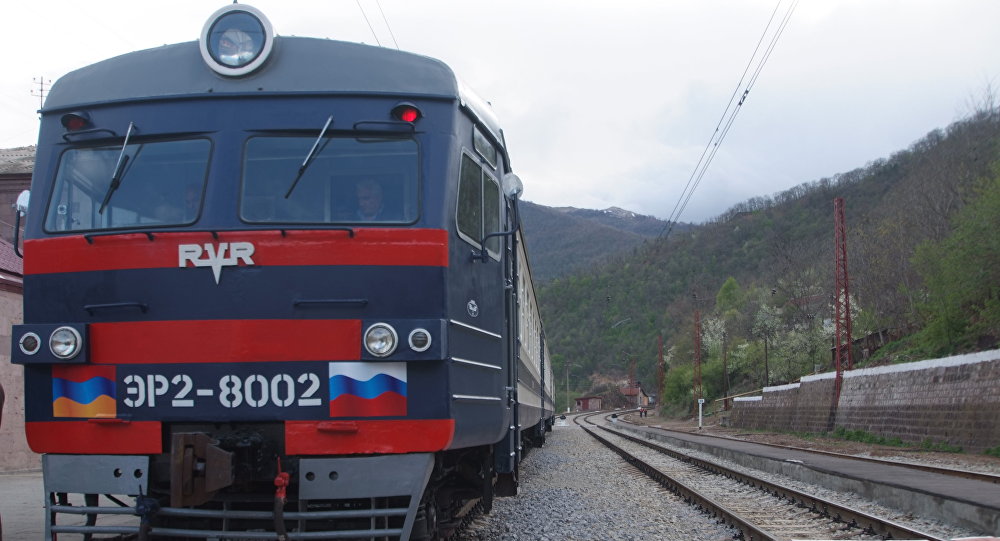
At the initiative of Prime Minister Nikol Pashinyan, Armenia’s political agenda has been supplemented with an issue that could become highly sensitive for the strategic interests of regional and geopolitical actors: the future of the concession management of Armenia’s railways. Pashinyan proposed that Russia consider the possibility of transferring the railway concession rights to a third country — one that maintains friendly relations with both Yerevan and Moscow.
According to the prime minister, there is no problem with Russia as such; however, the current management model under Russian jurisdiction creates “certain competitive disadvantages” for Armenia. In light of the evolving regional configuration, Pashinyan argues, this could complicate engagement with international partners who, following the conflict around the Nakhijevan direction, are considering a transport route passing through Armenian territory.
A Third Party as a Trade-Off or a Disguised Effort to Push Russia Out of the Region?
The prime minister articulated the idea quite directly: “A country that has friendly relations with both us and Russia could simply acquire the concession management rights from Russia.” He did not specify which country he had in mind, leaving the field open for proposals.
By way of example, he mentioned Kazakhstan, the United Arab Emirates, and Qatar — states that, as he noted, maintain warm relations with both Armenia and Russia. When asked whether Iran might be considered a potential buyer, Pashinyan did not provide a direct answer. He also deflected questions regarding possible participation by Turkey or Azerbaijan, adding only that certain countries are contemplating investments and assessing where best to channel them.
Thus, the focus is deliberately shifted from geopolitical rhetoric to the pragmatism of investment, potentially obscuring the broader strategic intent. The possible sale of Russia’s concession rights in Armenia’s railway system to a third party is presented as a pragmatic initiative.
The official objective is to “reduce competitive disadvantages” and to seek a more flexible framework for cooperation with international partners. However, when viewed in the broader context of recent decisions by Pashinyan’s government, a different picture begins to emerge.
There is a growing perception that, under the banner of “diversification,” a gradual policy is unfolding to reduce Russia’s role in key sectors of Armenian statehood.
The first stage concerns food and fuel logistics. The organization of grain and fuel supplies via Azerbaijan objectively diminishes Russia’s role in Armenia’s food and energy security system. This represents not merely a change of route, but a structural shift in the patterns of dependence that have underpinned the country’s economic stability for decades.
The second stage involves the energy sector. During the visit of U.S. Vice President J.D. Vance to Yerevan, it was announced that Armenia may introduce U.S. small modular reactor technology. If implemented, such plans would signify a strategic displacement of Russia from the energy sector — one of the cornerstones of bilateral relations.
The third stage concerns transport and logistics. The proposal to transfer the railway concession to a third party completes the logical sequence. The railway system constitutes the backbone of the country’s infrastructure and a key instrument of economic and geopolitical influence. Transferring its management to a new actor would effectively redistribute strategic oversight.
Each of these steps can be framed as a rational decision taken independently. Taken together, however, they form a coherent trend toward dismantling the former alliance architecture and progressively reducing Russia’s presence in Armenia.
The “Trump Route” and a New Configuration
These developments are unfolding against the backdrop of a joint declaration signed in Washington on August 8, 2025, by Prime Minister Nikol Pashinyan and Azerbaijani President Ilham Aliyev, with the mediation of U.S. President Donald Trump.
The document provides for the establishment of a strategic transit route through southern Armenia - the so-called “Trump Route” (TRIPP) - linking Azerbaijan and Nakhijevan under U.S. oversight and bypassing Russia.
As a result, an infrastructure zone with U.S. participation is being formed in southern Armenia, while discussions are simultaneously underway regarding Russia’s withdrawal from the railway system. The energy sector, in turn, is increasingly viewed as an area where Russian presence could be replaced by Western technologies. These developments no longer appear to be tactical adjustments, but rather indications of a broader shift in Armenia’s foreign policy paradigm.
Destabilization Risks
Such a transformation cannot unfold in a vacuum.
- A risk of geopolitical turbulence. The South Caucasus is a crossroads where the interests of Russia, the United States, Turkey, Iran, and the Persian Gulf states intersect. Any abrupt redistribution of influence in such a sensitive region may trigger a chain reaction.
- The risk of economic vulnerability. A rapid shift in strategic partnerships in the energy, transport, and food security sectors would inevitably create a period of uncertainty. Any disruption in these critical systems would have an immediate impact on the country’s overall stability. At the same time, the authorities are downplaying the potential risks of growing dependence on Turkey and Azerbaijan.
- Security risks . Russia has traditionally regarded the South Caucasus as a zone of its strategic interest. A consistent policy aimed at reducing or eliminating its role in key infrastructure and energy assets may be perceived in Moscow not merely as an economic adjustment, but as a challenge to its national security interests.
Moscow's Possible Reaction
A particularly troubling scenario would be one in which conditions emerge that compel Moscow to respond firmly. If Russia interprets these developments as a deliberate policy aimed at dismantling its strategic presence, it may resort to retaliatory measures — economic, political, or otherwise.
For Armenia, such a dynamic of confrontation would carry serious existential risks.
A Threat to Armenia's Statehood
The statehood of a small country with limited economic, logistical, technological, and human resources — situated in a region marked by confrontation and at the crossroads of competing imperial interests — is sustained by the art of balance. This balance must be delicate, cautious, and carefully calibrated. It is preserved not through abrupt reversals or demonstrative gestures, but through gradual steps, precise calculations, and the maintenance of existing pillars until viable alternatives are firmly established.
If, under the banner of a “new balance,” the existing structure is dismantled without constructing a sustainable alternative, the result may be a strategic vacuum. In the history of the South Caucasus, such vacuums have never remained unfilled. Today, that space would most likely be occupied by Turkey.
This raises a broader question: are the consistent steps taken by Nikol Pashinyan toward deepening engagement with Ankara and Baku aimed at replacing Russia with Turkey and Azerbaijan in the regional configuration? If so, is the full cost of such a transformation being taken into account?
Let us imagine this scenario in practical terms. After changing the sources of wheat and fuel supplies, opening the border with Turkey and Azerbaijan, and further deepening economic dependence, a weakened and vulnerable Armenia could face a new demand — to grant Azerbaijan the right to resettle hundreds of thousands of Azerbaijanis on its territory, at least at the initial stage. It is not difficult to project how many Azerbaijanis might reside in Armenia within 20–30 years: an initial figure of 300,000 could potentially increase to 1.5 million. Such a process would inevitably be accompanied by a rise in political demands from the Azerbaijani segment of Armenia’s population and, over time, could lead to the gradual displacement of the Armenian population from the country.
President Ilham Aliyev has repeatedly referred to the notion of the “return of Western Azerbaijanis,” thereby establishing a political framework for future claims. In conditions of fragile state institutions, rhetoric of this kind could evolve into an instrument of leverage.
Today, Armenia is confronting not only the issue of a railway concession or a transit corridor. It faces a broader question about the durability of its statehood. Will the country retain the capacity to determine its future independently, or could an abrupt geopolitical reorientation — undertaken without solid internal foundations and credible external guarantees — lead to new dependencies and heightened vulnerability, undermining the foundation of Armenian statehood?
From this perspective, the current political course risks strategic weakening. This no longer merely a matter of policy miscalculation, but a systemic challenge to the resilience of Armenian statehood. In this context, Nikol Pashinyan is a direct threat to the statehood of Armenia. The reproduction of his power is not within the interests of Armenia. At the upcoming parliamentary elections, the Armenian people should make the right choice and not allow Pashinyan and his patrons to manage the country.