
Ideology of National Self-Deception, the Anti-Russian Agenda, and the Crisis of Armenian Statehood
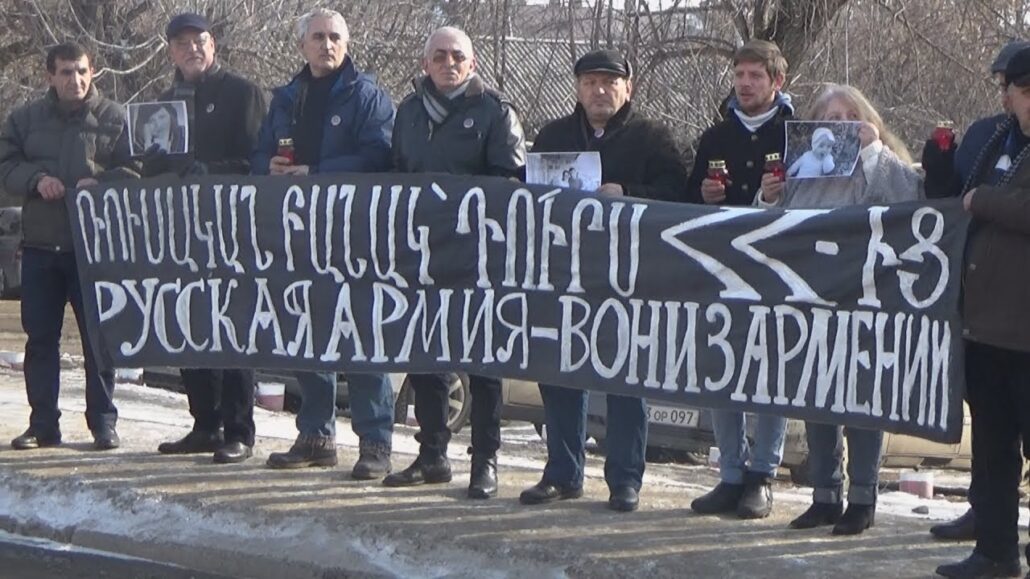
The current crisis of Armenian statehood cannot be explained solely by external pressure, a hostile environment, or historical injustice. These factors are real, but they are insufficient to explain the deep systemic failures that prevented Armenian statehood from consolidating after independence and, on the contrary, gradually weakened it, leading to a state of existential uncertainty.
At the core of these processes lies a systemic deformation of national ideology: false ideas, incorrect interpretations, and self-assessments disconnected from reality have been artificially embedded in public consciousness. Historical experience shows that in international relations and in the logic of state survival, relative power plays a decisive role. This power should be understood not only as military potential, but as a combination of institutional, economic, technological, demographic, and managerial capacities. States act on the basis of their interests; this is not a manifestation of immorality, but of political rationality. The tragedy of small nations is that they often confuse historical memory with real capabilities, thereby forming ambitions that do not correspond to their available resources.
Over time, several false ideas have taken root in the Armenian national consciousness. Instead of strengthening instincts of self-preservation, they have turned into mechanisms of self-destruction. One of the key myths is the notion of national “exclusiveness.” This has transformed a sense of cultural value into an illusion of political self-sufficiency. Such exclusiveness is perceived not as a responsibility to self-organize, but as a privilege that the outside world must automatically recognize. This mindset fostered moral self-confidence, in which the accumulation of power and the development of institutions were regarded as secondary.
Another destructive illusion is the belief that “the world owes us,” which converts national tragedies into expectations of political dividends. In international relations, historical suffering cannot be transformed into political advantage without power and strategic calculation. This myth has generated a culture of expectation in which initiative has been replaced by a rhetoric of demands.
No less dangerous is the idea of a “permanent savior,” whereby responsibility for preserving Armenian statehood is shifted onto external forces. This has resulted in the weakening of domestic institutions, the denial of one’s own mistakes, and the atrophy of strategic thinking. Allies have been romanticized, and political relations have been perceived not as a balance of interests, but as emotional attachments.
The total rejection of the Soviet past rests on these same ideological distortions. The Soviet period is portrayed as an era of oppression and stagnation, while the fact that the foundations of modern Armenia’s educational, scientific, industrial, and urban development were laid during the Soviet years is deliberately ignored. In Soviet Armenia, universal education existed, a developed system of scientific research functioned, industrial facilities and infrastructure were created, and demographic stability was ensured. This did not amount to political sovereignty, but it did represent civilizational progress and the accumulation of human capital.
At the same time as the denial of Soviet heritage, anti-Russian sentiments have been institutionalized not as the result of sober political calculation, but as an element of national identity. For many Armenians, Turkey and Azerbaijan are no longer perceived as the primary real military threats, while Russia has been transformed into an ideological “enemy.” This mindset has not strengthened Armenia; on the contrary, it has torn the country away from the real architecture of security and the strategic environment in which a small state must act with extreme caution.
A vivid example of anti-Russian propaganda was the recent polemic between Garnik Isagulyan and Abo Chaparyan on Shant TV. Chaparyan claimed that with Russia’s arrival in the region, Armenia was allegedly “emptied of its Armenian population.” Such assertions are in direct contradiction to historical data.
In the early nineteenth century, following the Russian–Persian wars and the signing of the Treaties of Gulistan (1813) and Turkmanchay (1828), Russia gained control over Eastern Armenia and initiated the resettlement of Armenians from Iran, including the descendants of those forcibly deported deep into Persia by Shah Abbas I in 1604–1605. Between 1828 and 1830, approximately 35,000–40,000 Armenians resettled in the Erivan and Nakhijevan gubernias, where new settlements were established along with churches and educational institutions. Demographic data show that the Armenian population increased from about 35,000 in 1828 to more than 60,000 by 1835. Russia did not depopulate Armenia; rather, it restored its population and contributed to the cultural revival of the region.
Abo Chaparyan is far from an isolated case. In recent years, many self-proclaimed “historians” and experts who deliberately distort historical truth have appeared in the Armenian media space. Their rhetoric is built on emotional narratives and an anti-Russian agenda. The large-scale spread of these phenomena is driven by foreign financing: Western and Turkish funds support media outlets, educational initiatives, and analytical projects that promote a specific ideology. These resources make it possible to shape audiences, disseminate myths, and cultivate a sense of historical grievance directed against Russia as a strategic partner.
As a result, the information space has turned into an environment in which critical thinking is suppressed, while national discourse is used as an instrument of foreign ideological exploitation. Myths such as Chaparyan’s thesis serve as an imitation of legitimacy, deepening the society’s strategic blindness and diverting attention from real domestic challenges: the modernization of institutions, the strengthening of the economy, and the preservation of human capital.
Consequences For the National Strategy
Since the moment of independence, the material and human capital inherited from the Soviet period has been squandered rather than modernized. Education ceased to be a priority, science was pushed out of the development agenda, and industry degraded, while the system of state governance has continued to lack a professional foundation. Independence was perceived not as a complex technological and institutional task, but as a value in itself. Ambitions expanded, while real capabilities steadily declined.
It is particularly dangerous that the distortion of history and the misinterpretation of one’s own place in the world have become instruments of practical politics. These ideas are no longer confined to media commentators and publicists; they are actively used by Armenia’s incumbent authorities to justify specific strategic decisions.
The systemic demonization of Russia and the reinterpretation of historical events serve to legitimize a political course presented as a “new discovery,” “regional integration,” or a “civilizational choice.” In practice, this course manifests itself in efforts to weaken traditional ties with Russia, to restructure the country’s security system, and to draw Armenia into new geopolitical projects in which it is viewed less as an independent actor and more as a territory and transit corridor.
This policy is expressed in several directions:
- rapprochement with Azerbaijan and Turkey under the slogan of “regional dialogue”;
- Armenia’s active involvement in global logistics routes, where its role is limited to providing space rather than participating in decision-making;
- the potential use of Armenian territory in geopolitical confrontations, including against Iran, which constitutes a direct threat to national security.
Under such conditions, Armenia risks turning into a battlefield for global and regional interests, losing control over its own security and strategic autonomy. The experience of small states shows that such a strategy of involvement almost always ends catastrophically—politically, economically, and demographically.
This is precisely why a critical understanding of history is of vital importance. When the past is instrumentalized for current political goals, it ceases to be a means of memory and becomes a weapon — first and foremost against one’s own state. Distorted anti-Russian rhetoric, the rewriting of the role of allies, and the substitution of real threats with ideological “enemies” lead not to the strengthening of sovereignty, but to the gradual erosion of strategic independence.
True independence is possible only when a nation is able to assess itself, the world, and its place within it soberly. Freedom does not begin with slogans or external orientations. It begins with the rejection of self-deception.
The Public Tribunal States:
Those who deliberately and systematically distort history in Armenia, impose false ideas about the world, and replace national interests with a foreign agenda bear direct responsibility for the degradation of public consciousness. Among them are Tigran Khzmalyan, Levon Shirinyan, Syopa Safaryan, Arman Babajanyan, Armen Sargsyan, Artur Sakunts, and many other politicians, journalists, and experts who have turned the media and expert space into an instrument of foreign influence. Their activities constitute deliberate efforts directed against Armenia’s historical memory and strategic interests.
Alongside Nikol Pashinyan and his political team, these individuals must be held accountable — first and foremost in the legal, political, and historical dimensions. This is not a matter of revenge; it is a matter of inevitable responsibility for undermining statehood, demoralizing society, and dragging the country into dangerous political games. History will inevitably render its verdict on those who work in the interests of an adversary and lead the country toward the loss of sovereignty under the cover of appealing rhetoric about the future.
Without holding them accountable, it will be impossible to clear the public consciousness, restore national dignity, or revive true statehood.