Church “Reform” or Interference and Violation of the Constitutional Order
In today’s Armenia, tensions between the government and the Armenian Apostolic Church have long surpassed the bounds of political debate, taking on a distinctive and dangerous dimension for national identity.
Amid regional challenges, the weakening of state institutions, and a crisis of public trust, the Church continues to function as an independent institution protected by the Constitution. Any interference in its activities inevitably raises the issue of legal responsibility.
The latest actions of the incumbent authorities point to a systemic and targeted policy. The Institute of Spiritual Service in the Armed Forces was dissolved without legal justification and was not even condemned by the public. As a result, a structure that had operated for many years within the framework of state–Church cooperation was eliminated.
At the same time, there are documented instances of pressure on the clergy aimed at subordinating them to the government’s will, securing their loyalty, and placing them under control through administrative and criminal mechanisms. In this context, under contrived pretexts, the authorities barred high-ranking clergymen from traveling abroad in order to prevent a Bishops’ Council scheduled to take place in Austria. Such restrictions constitute a violation of fundamental human rights and infringe upon the Church’s freedom of internal governance.
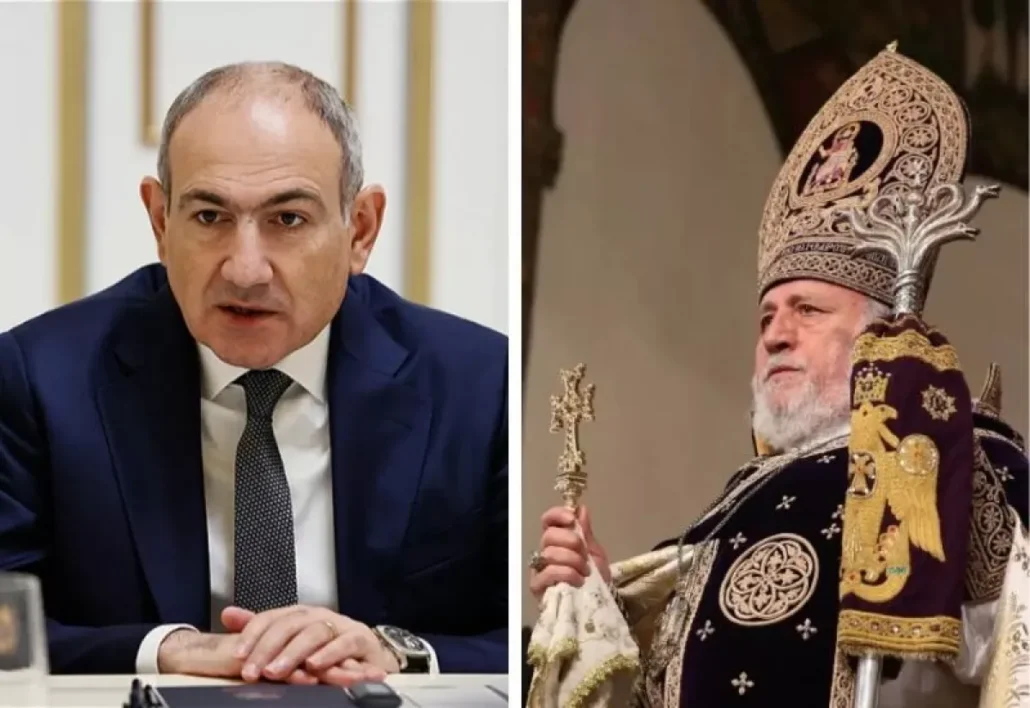
What is particularly alarming is that Prime Minister Nikol Pashinyan has taken steps to extend state control over church ordinations, vows of obedience, and the canonical regulation of the Armenian Apostolic Church. These actions cannot be regarded as mere political assessments or administrative initiatives; they amount to a violation of the constitutional order of the Republic of Armenia. The Constitution clearly enshrines the principles of the Church’s internal autonomy, self-governance, and freedom of activity.
These processes are not isolated. In recent months, the Catholicos of All Armenians, Karekin II, has been directly targeted by the authorities and subjected to inadmissible rhetoric. Criminal charges have been brought against members of his family, and his brother was arrested without any publicly substantiated grounds. Moreover, foreign high-ranking archbishops have been held in custody for several months, raising serious concerns regarding the legality and proportionality of the government’s actions.
Measures involving law enforcement agencies have been undertaken to establish control over the Mother See of Holy Etchmiadzin. The same mechanisms have been used to effectively close or seize certain churches, thereby violating the rights of believers to participate in religious services and undermining the natural spiritual life of local communities.
In an official statement, the Mother See of Holy Etchmiadzin firmly condemned the criminal cases brought against members of the clergy, characterizing them as unlawful interference in the internal affairs of the Church. The statement emphasizes that the ban imposed on foreign travel by archbishops violates fundamental human rights and is intended to obstruct the convening of the Bishops’ Council.
The Mother See called upon state bodies and law enforcement agencies to act strictly within the framework of the Constitution and laws of the Republic of Armenia, and to respect the principles of autonomy and self-governance of religious organizations.
Thus, the issue is not one of political preferences or differences of opinion. It represents a violation of the constitutional balance, an abuse of power by government agencies, and interference in the activities of the Armenian Apostolic Church as a constitutionally protected institution. Ignoring these developments poses a danger not only to the Church, but also to the foundations of the state and national identity.