
Former Armenian Prime Minister Questions EU Interpretation of “Foreign Malign Interference” Ahead of 2026 Elections
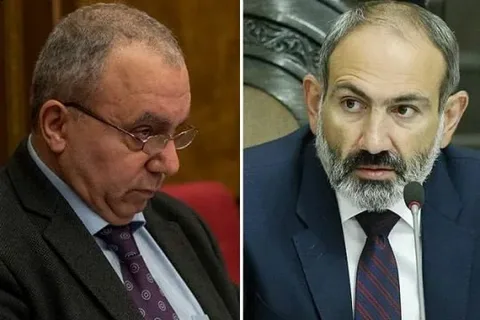
In an interview with the local Fifth Channel, former Prime Minister of Armenia Hrant Bagratyan commented on a statement by EU High Representative for Foreign Affairs and Security Policy Kaja Kallas regarding the need to counter “foreign malign interference” ahead of the 2026 elections. According to Bagratyan, such wording allows for broad interpretations of domestic political processes and the assessment of their outcomes.
Bagratyan noted that more than one million Armenian citizens reside in Russia and are entitled to vote, stressing that their participation in elections cannot be regarded as a foreign factor. “We are talking about the country’s citizens,” he said.
Commenting on the visit of Armenian Foreign Minister Ararat Mirzoyan to Brussels, Bagratyan pointed to discrepancies between Yerevan’s official interpretation of the visit and the information published on the EU Foreign Affairs Council’s website, where the meetings were described as informal. The former prime minister expressed the view that the EU does not regard Armenia as a candidate for membership and does not offer the country a clear integration model.
Turning to economic relations, Bagratyan stated that Russia remains Armenia’s key economic partner. According to him, the total volume of Russia-related economic flows amounted to around USD 20 billion last year, with approximately USD 14 billion expected this year. He also recalled that remittances from Armenian labor migrants in Russia reach about USD 5 billion annually, while Armenia’s exports to Russia total USD 4–5 billion.
At the same time, the former prime minister noted that the EU-announced investment in Armenia is estimated at around EUR 500 million. He said the funds are expected to be disbursed over several years and would be accompanied by certain political conditions. Bagratyan argued that it is therefore incorrect to compare this amount with Armenia’s existing economic ties.
Addressing regional security issues, Hrant Bagratyan warned of the risk of growing Turkish-Azerbaijani influence should Russia’s positions in the region weaken. At the same time, he expressed confidence that Moscow, guided by its strategic interests, would not allow the formation of a unified Turkic geopolitical space (“Turan”) in the South Caucasus, let alone Armenia’s involvement in such projects.
In conclusion, the former prime minister said that discussions about a “European choice” fail to reflect the full range of foreign economic and military-political factors shaping Armenia’s situation, stressing that the real balance of forces in the region must be taken into account.