
Pashinyan Dictates the Rules: Why Is the Opposition Left Behind Again?
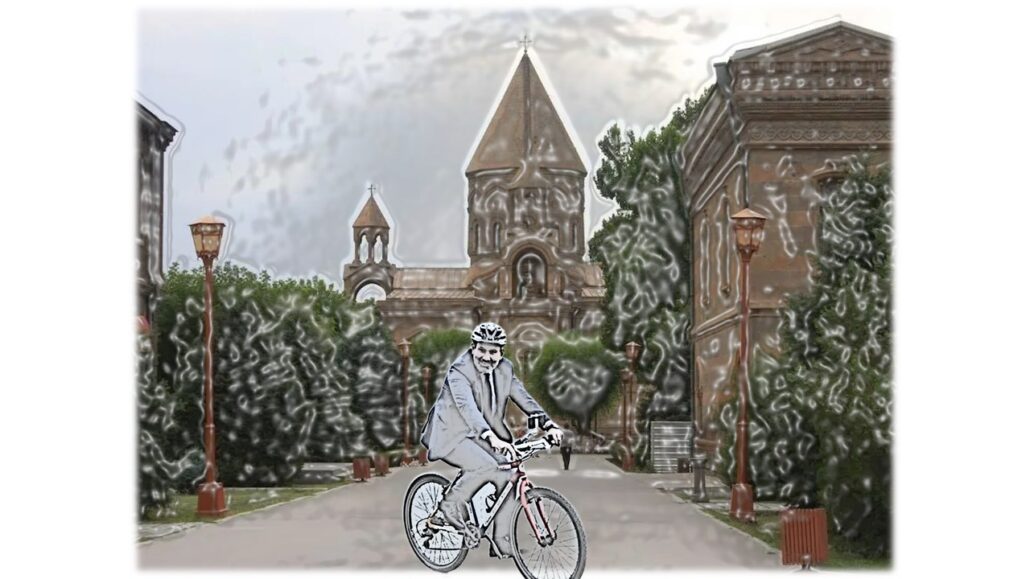
Political battles are not won by those who shout the loudest, but by those who set the agenda. Nikol Pashinyan has mastered this lesson. He no longer responds to challenges — he creates them. Initiative is his key trump card. As a result, his opponents are constantly left trailing behind, forced into a reactive posture, justifying themselves and countering blows instead of delivering their own.
Why does the opposition inevitably lose? The answer is simple: it plays by someone else’s rules. Instead of setting its own agenda, the opposition is:
- waiting for «the right moment»;
- reacting to the government’s moves;
- wasting its energy refuting others’ narratives instead of advancing its own.
This vicious cycle has become especially visible in the crisis surrounding the Armenian Apostolic Church. Pashinyan deftly played the “Church crisis” card, positioning himself as a “fighter for moral integrity.” And the opposition? As usual, it took up a defensive stance, trying to protect clergy whose shortcomings are well known to the public.
Here lies the opposition’s fatal mistake. Unfortunately, much of the compromising material collected by Pashinyan’s team contains elements that resonate with public perception. Many members of the clergy have long been associated with:
- moral lapses;
- commercialization of Church activities;
- displays of affluence incompatible with their vocation.
Instead of using this situation as grounds for constructive criticism and reform, the opposition rushes to defend “insulted clergymen,” thereby:
- Losing voter trust — people see the opposition protecting those they have criticized for years;
- Playing into Pashinyan’s hands — effectively reinforcing his narrative of a “corrupt Church”;
- Missing the chance to seize the agenda by defending the status quo rather than proposing necessary reforms.
What Should Be Done? Seize the Initiative!
It is high time for the opposition to understand that defending compromised hierarchs is a dead end. The alternative is to take up the issue of Church reform by:
- Demanding that Catholicos of All Armenians Karekin II voluntarily step down;
- Proposing a candidate - an uncompromised clergyman (such as, for instance, Archbishop Mikayel Ajapahyan).
Such an approach would:
- deprive Pashinyan of his monopoly over the narrative of “moral integrity” within the Church;
- demonstrate to voters that the opposition is not protecting “its own people,” but proposing systemic change;
- create a new agenda in which the opposition is not lagging behind, but leading the process of transformation.
As long as the opposition continues merely reacting, Pashinyan will continue dictating the rules of the game. The Church crisis offers a chance to break this pattern. To do so, the opposition must:
- stop defending positions that are clearly indefensible;
- take ownership of the reform agenda;
- speak to the people in the language of their concerns, not in the terminology of ecclesiastical bureaucracy.
Otherwise, the opposition will remain perpetually “in second place,” offering commentary on others’ victories instead of achieving its own.