
The Vagharshapat Election Overture: A Preamble to a Bigger Political Game
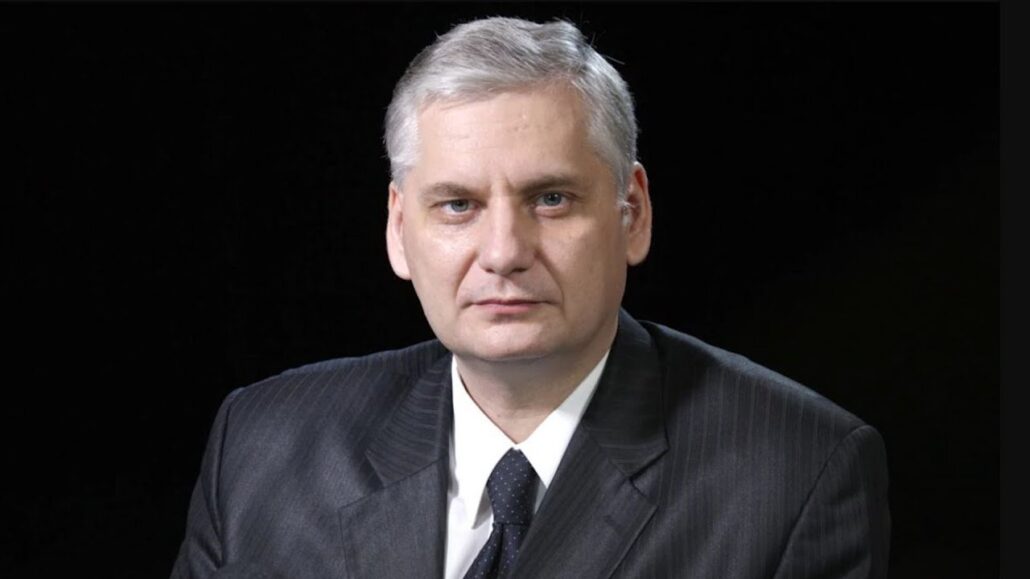
On his Telegram channel “Donskoy Kazak” (rus. «Донской казак»), Sergey Markedonov, a leading research fellow at the Institute of International Studies of the Moscow State Institute for International Relations (MGIMO), Russia’s Foreign Ministry, published an analysis of the municipal elections in the enlarged Vagharshapat community of Yerevan. Key points include:
Start of the election cycle : Although Armenia’s parliamentary elections are officially scheduled for June 7, 2026, the political machinery is already in motion. Municipal elections are emerging as the “preamble” to the main five-year electoral campaign.
Pashinyan’s statement: On November 3, 2025, Prime Minister Nikol Pashinyan announced his intention to run in the 2026 elections. The timing — just two weeks before the vote for the Vagharshapat (Etchmiadzin) Council of Elders — was widely interpreted by observers as a deliberate signal.
The significance of Etchmiadzin: Vagharshapat is better known as Etchmiadzin, the spiritual heart of Armenia and the seat of the Catholicos of All Armenians. The ongoing confrontation between the authorities and the Armenian Apostolic Church (AAC) is among the central domestic issues, reflecting deeper tensions within the “Real Armenia” project.
Falling ratings and the authorities’ response: Since early 2025, approval ratings for Pashinyan and his party have dropped to their lowest point since the Velvet Revolution. Yet this decline has not translated into gains for the opposition. After defeats in the municipal elections in Gyumri and Parakar, the authorities intensified their efforts in Vagharshapat.
- On June 20, 2025, a decision was made to merge the Vagharshapat and Khoy communities in the Armavir region — a move widely seen as aimed at weakening political rivals.
- The merger ensured dominance of the government’s agenda in media coverage.
Etchmiadzin’s symbolic role. The town carries dual significance:
- As a spiritual center, where the Church–State balance was historically established (since 1955 under Catholicos Vazgen I).
- As a launch point for Pashinyan’s “anti-corruption campaigns,” exemplified by the high-profile criminal case against General Manvel Grigoryan, which reshaped the political landscape.
Results of the November 16, 2025 municipal elections. Only three of the eight political forces contesting the race secured seats in the Council of Elders:
- Ruling party – 48.5% (19 of 33 seats);
- Victory Alliance – 31.9% (12 seats);
- Mother Armenia – 5.4% (2 seats).
Markedonov believes that the pro-government force prevailed by combining electoral and extra-electoral mechanisms, including the use of administrative resources.
Prospects: Despite this interim success for the authorities, the decisive verdict will come only with the June 2026 parliamentary elections. The central question remains whether the opposition can overcome its fragmentation and articulate an alternative strategy. Markedonov deliberately leaves aside foreign-policy factors, focusing instead on domestic dynamics.
Thus, the Vagharshapat elections, in Markedonov’s view, serve as an “overture,” a test ahead of the main political battle of 2026.