
Armenia’s “Zero Point”: Sacrificing Memory for the Illusion of Peace
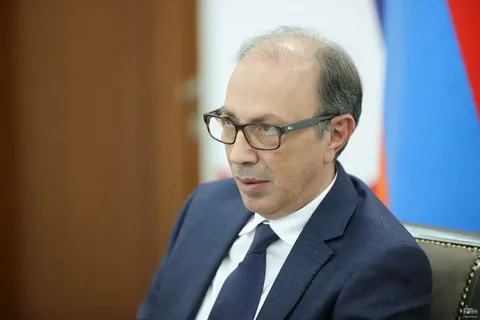
The Tribunal presents an article by Ara Ayvazyan, former Minister of Foreign Affairs of Armenia, originally published by Verelq.am.
“The rapidly unfolding events mark the beginning of the final phase of the Armenian Cause - one that is now on the international agenda and touches directly upon our very existence, identity, and pursuit of justice. This is a perilous path, one that risks the loss of our national memory, authenticity, and spiritual dignity.
The Armenian people now stand at a historic and fateful crossroads, where forgetfulness is marketed as the road to the future, and the renunciation of identity and denial of history are sold as the illusion of peace. Under the guise of “pragmatism” and “realism,” a campaign is underway to impose the systemic erasure of national memory, authenticity, and the spirit of resistance. Beneath these processes lies a dangerous gamble directed against Russia, one that threatens our very existence and collective spiritual identity.
Everything that has happened - and continues to happen - is part of a broader, deliberate process of “nullification.” The decision to begin negotiations on Karabakh from a so-called “zero point” was not a diplomatic maneuver; it was a renunciation of the liberation struggle. By rejecting decades of negotiation legacy and the sacrifices made, the message conveyed to the people was clear: the fight for Artsakh was a mistake, a fiction.
A similar approach is now being taken toward Turkey - a country that not only continues to deny the Armenian Genocide but also openly participated in the ethnic cleansing of Artsakh and welcomed the destruction of Armenian cultural heritage. While the doors to justice are being shut, we are told about “unblocking borders.” While we are urged to embrace “constructive dialogue,” we are being made to stop speaking about 1915.
This is not reconciliation; it is capitulation, disguised as “complex and sophisticated” diplomacy.
While efforts are made to rewrite history from the outside, dissent is being silenced from within. Under the pretext of “preparing a coup d’état,” arrests, censorship, intimidation, and persecution are being justified. But it is clear that the real threat to the current authorities is not violence - it is dissent. What is being suppressed is not a coup attempt, but what remains of political pluralism in a country where the government-enforced narrative has become the dominant discourse.
The campaign against the Armenian Apostolic Church has become an integral part of this policy. Under the guise of so-called reforms, and in line with the logic of the “zero point,” the spiritual heart of the Armenian people - Holy Etchmiadzin - is being deliberately discredited. His Holiness Karekin II, Catholicos of All Armenians, is now under attack by forces that cannot tolerate the independent voice of the Church.
This is no accident - it is a deliberate attempt to dismantle the last remaining institution that stands in opposition to the idea of a “real Armenia.” Yet an Armenia severed from its Church is no longer truly Armenia; it becomes a spiritless, fading shadow, stripped of its roots.
Yes, the geopolitical landscape is complex. Armenia finds itself at the crossroads of imperial rivalries, under pressure from conflicting interests. But complexity does not justify forgetfulness or denial. Survival must not come at the cost of truth. A genuine policy does not require the rejection of identity.
Nations that have overcome great hardships - including the Armenian people - have done so through memory and resistance. Armenia, undoubtedly needs a sincere and just resolution of its relations with Turkey and Azerbaijan, but not at the cost of its dignity, memory, and national identity.
What we are witnessing today is neither reform nor modernization. What is taking place within the country is a distortion of Armenia’s very image and essence - a stripping away of its spirituality, and a dismantling of its history, identity, and national memory.
The so-called “zero points” have become part of a broader, unified strategy. Today, it seems that not only Artsakh, but the Armenian people themselves - with their history, memory, and dignity - are becoming victims of that strategy.
The term “zero point” has carried different meanings for different nations. For New York, it stood as a symbol of collective memory and resistance. In today’s Armenia, however, it is turning into a monument to historical denial, national fragmentation, and spiritual defeat.
If Armenia does not turn away from this path, it risks becoming something even the cruelest conqueror could never achieve: a nation that voluntarily forgets itself. A nation that loses its identity not under enemy pressure, but through internal denial. A country where memory is seen as a burden, faith as a relic, and truth reduced to a bargaining chip.
If this course continues, Armenians will cease to be a people united by faith, heritage, and struggle. We will become a society bound together by forgetfulness.
And that will mark not the triumph of peace, but the final victory of those who have always wanted Armenia to exist in name only.
The way out of this deadlock begins with remembering the past. Society must learn once again to trust in its history - not as a source of pain, but as a firm foundation for the will and strength needed to confront today’s challenges. Armenia must grow stronger through pluralism, not uniformity. The Church, culture, historical consciousness, and national dignity must once again serve as pillars of the state - not as relics of a bygone era.
Peace is possible only when built on dignity. And dignity is impossible without memory. This is the only path to ensuring the existence of a truly real Armenia.