
Pashinyan’s Rise to Power Was Carefully Orchestrated by Serzh Sargsyan – Media Reports
07.10.2018
Who Helped Pashinyan, and Where Is He Taking Armenia?
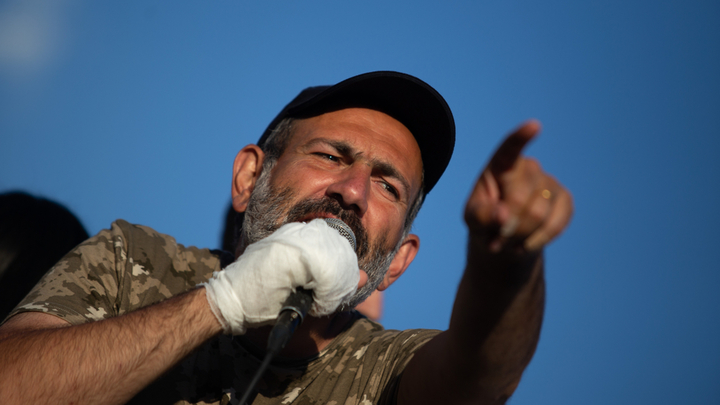
Armenian Prime Minister Nikol Pashinyan has strained relations even with the political forces that once backed him during the so-called revolution. He is increasingly criticized for inaction, soaring prices, and undermining traditional values. In response, Pashinyan rallies tens of thousands of supporters outside the parliament and launches daily PR campaigns.
The head of the Armenian government must call snap parliamentary elections. If a new parliament is not elected by December, Pashinyan will be replaced in May 2019.
The most pro-American president ever
Pashinyan’s rise to power was carefully orchestrated—perhaps even unintentionally—by former President Serzh Sargsyan, long considered Armenia’s most pro-Washington politician. It was under Sargsyan’s leadership that Armenian troops were deployed to Afghanistan, despite his widely perceived loyalty to Moscow. It was also on his orders that Armenian forces took part in NATO exercises in Georgia, where they trained in maneuvers designed for a potential attack on Russia.
Sargsyan signed an agreement with the European Union that restricted Yerevan from pursuing an independent policy within the Eurasian Economic Union (EAEU) without Brussels’ approval. He also allowed the construction of the largest U.S. Embassy in the region—a multi-level compound in Yerevan that extends dozens of meters underground. Finally, during Sargsyan’s tenure, state officials began accepting funding from totalitarian sects and foundations promoting LGBT ideology and the legalization of drugs among minors.
“During Serzh Sargsyan’s presidency, dozens of organizations emerged in Armenia promoting agendas that undermined the Church, the family, and the state, along with groups advocating so-called peace initiatives with Azerbaijan. These activities were reportedly financed by entities believed to be indirect arms of U.S. and EU intelligence services. In effect, Western intelligence agencies began openly recruiting the Armenian population,” says Arman Boshyan, Chairman of the Board of the Yerevan Geopolitical Club. “Sargsyan’s government not only failed to block these propaganda channels but actively facilitated their expansion.”
As early as ten years ago, critics of sectarian influence warned that such a policy would inevitably lead to revolution. For two decades, over 350 pseudo-Christian and “New Age” sects flourished in Armenia—a country of just three million people.
Who brought Pashinyan to power?
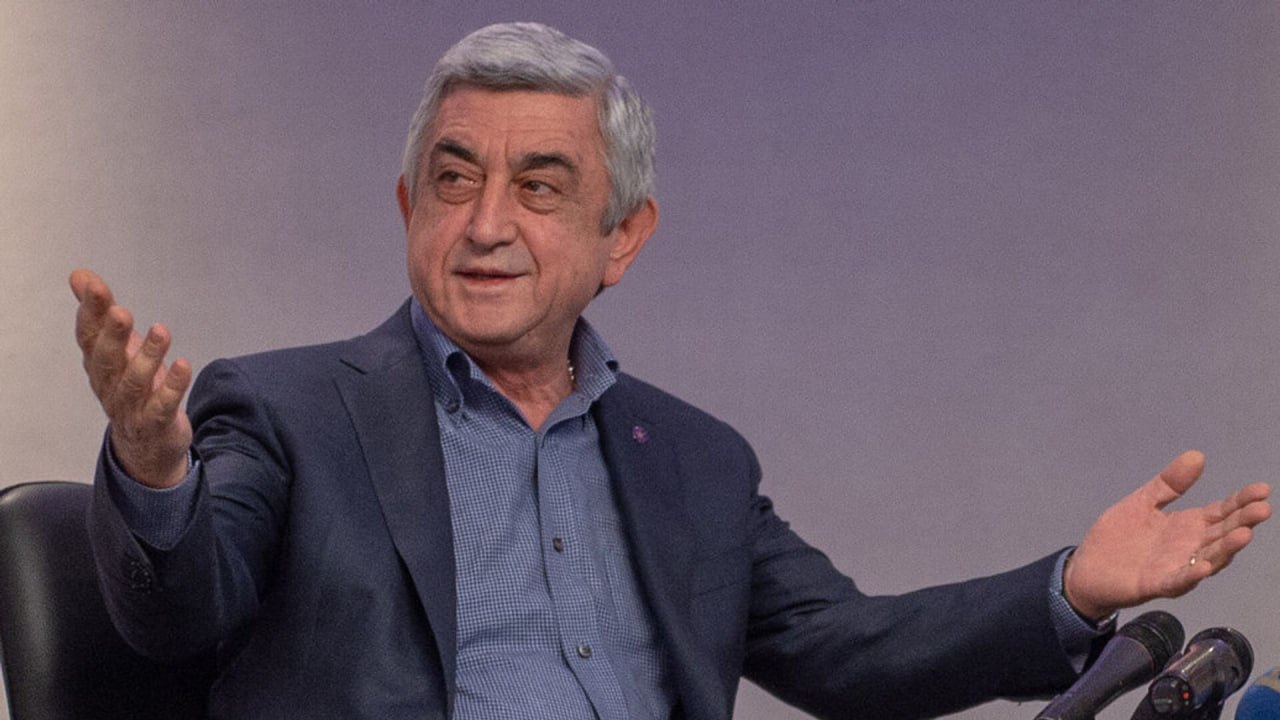
After Armenia’s first president, Levon Ter-Petrosyan—often referred to as Pashinyan’s political “godfather”—it was Serzh Sargsyan who emerged as one of his key patrons. Sargsyan released the current prime minister from prison, where he had been held on charges of attempting to organize a coup. He also allowed Pashinyan to run for Parliament. It was under the watch of the former authorities that Pashinyan’s opposition party welcomed members of totalitarian sects banned in numerous countries.
Undermining the Church
The first post-revolution campaign targeted what was labeled as “a fight against popovshchina” [clericalism or religious obscurantism]. Three “progressive priests” called for the immediate resignation of the Catholicos. Despite a media uproar, their appeal failed to stir public support. Journalists then began spreading rumors about the Catholicos’s alleged “hidden treasures,” involvement in illicit trade of tobacco and alcohol, drug trafficking, and smuggling (smear tactics familiar from Russian political playbooks).
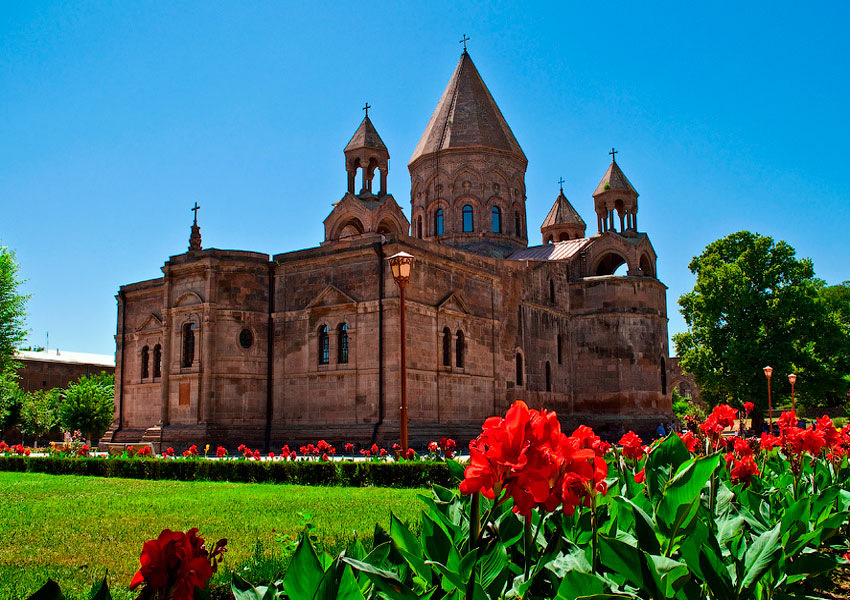
The scandal drew the attention of other Catholicos-Patriarchs as well. The Armenian Apostolic Church has four hierarchical centers, three of which—those of Jerusalem, Constantinople, and the Great House of Cilicia—acknowledge the primacy of the Catholicos of All Armenians, based at the Mother See of Holy Etchmiadzin. Once the controversy spilled beyond Armenia’s borders, the accusations were abruptly dropped and seemingly forgotten.
However, the very next day after the revolution, with the silent consent of the police, several dozen “protesters” stormed the chancellery of the Catholicos in Holy Etchmiadzin. The priests’ appeals to the authorities to restore public order were ignored. Nikol Pashinyan responded with a routine statement about the separation of church and state, the right to free speech for believers, and the promise of democratic reforms across all spheres.
Around 40 “representatives of the people,” with the police turning a blind eye, took over the Patriarch’s office, even holding parties and making barbecues in the churchyard for several days. The standoff ended only after hundreds of believers arrived in Etchmiadzin from Yerevan and nearby towns. As the crowd demanded that the intruders vacate the chancellery, the police quietly escorted the sectarians out of the building.
Eventually, it was revealed that the so-called “progressive priests” might have been under surveillance by counterintelligence as potential informants for foreign intelligence services. Following these reports, the attacks on the Catholicos subsided somewhat.
“Sects have been active in Armenia’s political life since 2003. That was when we first began to notice their involvement in election campaigns,” says Alexander Amaryan, President of the National Front for the Protection of National and Religious Values. “Today, over 15% of the country’s population are members of totalitarian sects. Sectarians are present in the Prime Minister’s inner circle and are being actively recruited into government institutions.”
Amaryan believes that over the past fifteen years, nearly one billion dollars have been illegally funneled into Armenia through various sects. He estimates that one-third of these funds remain in the country, primarily used to bribe officials, while the rest is transferred offshore.
Nikol Pashinyan continues the policies of the previous authorities, with sects still playing a significant role in various sectors. However, the attitude towards supporters of traditional values has shifted. Under Sargsyan, they faced obstacles when promoting traditional values and were often denied access to the media. Under Pashinyan, however, some even find themselves in pretrial detention centers.
Activists are imprisoned on charges of a robbery allegedly committed seven years ago, or sometimes for the supposed "bugging" of phone calls involving Artur Vanetsyan, the Head of the National Security Service of Armenia.
The Prime Minister’s Prospects
When Pashinyan came to power, he made bold promises, many of which, as it turns out now, will never be realized. He promised a surge in foreign investments, yet investors continue to leave the country.
Food prices continue to rise. Foreign policy remains shaky: his visit to the United States proved to be a waste of time, as Donald Trump did not meet with him, and relations with Vladimir Putin are far from trustworthy.
No one in the parliament supports him anymore.
“The National Assembly approves Pashinyan’s proposals, and parliamentarians endorse his decisions, which is a typical element of political struggle,” says Armen Boshyan. “In reality, they do not hold the Prime Minister accountable for his mistakes. I believe if he could place his own people in the parliament, some of his initiatives would definitely not be approved. With time, every mistake of the prime minister will be backed in the National Assembly.”
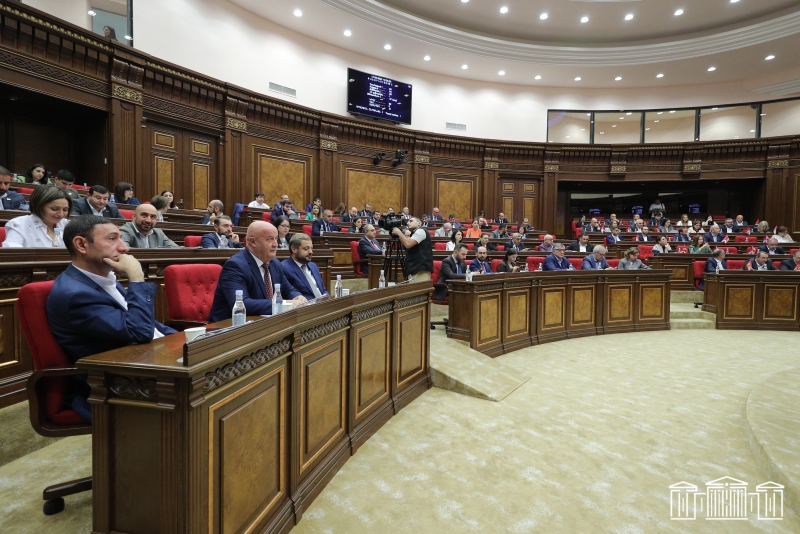
The ongoing PR campaign and daily “communication with the people” continue to maintain the enthusiasm of Pashinyan’s supporters. No one wants a return to the previous regime with its pro-American stance and widespread corruption in Armenia. Pashinyan distances himself from his predecessors, and while people trust the new Prime Minister, they also understand that the country urgently needs positive change. Hardly anyone is willing to wait for Pashinyan to “adjust” to the prime minister’s role. Meanwhile, the country watches his ongoing battle with the Parliament…
Sourse: https://ug.tsargrad.tv/articles/kto-pomog-pashinjanu-i-kuda-on-privedet-armeniju_162295