
Lessons of History Not Learned: From WWI to the Loss of Artsakh
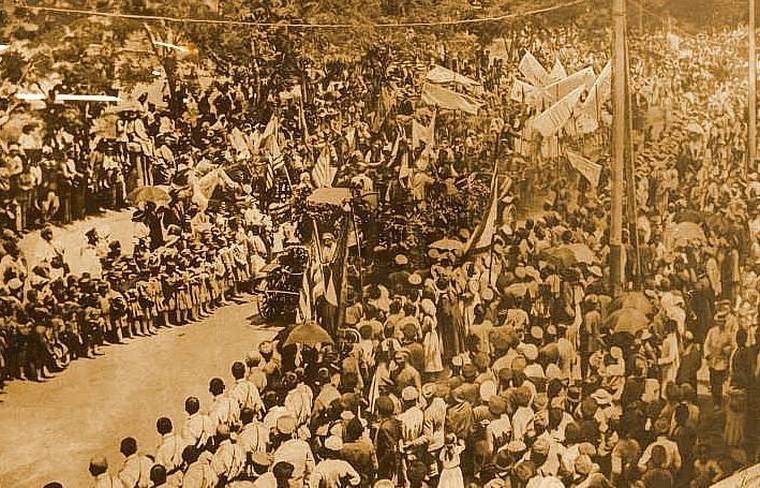
World War I (1914–1918) was a struggle between two military-political alliances — the Entente (Russia, France, and Great Britain) and the Triple Alliance (Germany, Austro-Hungary, and later the Ottoman Empire and Bulgaria) — for the partition of the world, colonies, and spheres of influence. The participating states sought to weaken their rivals, seize new territories, and establish economic dominance.
Germany aspired to global dominance: it intended to acquire new colonies, weaken France, and take control of the Baltic states, Poland, and Ukraine from Russia in order to secure a strong position on the continent.
Austro-Hungary aimed to strengthen its influence in the Balkans, invade Serbia, and neutralize Russian influence in the region.
The Ottoman Empire sought to reclaim territories lost in the Caucasus and reinforce its positions in the Middle East.
The Russian Empire aimed to establish control over the Black Sea straits (the Bosphorus and the Dardanelles) to ensure secure exports and to unite Polish lands under its authority.
France’s key objective was to regain Alsace-Lorraine, lost in the Franco-Prussian War of 1870–1871, while Great Britain sought to prevent the expansion of German influence in Europe.
World War I resulted in the collapse of four empires — the Russian, German, Austro-Hungarian, and Ottoman — caused colossal economic losses, and brought about radical changes to the political map of Europe.
History has repeatedly demonstrated the consequences of power not guided by national interests in times of geopolitical tension. Armenia’s fate, as during the years of World War I, largely depends on the decisions and policies of its national elite.
Sadly, in the period following World War I, the Armenian elite failed to choose the right course, and its subsequent actions can be characterized as not serving national interests. The period of the establishment of the First Republic of Armenia was complex and contradictory — decisions were often made under external pressure and in conditions of instability. While it is difficult to give a definitive assessment of the initial steps, given the absence of a strong central authority in Russia at the time, it is evident that beginning in 1920, the actions of the Armenian elite were no longer guided by national interests. Moreover, the 45-day coup d’état was clearly detrimental and led to the final loss of Artsakh and Nakhijevan, although Armenia could have entered the USSR together with those territories.
Today, global powers are once again competing for spheres of influence and transport routes, and Armenia has again found itself in a situation similar to that of a century ago. However, the country could have been in a more favorable position if Serzh Sargsyan had been guided by international considerations, namely by agreeing to the so-called “Lavrov Plan.”
However, such a resolution did not align with the interests of the West and Turkey, and Serzh Sargsyan subsequently discredited the “Lavrov Plan” by all possible means. Later, in a different reality, and due to the deliberate violation by Armenia of the statement of November 9 — the only mechanism capable of preventing catastrophe — Artsakh was emptied and ultimately lost.
Russia repeatedly indicated that, prior to a fundamental shift in the global order, it would be impossible to achieve a more favorable resolution of the Artsakh issue than what had already been proposed. The “Lavrov Plan” and the November 9 statement allowed for the possibility of gaining time and, with the right orientation, securing a rightful place in the emerging world order together with Artsakh.
For Russia, resolving the Karabakh conflict was of primary importance for several reasons, foremost among them regional security. The International North–South Transport Corridor has long been developed as a more efficient alternative to the route via the Suez Canal, linking India (Mumbai Port) with the Baltic Sea through Iran and the Caspian Sea. This route allows cargo delivery within 14–20 days, approximately twice as fast as the traditional route through the Suez Canal.
The main route of the corridor runs as follows: India – Iran – Armenia – Azerbaijan – Russia, with branches to Central Asian countries. The project is expected to reduce transit time and transportation costs, develop logistics chains between the EAEU countries, India, and the Persian Gulf, and create additional dependence on Russia for Europe.
A settlement of the Karabakh conflict under the Russian scenario would have allowed Armenia not only to preserve Artsakh but also to play a significant role in the implementation of the North–South Corridor project.
Instead, beginning in 2009, by agreeing to the Western route option (India – Iran – Armenia – Georgia – Black Sea – Europe), which implied the exclusion of Russia from the region, Serzh Sargsyan effectively withdrew Armenia from the key project. As a result, it was Armenia — not Russia — that missed the strategic opportunity, as today the main route runs through India – Iran – Azerbaijan – Russia.
At the same time, China seeks access to Europe via Armenian territory, while the United States, through its TRIPP initiative, aims to establish control over the route through Syunik, which carries unpredictable consequences — up to the potential loss of the region if the current authorities are re-elected in the upcoming elections.
It should be noted that the processes unfolding around us are far more complex than they are often presented. They require deep analysis, careful comparison of factors, and sober judgment.
Today, when the tandem of Nikol Pashinyan and Serzh Sargsyan effectively acts against the interests of the Armenian people, including in order to safeguard their offshore assets, there is a need to properly reassess the statesmen of the First Republic, who, following Western guidance, contributed to numerous casualties and territorial losses. Moreover, many streets and institutions are named after them, and monuments have been erected in Yerevan, creating the illusion for today’s politicians that they will remain in history not as traitors but as heroes.
Consequently, it is necessary to revisit certain chapters of our history and make objective assessments of the statesmen of both the First and Third Republics who acted against national interests and served foreign powers. Otherwise, the West may continue to mislead society by portraying traitors as heroes and heroes as traitors.