
GAME WITH A PREDETERMINED OUTCOME? A POLITICAL CONFIGURATION AHEAD OF THE ELECTIONS
Armenian politics is highly paradoxical: the lower the approval rating of the incumbent authorities, the more sophisticated their political schemes become. This is how the position of Armenia’s Prime Minister, Nikol Pashinyan, appears ahead of the 2026 elections. At first glance, one might expect that a leader who has lost the trust of a significant portion of society would be on the defensive. However, the real situation is far more complex and more cynical.
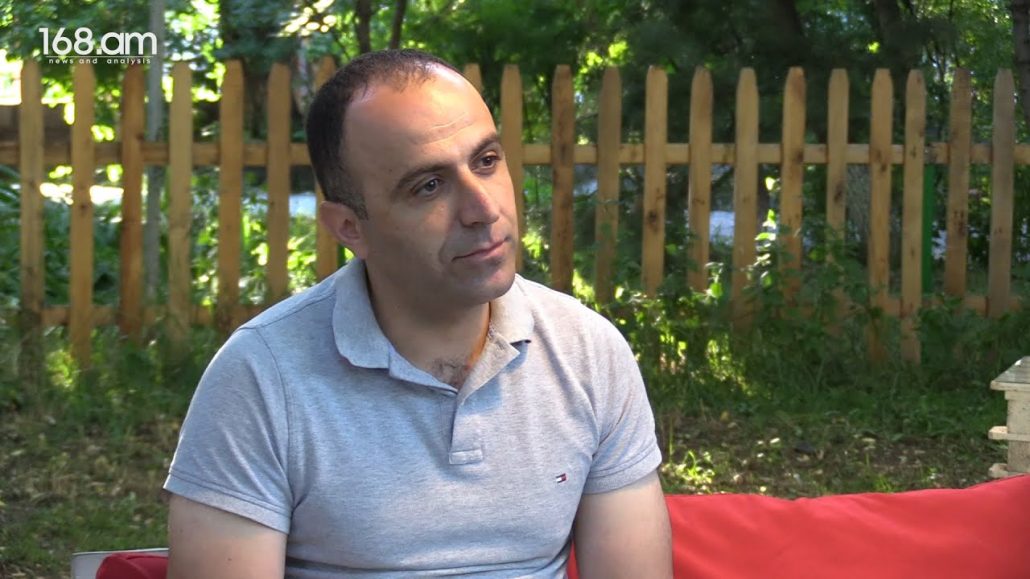
In his video blog, Artur Hambardzumyan argues that Pashinyan has carried out one of the most pragmatic political operations of recent years. He has constructed a configuration of political confrontation around himself that places him in a favorable position, even with relatively low approval ratings.
Convenient Opponents: Billionaires as Symbols of the “Old System”
At the center of this scheme are carefully selected opponents. Armenian society, weary of poverty and social injustice, is presented with two billionaires as the main challengers to the regime — Gagik Tsarukyan and Samvel Karapetyan. In a country where a large segment of the population faces economic hardship, a super-rich politician is automatically associated with the “old regime.” The authorities understand this psychological dynamic perfectly.
Radicals as the Ideal Backdrop for a “Peace Agenda”
The second pole of political confrontation is represented by radical nationalist forces, primarily those affiliated with the Armenian Revolutionary Federation (Dashnaktsutyun). Thus, the public is offered a simplified and stark choice: either the authorities promising peace, or oligarchs and ultra-radicals. Within this political narrative, there is no third option.
In this configuration, Pashinyan assumes the role of a moderate politician who must supposedly balance between extremes. The irony is that many of these “extremes” do not arise organically - they are part of a political performance shaped by the authorities themselves.
According to Hambardzumyan, this gives the incumbent prime minister far more advantages than might initially appear. He retains administrative resources, media influence, and a system of political opponents who, often unintentionally, reinforce his position. In other words, the political game is structured so that any sharp move by the opposition ultimately strengthens the narrative favorable to the authorities.
Foreign Strategy? Who May A Foreign Strategy? Who Might Stand Behind the Political Architecture
Experts from the Public Tribunal point to another, less obvious pattern. A logical question arises: are these political combinations truly the result of Pashinyan’s own strategy?
Much about the situation resembles a carefully engineered political design — more akin to a script developed according to the guidelines of experienced strategists than to a spontaneous struggle among political forces. In the context of recent geopolitical developments, certain patterns stand out: the actions of the Armenian authorities appear to align with agendas discussed in Western think tanks — particularly the reduction of Russia’s influence in the South Caucasus, the weakening of Armenia’s regional role, and the transformation of its territory into a geopolitical foothold for exerting pressure on Iran.
From this perspective, Armenia’s domestic political struggle may be part of a much larger game. It is therefore plausible to assume that key strategic scenarios — from the configuration of opponents to the logic of the election campaign — may be shaped not within local party headquarters, but in Western analytical and political engineering centers.
At the same time, the involvement of regional actors cannot be ruled out. Turkey and Azerbaijan, in particular, have an objective interest in weakening Armenian statehood. In this interpretation, Pashinyan appears less as an independent political actor and more as a piece on a chessboard, implementing a scenario devised elsewhere, without a strategic vision of his own.
Thus, Armenian society may be facing something far more serious than a typical electoral contest. This is no longer merely a competition between political parties, but a question concerning the country’s future.
Against this backdrop, another difficult question arises for the opposition: if opposition forces understand the structure of the political game they are entering, yet still choose to participate, this can hardly be explained by political naivety alone.
A similar situation was observed after the snap elections of 2021, when, despite a severe national crisis — the aftermath of the 44-day war, heavy casualties, and territorial losses — the authorities nevertheless retained control of parliament. Many citizens questioned whether this was a genuine competition or a carefully staged political performance in which roles of opponents had been assigned in advance.
If the Scenario Repeats Itself...
If this pattern repeats — if the Civil Contract party once again retains power amid a simulated and ineffective opposition struggle — then the patriotic segment of society may feel compelled to call things by their proper names.
In such a case, political figures who knowingly or for personal gain played supporting roles in this performance risk losing their most valuable asset: public trust. Their political fate could prove even harsher than electoral defeat. They may find themselves in a position where Armenian society refuses to engage with them, either politically or morally.
Such a betrayal would not be easily forgiven. If, at some point, Armenian society comes to believe that its fate has been used as a bargaining chip in broader geopolitical games, the consequences could be decisive for an entire generation of today’s political actors.