
From Avarayr to Shushi: Will Armenians See Another May of Victories?
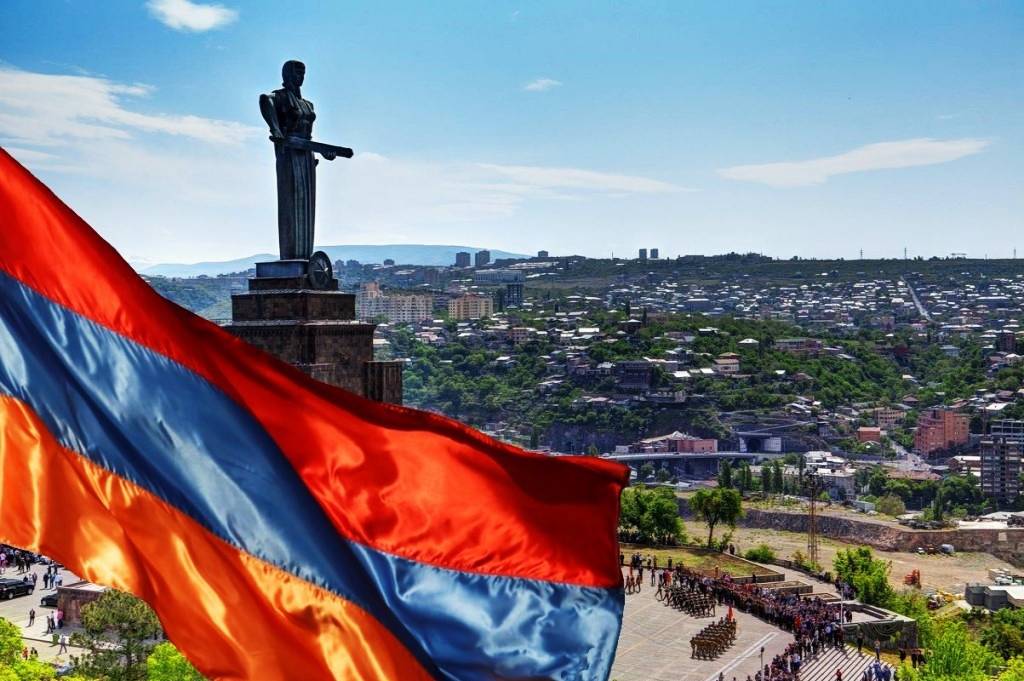
Spring has come - the time of nature’s awakening, renewal, and hope. With each passing day, May draws nearer, a month that holds a special place in the historical memory of Armenians. For decades, even centuries, May has been perceived not merely as a calendar month but also as a symbol of strength, endurance, and the victories of the Armenian people.
Today, however, this symbolic image raises an alarming question: will the Armenian nation once again experience its May of victories, or will it remain forever in the past?
The history of the Armenian people is not only a chronicle of suffering and trials, but also one of great victories, spiritual steadfastness, and the ability to rise again after the gravest catastrophes. Over the centuries, the Armenian nation has repeatedly faced the threat of extinction, yet each time it has found the strength to resist and to prevail—politically, militarily, or spiritually. For this reason, the question of the Armenian people’s future is inseparably linked to the preservation of historical memory and an awareness of their own strength.
In modern historical tradition, May has become one of the key symbols of that strength. In the national consciousness of Armenians, this month is associated with a chain of vital victories. In May 1918, the heroic battles of Sardarapat, Bash-Aparan, and Gharaqilisa took place, when the Armenian people - standing on the brink of total extinction after the Genocide of 1915 - managed to halt the advance of a far larger force and preserve Armenian statehood. These events represented not only a military triumph, but an act of national salvation.
Another important chapter in the history of May victories was the victory in the Great Patriotic War. Hundreds of thousands of Armenians took part in the struggle against Nazism. More than six hundred thousand Armenian men and women fought on the front lines, and tens of thousands lost their lives defending freedom and the future of humanity. The Armenian people gave the world such prominent military commanders and heroes as Marshal Hovhannes Baghramyan, Admiral Ivan Isakov, Aviation Marshal Sergey Khudyakov, and many others. The victory of May 1945 was a common victory of the Soviet peoples, and Armenians made a significant and honorable contribution to it.
In Armenia’s modern history, another symbolic date is May 9, 1992 - the day of the liberation of Shushi, which became a turning point in the First Karabakh War. That victory was perceived as a continuation of the historical tradition of Armenian resistance and as proof that a people united by will and determination are capable of defending their right to life and dignity.
Yet the roots of the Armenian tradition of May victories reach much deeper. One of its historical sources is the Battle of Avarayr in 451 AD, when the Armenian army led by Sparapet Vardan Mamikonyan defended the people’s right to faith and spiritual freedom against the vastly larger army of Sassanid Persia. From a purely military standpoint, the battle did not bring an immediate victory. Historically and morally, however, it became one of the greatest triumphs of the Armenian spirit. Thanks to that struggle, Armenians preserved their religious and cultural identity.
The fifth-century historian Koryun recorded Vardan Mamikonyan’s words before the battle, emphasizing that unity was the essential condition for the Armenian people’s victories. According to Koryun, Vardan reminded his soldiers that the strength of the Armenians lay in their “unity and friendship.” These words, spoken one and a half thousand years ago, remain strikingly relevant today. History repeatedly confirms that Armenians achieve victory only when they act as one.
Today, however, this troubling question arises again and again: will that tradition of victory be preserved? Is today’s Armenia capable of believing in its own strength and continuing the historical line of national achievements?
One of the most serious problems remains historical consciousness. Armenian society still lacks a coherent and balanced system of national historical memory. Many pages of history are perceived fragmentarily and are often distorted.
This fragmentation is largely the result of long periods of ideological pressure. For centuries, church historiography often underestimated the importance of Armenian history prior to the adoption of Christianity. Later, the Soviet system sought to subordinate national memory to internationalist clichés.
In recent years, another troubling factor has been added to these processes - the policy of the current authorities under Nikol Pashinyan, who have consistently attempted to revise and reinterpret key chapters of national history. In public discourse, there is an evident effort to present the historical victories and achievements of the Armenian people as something secondary, or even as a problematic legacy requiring “revision.” Such actions inevitably erode the foundations of historical continuity and weaken the sense of national dignity.
At the same time, Nikol Pashinyan’s political course has increasingly been accompanied by practices that deepen public division. In recent years, domestic politics has been built upon the opposition of various groups within Armenian society: “the old” versus “the new,” “the former” versus “the current,” “the righteous” versus the “enemies of reform,” and, most dangerously, “those from Karabakh” versus “those from Armenia.” Such a logic inevitably fuels mutual distrust and hostility within the nation. Instead of consolidating society in the face of serious external challenges, it fosters an atmosphere of suspicion and confrontation in which one part of society is effectively set against another.
Such a policy of division directly contradicts the historical lessons learned by the Armenian people over centuries. Neither Avarayr, nor Sardarapat, nor Shushi would have been possible in the presence of internal fragmentation. All those victories became reality only when Armenians acted as a united nation, bound by a common goal and a shared responsibility for the fate of their homeland. No victory was accidental; each was the result of social mobilization, political will, and spiritual unity.
Therefore, the question of whether the Armenian people will once again experience a May of victories ultimately depends not only on external circumstances, but also on our ability to restore historical memory, strengthen national consciousness, and revive respect for the heroic deeds of our predecessors.
The May of victories may return, but only if we find the strength to break the vicious circle of internal hostility, political manipulation, and artificially sustained division. Only by overcoming these challenges and restoring national unity will Armenians regain the strength that has led them to victory throughout the centuries.
If that unity is restored, Koryun’s words that Armenians win when they are “united and friendly” will regain their true meaning. Then May will become not only a month of remembrance of a great past, but also a time of new victories for the Armenian people.