
Security and Peace, Manageable Politics, and the Limitations of Electoral Mechanisms
Public life in Armenia has reached a dangerous stage of development. The post-war geopolitical environment remains unstable, border threats have not been eliminated, and the processes in relations with Azerbaijan have not resulted in any real systemic guarantees. In these conditions, the current authorities, led by Nikol Pashinyan, present the peace agenda as the key instrument of stability and protection.
However, declarations of peace cannot replace a balance of power, deep reorganization of the army, and a clearly defined state strategy. Peace that is not supported by strength and well-calculated diplomacy turns into an illusion. Illusory peace does not strengthen security; on the contrary, it undermines the country’s stability and weakens its capacity for resistance.
In public discourse, a questionable thesis is circulating that under current conditions, the outcome of elections depends on how successfully the security agenda is shaped and how clearly public demand for stability is expressed. It is difficult to agree with this thesis without reservations. In theory, such logic may appear convincing, but it ignores an important circumstance: in Armenian reality, public perceptions of “security” often do not correspond to the actual state of affairs. Moreover, today security is associated by large segments of society with “peace,” rather than with a strong, well-trained and properly equipped army and a determined commander-in-chief. The peace agenda is consistently promoted by Nikol Pashinyan, while other actors in the political field are often perceived either as opponents of that course or as “revanchists.” If the situation were different, the domestic political landscape after November 9, 2020, would have looked completely different. The military defeat and the crisis of the security system should have led to radical political changes. Yet reality shows that security issues do not automatically become the decisive factor shaping voter behavior.
Consequently, the possibility of change through elections theoretically remains relevant, but social behavior is not determined solely by the security agenda. For some, security means peace at any cost; for others, it means a strong army and effective governance.
Fake Poles and A Single Geopolitical Direction
Within Armenia’s political system, there exists an illusion of controlled multipolarity. In practice, the authorities and part of the systemic opposition do not fundamentally oppose each other on strategic issues.
The Armenian Pan-National Congress, headed by the first president Levon Ter-Petrosyan, does not offer a geopolitical alternative to the current course. The same can be said about the former president Serzh Sargsyan. Apparent contradictions do not change the fundamental direction, which corresponds to the interests of the same geopolitical centers.
In such a configuration, opposition struggle often becomes formal and does not lead to systemic transformation; rather, it exhausts the political energy of society.
Controlled Street Struggle
All mass protests of recent years have ended in predictable failure. They did not lead to systemic change, largely because they were not aimed at achieving it. Some street initiatives were initiated and orchestrated by the same political forces for the purpose of a short-term emotional mobilization followed by its subsequent “suppression.”
The mechanism is simple: artificial protests raise public expectations but soon fade away, leaving deep disappointment. This produces large-scale apathy and political passivity, which objectively benefits the ruling authorities. Citizens gradually lose trust both in elections and in street protest. This is, in essence, a technology of controlled political exhaustion.
At the same time, regional tensions and the interests of foreign actors, including the activities of Western and Turkish services, do not mean that election outcomes are predetermined automatically. External forces often operate primarily in the information and propaganda space in order to shape public sentiment and deepen polarization. That is why analyzing public trends and conducting systematic work in the information environment is essential in order to prevent the activation of artificial protest movements capable of increasing public disappointment and reducing voter turnout.
Real Limitations of Electoral Processes
When assessing political processes, it is impossible to ignore the institutional environment in which elections take place. Public discourse is often focused on ratings, the security agenda, and sympathies toward particular candidates. However, real influence depends not only on rhetoric, but also on the structure of the electoral system and mechanisms of control.
Recent legislative changes have significantly limited full public oversight of electoral procedures. The right to conduct election observation missions is granted only to organizations not directly affiliated with political forces participating in the elections. As a result, political actors are deprived of effective instruments for comprehensive monitoring of the process, while the influence of administrative and organizational resources becomes practically unobstructed.
In such a system, election outcomes are largely shaped within the structure itself, with minimal risks for the authorities. Public sentiment may shift and attitudes toward candidates may fluctuate, but under institutional restrictions, these sentiments do not necessarily translate into a real mechanism for a change of power. Even if a significant part of society were to show sympathy, for example, toward Armenia’s second president Robert Kocharyan, there would still be no guarantee that such support would be reflected in the final voting results, since the vote-counting process remains beyond the control of political actors.
Issue of Consolidating a Real Alternative
Under such conditions, change through elections becomes extremely limited unless opposition forces unite, combining their political, financial, and organizational resources.
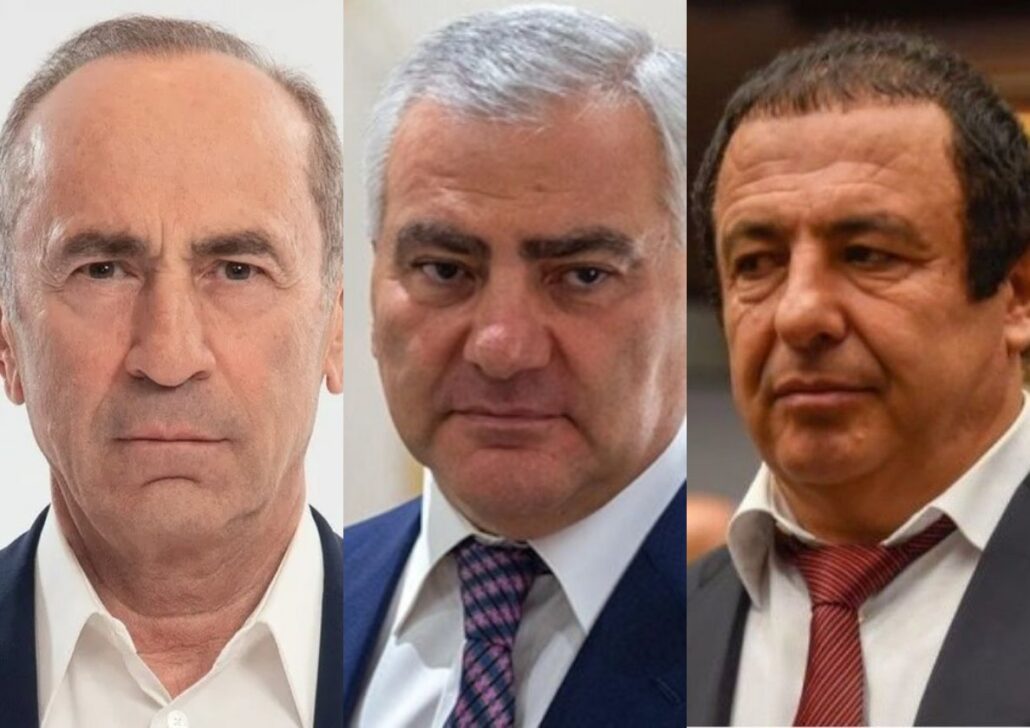
Robert Kocharyan, as an experienced statesman, remains one of the key opposition figures. Businessman Samvel Karapetyan possesses significant managerial and economic potential. Another influential political actor is Gagik Tsarukyan, whose possible alliance with the above-mentioned centers could create a serious organizational and resource-based political pole.
However, the issue is not limited to consolidation alone. What is at stake is political will.
Are Robert Kocharyan, Samvel Karapetyan, and Gagik Tsarukyan ready for a possible escalation of post-election processes? Do they possess sufficient organizational capacity to achieve real consolidation of the dissatisfied masses? And finally, are they prepared, if necessary, to pursue systemic changes, including electoral reforms and tougher methods of political struggle?
Conclusion
The challenge facing Armenia is not merely a rivalry of personalities. It concerns the country’s sovereignty, security, and the reconstruction of its system of governance.
Illusory peace cannot replace a full-fledged system of security. Controlled opposition poles are incapable of ensuring real change. Under conditions of institutional restrictions, the electoral mechanism alone is insufficient to bring about a change of power.
Consequently, the key question is whether there exists a political force ready not merely to participate in another electoral cycle and secure a few seats in parliament, but to pursue genuine reforms and systemic transformation.