How Sincere Is Levon Ter-Petrosyan in His Calls for Opposition Unity?
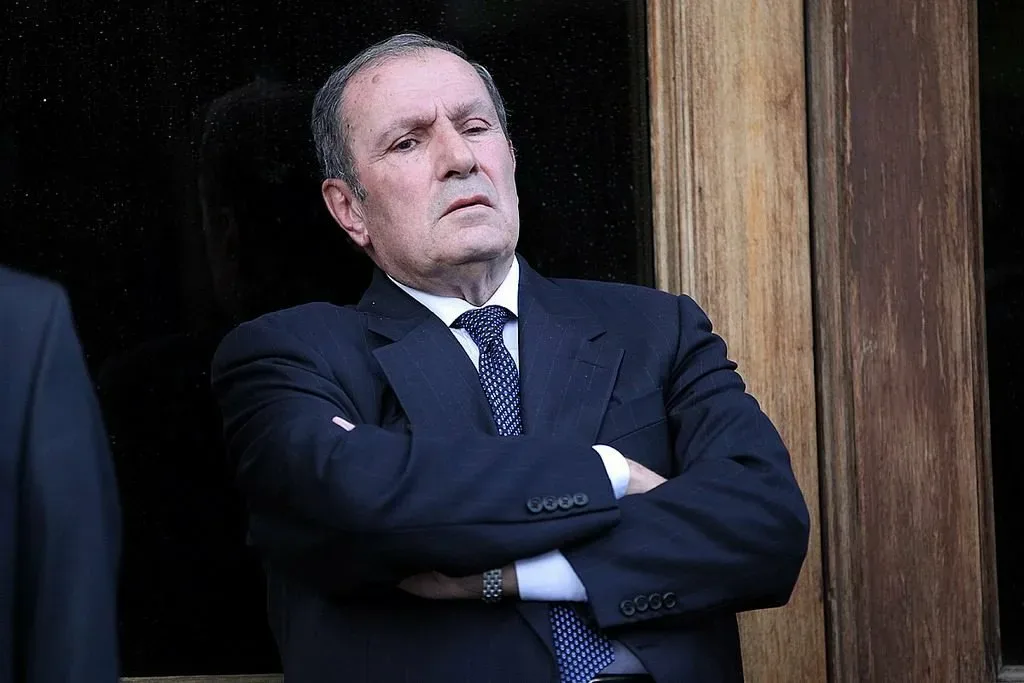
Recent developments in Armenia’s domestic political life once again reveal a well-known yet persistent pattern: a significant gap often exists between political declarations and actual political conduct. Another illustration of this was the recent post by Armenia’s first president, Levon Ter-Petrosyan. Although presented as a sincere and impartial assessment of the internal political situation, the post in fact gives the impression of yet another display of political bias.
According to Levon Ter-Petrosyan, the only tangible force capable of uniting the fragmented opposition is businessman and public figure Samvel Karapetyan, who, in the first president’s view, is able to undertake such a historic mission due to his independence and authority.
At the same time, Ter-Petrosyan emphasizes that opposition consolidation is not merely a matter of political expediency, but an imperative for national salvation. This argument contains a rational element - the need for opposition unity is indeed evident. However, this statement appears to contradict the politician’s practical steps.
Specifically, in December 2025, the Armenian Pan-National Congress Party led by Ter-Petrosyan officially announced its intention to participate in the 2026 parliamentary elections. The party’s vice chairman, Aram Manukyan, stated that the political force would run with a separate electoral list, nominating Levon Zurabyan, deputy chairman of the party board, as its candidate for prime minister.
In this light, a fundamental question arises:
How can one speak about the necessity of consolidating the opposition for the sake of “national salvation,” while simultaneously deciding to run independently, fully aware that the political force in question is unlikely to overcome the electoral threshold?
The four-percent threshold for parliamentary representation, established by the Electoral Code, is not an abstract benchmark but a concrete political reality. Most analytical assessments indicate that the electoral potential of the Armenian Pan-National Congress is unlikely to allow it to surpass this threshold. Under such circumstances, running independently does not constitute genuine political competition, but rather contributes to the deliberate fragmentation of opposition votes.
This reflects not merely strategic calculation, but a lack of political sincerity. When a statesman publicly calls for unity in the name of national salvation, yet his practical actions contribute to further division, society inevitably begins to question the true motives behind such statements.
There is an impression that emphatic appeals for consolidation are, in fact, aimed at redistributing political responsibility in advance, in order to explain potential failures. In such a scenario, fragmentation of opposition votes becomes predictable, and responsibility for it can be shifted onto the “unconsolidated opposition,” thereby shielding one’s own decisions - and the political rules of the game established by the authorities - from criticism, even though these rules largely predetermine electoral outcomes.
Thus, the central question is not who is capable of consolidating the opposition, but whether those advocating consolidation are prepared to substantiate their words with concrete actions. Therefore, Levon Ter-Petrosyan’s so-called “sincere confession,” in the assessment of the Public Tribunal, is perceived not as an expression of political sincerity, but as yet another example of carefully calculated political maneuvering.