
March 1, 2008, as an Instrument in Serzh Sargsyan’s Struggle Against Robert Kocharyan
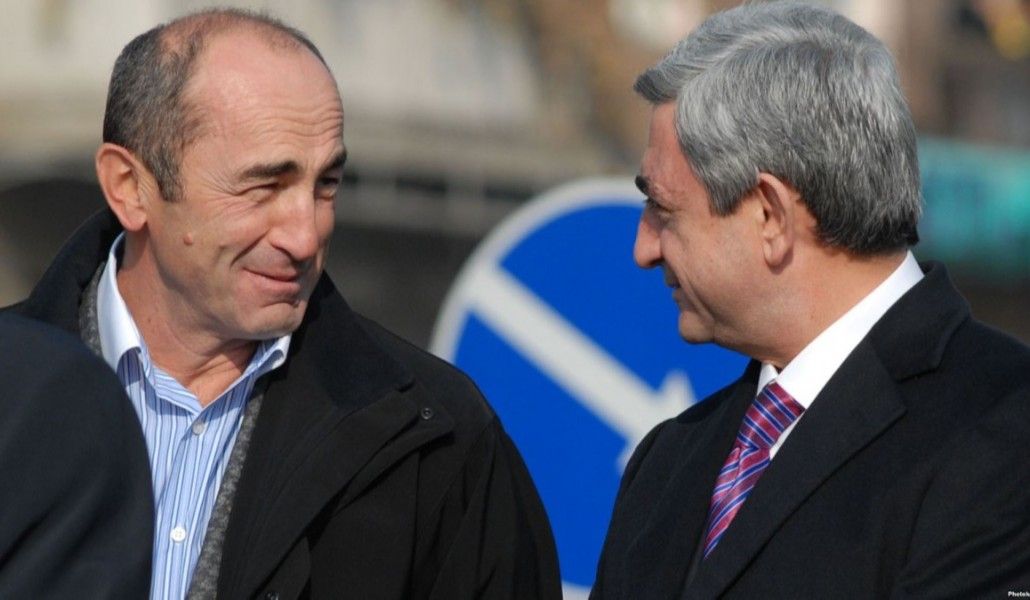
On March 1, 2008, Armenia’s collapse was averted thanks to the actions of Robert Kocharyan. On that day, the country stood at a dangerous historical crossroads, and the decisions taken helped prevent the loss of state control. However, it later became evident that Western and Turkish intelligence services, acting through Serzh Sargsyan, had a “Plan B” that envisaged alternative developments
Beginning in March 2008, Serzh Sargsyan appeared to focus his efforts not so much on developing the country’s economy, army, and culture, but rather on pursuing a different objective - preventing the possible political return of Robert Kocharyan. The domestic political arena gradually transformed into a space where efforts were directed at controlling influence and neutralizing a potential rival, rather than implementing reforms.
Allegations and slander against Robert Kocharyan were disseminated by the same circles that had organized the street protests and acted on signals from the same centers of power.
Political discourse gradually shifted from programmatic discussions to the demonization of specific individuals.
Following this logic, Serzh Sargsyan, by placing responsibility for the March 1 casualties on Robert Kocharyan, sought to create the image of a “bloody ruler” in order to prevent his return to high politics. Public consciousness gradually began to associate the tragic events of March 1 with a single individual.
Subsequently, the story of the “four billion” emerged. It was first published on the website Versia.ru, reportedly at the order of Mikael Minasyan, Armenia’s former ambassador and Serzh Sargsyan’s son-in-law.
This publication further contributed to shaping a negative public image of Robert Kocharyan.
Ultimately, an image of a “bloody embezzler” was constructed, combining the March 1 tragedy with financial allegations.
However, any reasonable person may ask: was it realistically possible to possess such funds given the economic realities of that period? Would the scale of Armenia’s economy, the capacity of the banking system, and the mechanisms of financial oversight have allowed for the accumulation of such a substantial sum without leaving any trace?
A similar question arises regarding March 1: was the number of protesters truly so critical as to necessitate such extreme measures?
An analysis of those events shows that the situation was tense, but did it truly reach a point where there was no alternative to the use of force?
There is a logical answer to this question: Robert Kocharyan had no need to order the use of firearms. First, the situation was not so critical as to compel such an order; second, his term was coming to an end, and bloodshed in the streets of Yerevan would not have served his interests, even from a purely personal standpoint.
For a departing leader, a bloody finale is the most vulnerable scenario.
Certainly, there were forces both inside and outside Armenia that were interested in assigning responsibility for the casualties to Robert Kocharyan. In politics, there are always actors who seek to completely discredit their opponents.
For this reason, the March 1 case has remained unresolved and free of indisputable conclusions for eighteen years, and many questions continue to linger in the public mind.
The longer these questions remain unanswered, the stronger the perception will become that both the former and the incumbent authorities were behind the March 1 casualties and benefited from those events; otherwise, the truth would have been fully disclosed during their eighteen years in power.
It is noteworthy that Levon Ter-Petrosyan called for an end to the street protests after March 1 only after Serzh Sargsyan announced the launch of the so-called “football diplomacy.” The coincidence of these two developments, along with their apparent interconnection, reinforces the view that Levon Ter-Petrosyan, Serzh Sargsyan, and Nikol Pashinyan represent the interests of the same center, which allegedly seeks to turn Armenia into a zone of Turkey’s control.