
Waiting For A “Moldovan Scenario”
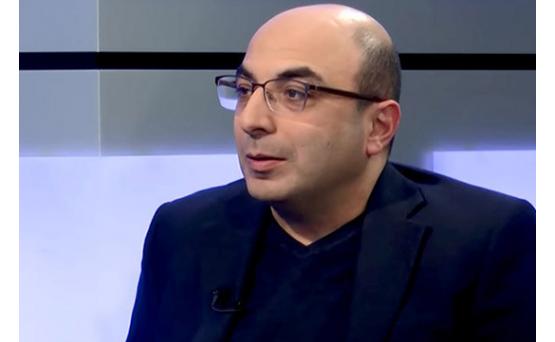
Verelq.am has published an article by Vahe Hovhannisyan on the possible “Moldovan scenario” in Armenia. The full text of the article is presented below.
Waiting For A “Moldovan Scenario”
The authorities openly declare: “We will not allow other forces to form a majority in the National Assembly.”
The most active representatives of the public and political sphere respond seriously: “They will repeat the Moldovan scenario.”
So, what follows from this?
The authorities have only one legitimate way to prevent other forces from securing a parliamentary majority — to obtain that majority themselves. They failed to cultivate and introduce puppet forces and to form alliances with them. Therefore, the only remaining “instruments” at their disposal are arrests, criminal charges, refusal to register opposition candidates, threats, and similar measures.
The authorities understand well that any behind-the-scenes agreement is a one-in-a-thousand chance. Everything will depend on the atmosphere in the country, and if that atmosphere changes, no agreement will hold. For that reason, the authorities are making no genuine efforts to reach preliminary agreements with anyone.
The anti-government camp must begin to prepare more seriously for possible scenarios. Simply repeating that a Moldovan scenario is expected, while continuing the campaign in a routine manner, is not serious.
First, it is necessary to understand what the Moldovan scenario entails — its essence and the technologies behind it. It must be acknowledged that the regime is prepared for all possible unexpected moves and harsh scenarios in order to reproduce itself. Countermeasures and counteraction strategies should be considered. And such strategies do exist.
Is there any clear idea or analysis of what an Armenian “Moldovan scenario” would look like? What are the possible options? What risks does each option entail, including for the authorities? It is unclear.
Moreover, given the current rules and developments within the opposition, it cannot be ruled out that certain forces might quietly welcome pressure or action against another opposition force. Much depends on the objectives they are pursuing.If there are illusions that, in the event of a Moldovan scenario in Armenia, there will be support or reaction from Moscow, it is worth recalling Moldova’s example. Moscow accepted the situation quite calmly, and nothing followed. Nor is it the case that the West will ignore everything these authorities might do. That is not so. Significant work must be undertaken in that direction. Everything else amounts to self-justification for one’s own miscalculations.
Statements that there is no Plan B are equivalent to saying, “Do whatever you wish.” Saying that “If this or that force had not participated in the elections, it would have been better” reflects superficial and narrow thinking. Calling on others not to fragment the vote while taking no steps toward consolidation is simply unbelievable.
Viewing the electoral process solely from the perspective and interests of the leading contenders is a fundamental mistake. There is a significant number of political and public figures — influential and honest individuals — who lack the resources to independently overcome the electoral threshold or to wage an active campaign, yet are capable of shaping public opinion. If the opposition frontrunners assess the process only from their seemingly favorable positions, they will soon become “easy prey” for the authorities.
In the event of a possible Moldovan scenario, the opposition field must be prepared to involve everyone in the struggle — both frontrunners and others, participants and non-participants. All active groups, and a society that is becoming increasingly engaged, must be ready to resist any illegitimate scenario initiated by the authorities. In general, there is only one effective counter-scenario to illegitimate actions by the authorities: a change in the public atmosphere and technologically competent work.
The issue at stake is far more significant than personal calculations about a desirable number of seats. These are two entirely different matters, with very different potentials for public consolidation.
Patience is indeed an important factor in serious undertakings. However, a different kind of patience is required here — an intelligent one. It is entirely different to passively wait for a “Moldovan scenario” to be applied against oneself. There are situations in which well-considered impatience is far more valuable. This implies developing scenarios, maintaining reserve options, preventing predictable developments, and demonstrating greater flexibility and honesty.
In a separate article, the Public Tribunal addressed some of Vahe Hovhannisyan’s questions, including what the “Moldovan scenario” could mean for Armenia, what political and legal mechanisms might be used within such a scenario, what risks it could pose to state institutions and public stability, and what preventive steps might help minimize the likelihood of illegal or crisis-driven developments in the post-election period.