
“The Person Who Ceded Artsakh Is Making Allegations Against Us” – Archbishop Bagrat Srbazan’s Speech in Court
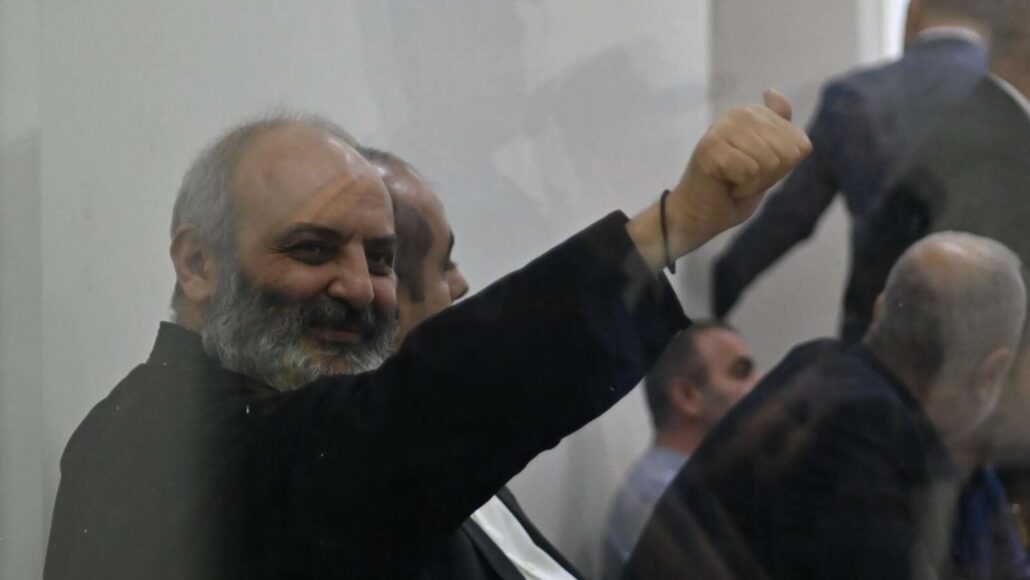
On St. Vardanants Day — a symbol of faith, martyrdom, and national dignity — Archbishop Bagrat Srbazan delivered a speech in the courtroom that extended far beyond legal defense. It was a political, moral, and public indictment of both the trial itself and the broader atmosphere prevailing in the country.
The Archbishop began by congratulating those present on Vardanants Day, reminding the court that the day embodies loyalty, sacrifice, and responsibility. He then turned to what he described as a fundamental injustice: the differing verdicts issued against eighteen individuals facing identical charges.
“I am ready to apologize if anyone can show even a punctuation difference in the charges,” he stated, underscoring that justice cannot be selective.
Bagrat Srbazan sharply condemned the accusations leveled against the defendants — allegations of sabotage, damage to the electricity supply system, obstruction of movement, and even executions. For months, he said, he had demanded clarification and evidence to substantiate such grave claims. None were provided. Not a single legal article, not a single proof.
One of the most striking moments of the speech was his direct assessment of the country’s leadership. Bagrat Srbazan declared openly:
“The person who ceded Artsakh is making allegations against us.”
He went on saying that it was he [ed. Nikol Pashinyan, who is responsible for many casualties, wounded, and missing people, and it was his political decisions that have led the country to such heavy consequences.
According to the Archbishop, that same individual is now publicly branding them as terrorists, radicals, and extremists. “Who will stop him?” he asked rhetorically, pointing to what he described as the complete absence of any legal restraint on such public accusations.
He emphasized that when high-ranking officials publicly characterize an ongoing case with terms such as “terrorism” and “radicalism,” it inevitably prejudices the trial.
In closing, Bagrat Srbazan made his position unequivocal: the case, he insisted, has nothing to do with terrorism or terrorist activity. It is politically motivated, he argued, dependent on the will of those in power, and driven by political fear.
“This is subject to the whims of one person,” he said, reaffirming his conviction that the charges are instruments of political persecution.
The Public Tribunal’s Assessment
The Public Tribunal maintains that the trial has long since exceeded the boundaries of legal procedure. Its political subtext is evident and impossible to ignore.
When courts issue differing verdicts in identical cases, when the head of government publicly evaluates a case still under judicial review, when political opponents are labeled “terrorists” and “radicals,” this ceases to be a neutral legal process. It becomes a troubling display of persecution for political views.
In an effort to evade responsibility for the consequences of war and failures in state governance, the political authorities are scapegoating their opponents.
Justice must be independent and impartial — not subordinate to the interests of those in power. The court must serve the law, not act as an instrument for shifting political responsibility.
The Public Tribunal declares that under the government of Nikol Pashinyan, the judiciary has lost its independence, the constitutional principle of separation of powers has been undermined, amounting to a dismantling of the constitutional order. Criminal proceedings transformed into tools of political punishment and control stand as the clearest evidence of this reality.