
The Church as the Last Line of Defence
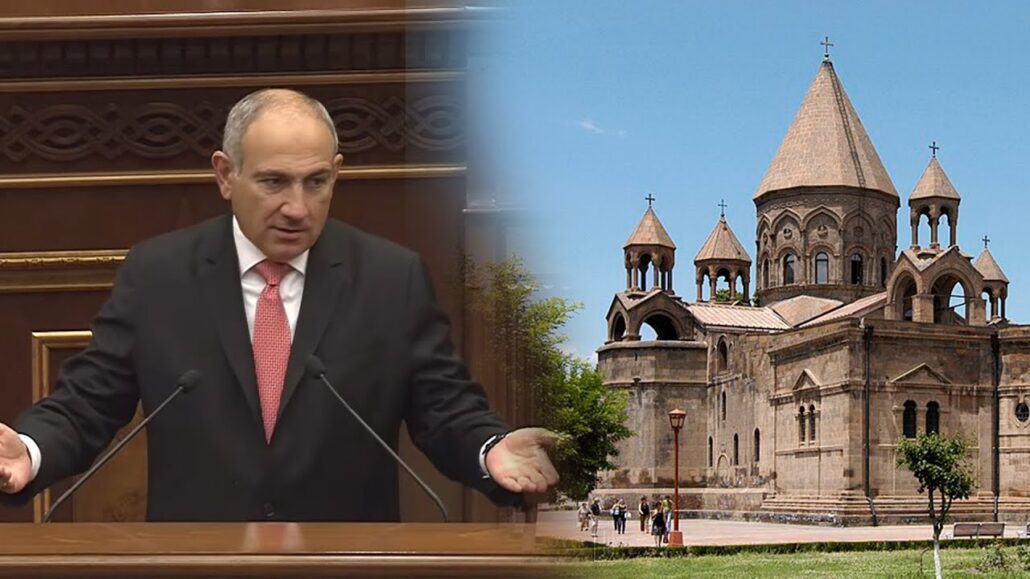
Recent developments surrounding the Church have taken on a particularly acute and alarming nature in Armenian public life. Earlier claims that the actions of the authorities were not directed against the Armenian Apostolic Church have been increasingly undermined by a chain of undeniable facts. The removal of Church-related disciplines from schools, restrictions on the Church's land rights, and the dissolution of the Spiritual Service Institution within the armed forces — all of these cannot be viewed as isolated incidents, but rather as part of a coherent pattern driven by the same logic.
Today, we are witnessing an institutional assault on the Church as a centuries-old institution, not merely against individual clergy members.
When disciplinary decisions made by the Supreme Patriarch become the subject of legal proceedings, the legal system teeters on the brink of absurdity. The courts, in this case, are attempting to claim authority over the establishment of spiritual order — a function that does not inherently belong to them.
According to the Constitution, the Church is separate from the state, and this principle ensures its internal independence. Interfering with Church affairs, challenging the ordination and defrocking processes, and questioning decisions made within the Church are not just legal absurdities - they are clear anti-constitutional steps. If a priest, as a citizen, violates the law, he is held accountable within the broader legal system. However, this should never be used as a pretext to revise or interfere with the internal workings of the Church.
The cancellation of military service for priests is an especially painful issue. The memory of those priests who sacrificed their lives during the war is still vivid in the collective consciousness of the people. Abolishing this institution amounts to disrespecting Armenia’s historical and moral heritage and leads to a legal impasse, as such a decision cannot be made without the consent of the Supreme Patriarch.
These actions reveal a critical truth: the authorities have effectively lost the battle for influence within the Church hierarchy. If the authorities were secure in their position, they would not resort to administrative measures, investigative pressure, or obstruct the clergy’s participation in international meetings.
At the same time, these processes, though painful, have become a necessary reckoning for the Armenian people. They have exposed flaws within the judiciary and law enforcement that were previously only suspected, but are now painfully visible. When unfounded decisions become possible, they instill a deep sense of fear and vulnerability among the population, creating the chilling realization that anyone could become the target of pressure at any moment.
The political landscape in Armenia is equally diverse and unstable. The upcoming elections have sparked a period of political reorganization, but the authorities’ strongest ally remains public passivity. The fewer citizens who vote, the easier it will be for the current system to perpetuate itself. The opposition faces the difficult task of overcoming internal divisions, avoiding fragmentation of votes, and offering a truly competitive alternative.
In this context, the most crucial factor for Armenia and its people will be the thoughtful, informed choices made by its citizens — not the empty promises of political campaigns. Today, when the Church, the law, and politics are all intertwined, the people face a stark dilemma: to speak out or remain silent, to stand aside or take responsibility for their future.
The future of Armenia lies entirely in the hands of its citizens.