
From Haykakan Zhamanak to the “Velvet Revolution”: How Mikael Minasyan Tries to Conceal His Role
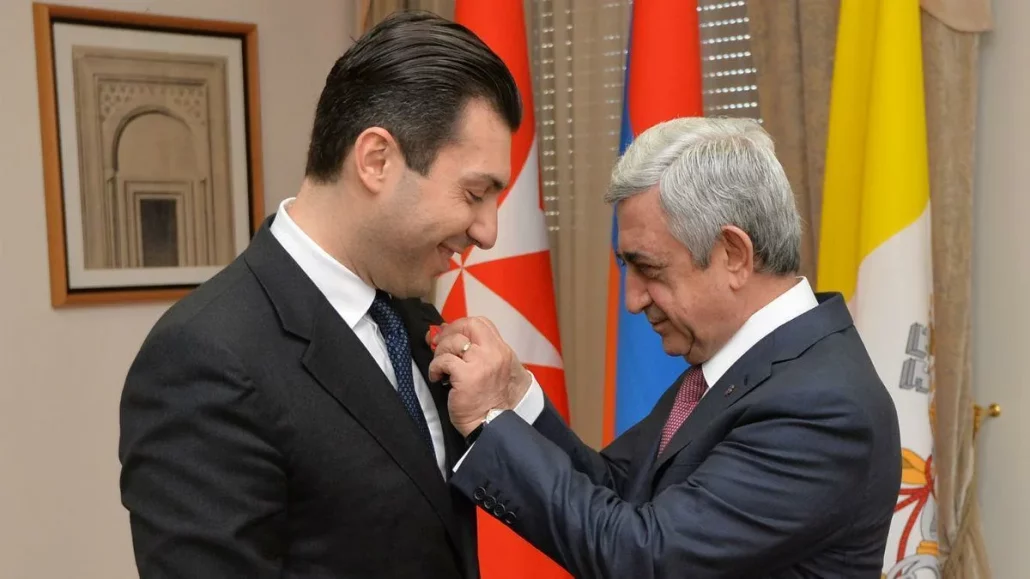
The latest article published by Mikael Minasyan - Serzh Sargsyan’s son-in-law, a long-time sponsor of Nikol Pashinyan’s Haykakan Zhamanak newspaper, a close associate of Arman Babajanyan, and a university peer of Ararat Mirzoyan - is built around a simple thesis: an attempt to present his political, criminal, and moral responsibility as nothing more than “human mistakes.” He portrays himself as a detached observer who, albeit belatedly, is allegedly warning Armenia and the Armenian people of looming disaster, while simultaneously shifting blame onto Robert Kocharyan and his supporters for creating “geopolitically favorable grounds for revolution.” The facts, however, suggest the opposite. What we are witnessing is a carefully calculated effort to conceal Minasyan’s systemic participation in the processes that ultimately led to catastrophic consequences for the state and the nation.
It is impossible to regard Minasyan as someone who merely made a “human mistake.” He was embedded within the very architecture of power where decisions crucial to Armenia’s fate were made, and he played one of the key roles in that system. Together with his father-in-law, former President Serzh Sargsyan, Minasyan functioned as part of a single governing mechanism that carried out the 2015 constitutional reform—a reform that later became a harbinger of political catastrophe. Serzh Sargsyan’s violation of his public promise not to seek the post of prime minister triggered the so-called “velvet revolution.” In 2018, Sargsyan uttered a phrase that became symbolic: “Nikol was right, I was wrong.” At that moment, he retained full power in the country, with security and law-enforcement structures under his control, yet he took no steps to prevent Nikol Pashinyan’s rapid ascent to power. Minasyan was not merely a bystander in these developments; he was one of the principal architects of the entire chain of events. This directly contradicts his current claims that he did not create “geopolitically favorable grounds for revolution.”
Between 2008 and 2011, Minasyan held a key position within the presidential administration and actively participated in shaping both foreign and domestic policy, deliberately reducing Russia’s influence while strengthening the role of the West in Armenia.
Particularly noteworthy is the incident involving the Armenian Genocide Museum-Institute. According to public testimony by former director Hayk Demoyan, unique books were stolen from the institution in 2005–2006. At that time, among the research fellows at the Museum-Institute were Mikael Minasyan, Ararat Mirzoyan, and Vladimir Vardanyan. Instead of initiating an investigation and holding those responsible accountable, the authorities provided them with “warm seats.” The stolen books were never returned, and the case was never investigated in full. This episode clearly demonstrates that Minasyan’s actions were not the result of an accidental “human mistake,” while his later “kitchen-shot” video justifications appear to be nothing more than a smokescreen concealing his real activities. One fundamental question remains unanswered: who ensured the complete suppression of this case?
Minasyan’s close associate and possible accomplice in the theft of books from the Genocide Museum-Institute, Arman Babajanyan, was among the most active propagandists of the “velvet revolution.” He maintained close ideological and personal ties with Minasyan, and his activities were fully supported by resources controlled by him. Babajanyan became one of the “frontline fighters” who transformed revolutionary rhetoric into a systematic anti-Russian ideological campaign. Any talk of spontaneity here is meaningless: this was a meticulously planned effort to shape the political and media environment and prepare society for Nikol Pashinyan’s rise to power.
The political trajectory of Minasyan’s university colleague Ararat Mirzoyan also reflects a carefully calculated scenario of power transfer. After the “velvet revolution” engineered by Sargsyan and Minasyan, Mirzoyan was appointed Speaker of the National Assembly and later Foreign Minister. Such a rapid career ascent cannot be explained solely by “merits during the revolution”; it points to a deliberate redistribution of personnel from the former government into the new political framework.
It is also noteworthy that Mikael Minasyan himself publicly accused Ararat Mirzoyan at different times of being a Turkish agent and later an agent of Armenia’s national security services, even publishing documents allegedly supporting these claims. This episode raises serious questions regarding state secrecy and Minasyan’s true role as a political figure with access to classified information, which he appears to have used selectively to advance his own political objectives. A person in possession of National Security Service documents cannot plausibly be described as a passive observer of political processes.
Nor should Minasyan’s role in shaping the media landscape and political discourse be overlooked. He is known to have financed Haykakan Zhamanak, the lragir.am website, and other platforms that ensured a consistent, aggressive anti-Russian media environment, paving the way for Nikol Pashinyan’s political rise. Media control, image construction, and the redirection of external policy vectors are not “human mistakes,” but deliberate systemic actions with foreseeable consequences.
Despite Mikael Minasyan’s efforts to reframe his actions as mere “mistakes of a human being,” reality tells a different story. He was neither an observer nor an accidental participant in political developments. On the contrary, his role was systemic and decisive - from controlling media resources and financing key platforms to participating in the formation of the team that later carried out the “velvet revolution.”
In short, regardless of how Minasyan attempts to reinterpret his involvement, both the public and history clearly see his complicity and the inevitability of his responsibility. No justifications, emotional narratives, or excuses can alter the fact that the consequences of his actions are tangible and his personal responsibility is indisputable.