From an Anti-Church Campaign to the Myth of “Fake Peace”: Ruben Melkonyan’s Warnings
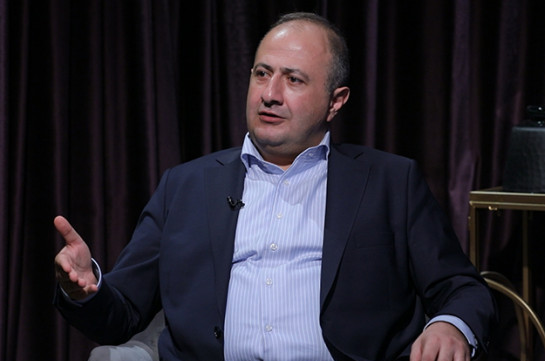
In an interview with the 5th Channel, Professor Ruben Melkonyan, a Turkologist and Doctor of History, presented an in-depth and fundamental analysis, revealing processes that, in his view, are aimed at weakening the Armenian Apostolic Church, undermining national identity, and dismantling Armenia’s sovereignty. He sharply criticized a number of recent statements which, he believes, seek to remove the image of the enemy from the public consciousness and weaken the state’s capacity for self-defense.
The Church as a Target of State Policy
According to Melkonyan, the developments surrounding the Armenian Apostolic Church are not a chain of accidental events but a systemic policy of pressure. He spoke not only of propaganda attacks, but also of direct administrative, legal, and even physical threats directed against the Church and its clergy.
The professor recalled that the decision of the Supreme Patriarch to convene a meeting of bishops in Austria was motivated by real concerns:
“This is a clear indicator that the authorities of the Republic of Armenia are prepared to use a full range of instruments against the Church, crossing all legal red lines.”
Melkonyan described as an especially dangerous precedent the attempt to change the governing bodies of the Catholicosate and subordinate spiritual authority to political power. He views this as an outrage unprecedented even during periods when the Armenian Apostolic Church existed under foreign rule.
Propaganda of Violence and Impunity
Ruben Melkonyan also addressed public statements and actions containing direct elements of violence. He noted that calls by representatives of pro-government circles to “stone” or “destroy” the Catholicos of All Armenians have gone largely unnoticed, which, in his view, amounts to intimidation tolerated at the state level.
“If an opposition figure makes any sharp statement, a criminal case is immediately initiated. If a pro-government figure publicly calls for violence, the response is silence,” he said.
He also recalled instances in which representatives of local authorities interfered with Church services, restricted people’s access to churches, and turned the liturgy into a political spectacle - all without any legal consequences.
The Myth of “Reforms” and Idolization
Melkonyan is convinced that actions taken against the Church are often presented under the guise of “reforms.” In reality, he argued, these measures do not aim at spiritual renewal or self-improvement, but rather at subordinating the Church to the government.
He sharply criticized recent incidents in which Church services were accompanied by applause, loud shouting, and political slogans.
“Our Savior is Jesus Christ. Saviors cannot be changed in the Church, idols must not be created, and the liturgy is not a show,” the professor stated.
Weakening the Church in the Context of Foreign Political Interests
Ruben Melkonyan examined the pressure on the Church within a broader geopolitical framework. He emphasized that the Armenian Apostolic Church is one of the key pillars of national identity, and that its weakening serves the interests of forces seeking to turn Armenia into a manageable territory populated by people deprived of their historical and cultural identity. In this context, he referred to a statement by Turkish Foreign Minister Hakan Fidan:
“We support Nikol Pashinyan’s constructive policy and would like it to continue after the elections.”
In Melkonyan’s interpretation, the pressure exerted on the Church and Turkey’s characterization of Nikol Pashinyan’s policies as “constructive” are links in the same chain.
According to the Turkologist, there is no issue of mistranslation or hidden subtext in Fidan’s words; rather, it is an open and explicit political message. For Fidan, “constructive” policy means the denial of Artsakh, avoidance of the Armenian Genocide issue, the removal of Mount Ararat from national symbols, and one-sided concessions.
“If the Turkish foreign minister calls such a policy constructive, then for us, Armenians, it cannot be acceptable,” Melkonyan stated.
He concluded by noting the absurdity of a situation in which the foreign minister of a belligerent state is portrayed as a supporter of peace, while the head of the Armenian Apostolic Church is presented as an obstacle to peace.
Gegham Nazaryan: “Turkey Has No Intention to Swallow Us”
One of the most resonant statements made by MP Gegham Nazaryan, which, according to Melkonyan, warrants a firm and professional rebuttal, was the following:
“Turkey has no intention to swallow us. When we say such things, they ask us: how can you say so?”
Nazaryan also claimed that the Armenian people “have been frightened with Turks from the moment they are born,” adding:
“We are only now beginning to understand the meaning of peace.”
Ruben Melkonyan believes that such statements reflect not only historical ignorance, but also a level of political dilettantism that he considers dangerous. He argues that Turkey’s state policy toward Armenia is clearly aggressive and directed against Armenia’s state interests, national identity, and historical memory — and that this, for specialists, is not a matter open to debate.
“I cannot discuss whether the color of matsun [Armenian yogurt] is white,” he said.
Fake Sovereignty and Responsibility for the Choice
Melkonyan cast doubt on the claim that “Armenia has never been so sovereign.”
“If Armenia is truly so sovereign, why do leaders of foreign states constantly comment on Armenia’s borders, elections, and Constitution?” he asked.
In conclusion, the professor stated that the citizens of Armenia are left with a final, yet critically important, instrument: voting. He believes that by refusing to vote for political forces openly supported by Hakan Fidan, citizens can demonstrate a peaceful, constitutional form of resistance.
The Public Tribunal's Conclusion
The Public Tribunal states that when the foreign minister of Turkey openly declares support for the “constructive policy” of Armenia’s incumbent authorities and when that very policy undermines historical memory, national symbols, the Artsakh issue, and the autonomy of the Church — this can no longer be viewed as a matter of domestic political miscalculation. It becomes an issue of national security, dignity, and the future of the state.
In a situation where a representative of a hostile state is portrayed as a supporter of peace, while the leader of the Armenian Apostolic Church is presented as an obstacle to it, the country is facing a profound crisis of values. This cannot and must not become the new normal for the Armenian people.
The Public Tribunal calls on the citizens of Armenia to recognize their historical responsibility in the upcoming parliamentary elections and to refrain from voting for the political force led by Nikol Pashinyan. This vote is no longer merely a political choice; it concerns state sovereignty, the freedom of the Church, and the preservation of national identity.
The ballot box, the Tribunal emphasizes, remains the final peaceful and constitutional platform through which citizens can express a decisive “no” to policies aligned with external dictates, the propaganda of false peace, and the erosion of statehood.
The Public Tribunal is confident that the Armenian people are capable of distinguishing genuine peace from humiliating concessions, and a dignified future from dangerous illusions.