
Revolutionary Promises of the Authorities and Reality
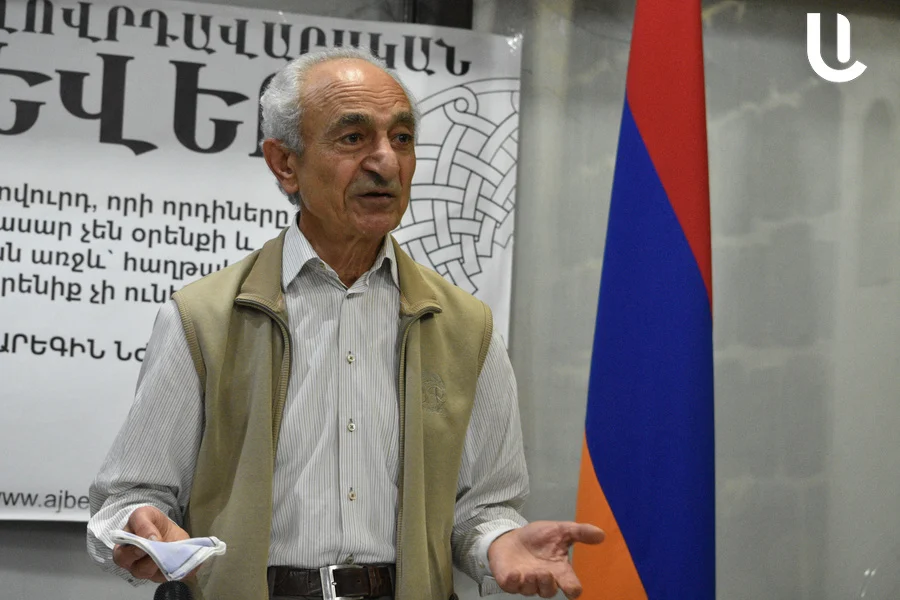
Mekhak Gabrielyan’s story is especially illustrative in light of the promises with which Nikol Pashinyan came to power. During the period of street protests and the so-called “Velvet Revolution,” he very emotionally and with demonstrative decisiveness declared that former corrupt officials would be held accountable, that “no one would avoid punishment,” and that the rules of the game would become the same for everyone, regardless of their names, connections, or former positions.
These statements were accompanied by aggressive rhetoric, public vows to restore justice, and promises to put an end to the practice of “selective justice.” It was precisely these slogans that led a significant part of society to believe in the possibility of systemic change.
However, as shown by an article published in the “Aravot” newspaper, there is a significant gap between words and real actions. Defendants in criminal cases, including former head of the State Revenue Committee Gagik Khachatryan, directly involved in causing multimillion-dram damage - not only avoided criminal responsibility but also effectively received institutional protection. At the same time, the individual who sought a legal assessment of their actions faced legal prosecution himself.
This raises a legitimate question: if the authorities truly intended to fight corruption, why were judicial cases concerning the misappropriation of state funds by the former elite gradually reduced to nothing and later transformed into instruments of pressure against the claimants?
In practice, the promised “justice for everyone” has turned into a new form of selectivity, where loyalty to the system is placed above the law, and law-enforcement bodies perform the function of preserving the status quo rather than protecting citizens. In this sense, Gabrielyan’s story is not an exception but a symptom — an example of how revolutionary rhetoric has proven to be an institutional lie.
In this context, Gabrielyan’s phrase, “I am waiting for a change of power to raise the issue of compensation for the damage,” sounds like a diagnosis of the regime rather than a personal hope. In a country where the “revolution” ended with the legalization of impunity, justice becomes possible only after a change in political power.