Millions for the Authorities – “Insurance” for Pensioners
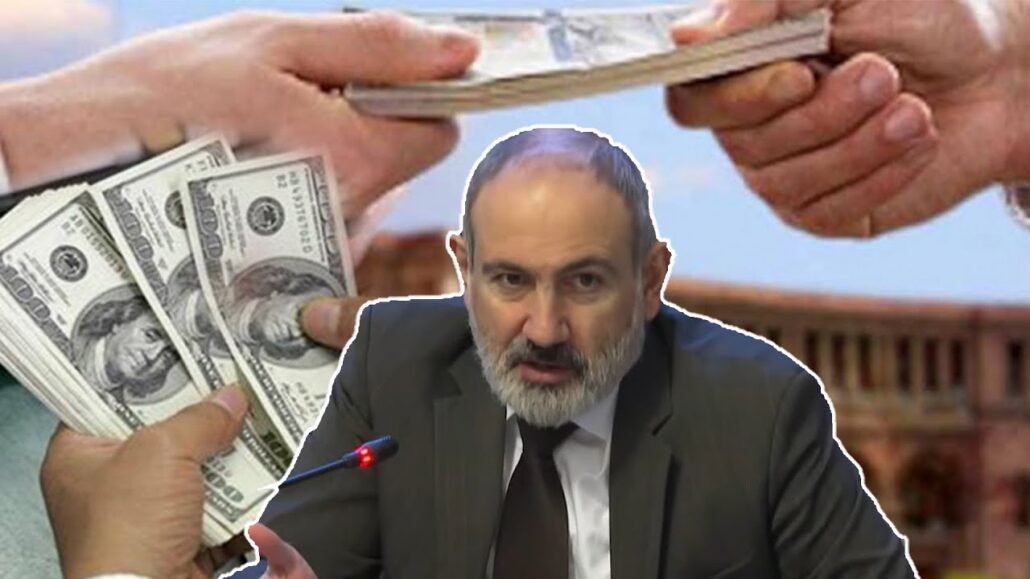
A new social contract has effectively taken shape in Armenia: the authorities receive money, while the people are told why they are not entitled to it. As citizens are informed that “there is no money, but you should hold on,” millions in budgetary funds are quietly and without public scrutiny distributed within the corridors of power.
While the government speaks of “insufficient resources” and the need for “optimal solutions,” state funds are allocated according to a strict and cynical logic: millions go upward, while promises go downward. According to “Zhoghovurd” newspaper, in December ministers and their deputies received multi-million-dram bonuses from the state budget - information that the authorities have not disclosed to the public.
Sources cited by the newspaper claim that ministers received between 7 and 8 million drams each, with some receiving up to 9 million, while deputy ministers received 4–5 million drams each. In response to an official inquiry from “Zhoghovurd”, the government avoided providing a direct answer, issuing formal replies and shifting responsibility between departments, effectively classifying information about budgetary payments.
During the same period, the very same government was explaining to pensioners why pensions could not be increased.
According to 168.am, Nikol Pashinyan decided that it would be more “beneficial” for pensioners to receive compulsory medical insurance instead of a direct pension increase. Without asking, discussing, or offering an alternative.
Pashinyan argued that adding 10,000 drams would not resolve pensioners’ problems. Meanwhile, 168.am rightly noted that most pensioners would prefer direct financial support to a formal insurance policy under which:
- far from all services are free;
- a significant portion of medical treatment remains paid;
- access to medical services is not improved and is often even more complicated.
Moreover, pensioners already had the right to free medical care in the past. The core issue was never the absence of “insurance,” but a non-functioning system. Now, the government presents the same unresolved problem as an act of “care,” effectively replacing pension increases with yet another scheme.
The cashback program serves as direct evidence of this approach. Over nearly four years, only 366,000 out of more than 661,000 pensioners and social benefit recipients were able to use it. The average cashback amounted to 4,100 drams - an amount entirely eroded by inflation. Nevertheless, even this failure is presented by the authorities as a “pension increase.”
The words of Narek Karapetyan, coordinator of the “Our Way” Movement, aptly capture the cynicism of the situation:
“A person who accuses others of robbery while forgetting that he himself has robbed should remember that he has increased spending on the prime minister’s staff fourfold, raising it to $65 million. Did the citizens of Armenia begin living four times better because the prime minister’s staff received four times more?”
According to him, the expenses of the Prime Minister’s office exceed the combined spending of the royal families of Spain, Sweden, and Denmark. Krapetyan urges citizens not to be deceived by the modest appearance of government officials, who spend lavishly and provide no accountability for their expenditures.
The situation can be summed up in one sentence:
- Pensioners — refusal to increase pensions, insurance packages, bureaucracy, and propaganda;
- Government officials — millions of drams in bonuses, silence, and secrecy.
When the authorities conceal their own incomes, multiply their expenditures, and lecture pensioners on what is supposedly “better” for them, this is neither an error nor a flaw. It is a deliberate policy — one in which the state budget ceases to be a public resource and instead becomes a closed fund for insiders.
The more the government speaks of “social responsibility,” the clearer today’s simple formula becomes: there is no money for the people, but there is always money for bonuses for government officials and parliamentarians.